 Back
Developmental Genetics: Mechanisms of Animal Development and Pattern Formation
Study Guide - Smart Notes
 Tailored notes based on your materials, expanded with key definitions, examples, and context.
Developmental Genetics: An Overview
Introduction to Developmental Biology
Developmental genetics explores how a single fertilized egg develops into a complex multicellular organism. This field investigates the genetic and molecular mechanisms that control cell differentiation, tissue formation, and the emergence of body patterns. Understanding these processes is crucial for medicine, evolutionary biology, and biotechnology.
Cell Differentiation: The process by which cells become specialized in structure and function.
Pattern Formation: The spatial and temporal organization of differentiated cells into tissues and organs.
Genetic Regulation: Genes interact with each other and with environmental signals to guide development.
Evolutionary Conservation: Homologous genes control development in diverse species, indicating deep evolutionary roots.
Cellular Processes in Development
Cell Proliferation
Cell proliferation refers to the process by which cells divide and increase in number, forming the basis for tissue and organ formation during development.
Stem Cells: Undifferentiated cells capable of continuous division and differentiation into specialized cell types.
Types of Stem Cells:
Embryonic Stem Cells: Totipotent or pluripotent, can give rise to all cell types.
Adult Stem Cells: Multipotent, restricted to certain lineages (e.g., bone marrow, skin).
Induced Pluripotent Stem Cells (iPS): Lab-generated, pluripotent cells.
Applications: Stem cells are used in regenerative medicine and tissue repair.

Programmed Cell Death (Apoptosis)
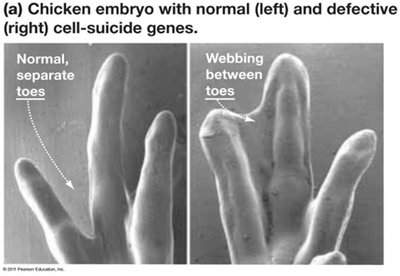
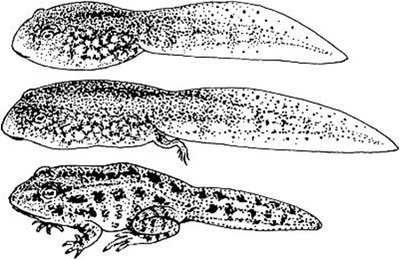
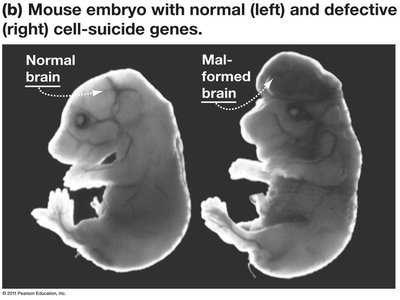
Apoptosis is a genetically regulated process of cell death that shapes tissues and organs by removing unnecessary or damaged cells.
Genetic Control: Controlled by cell death genes (e.g., ced genes).
Developmental Role: Essential for sculpting structures (e.g., separation of digits in vertebrates).
Malfunction: Defects in apoptosis can lead to developmental abnormalities or cancer.

Cell Movement and Tissue Folding
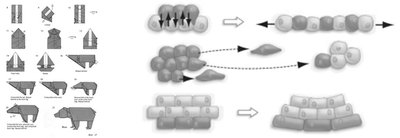
During development, cells move, change shape, and reorganize to form complex tissues and organs. Examples include gastrulation and neural crest cell migration.
Gastrulation: Tissue layers roll and fold to establish the body plan.
Cell Migration: Cells move to new locations, contributing to organ formation.
Cell Differentiation and Determination
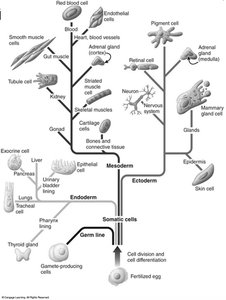
Cell differentiation is the process by which cells become specialized, while determination is the progressive restriction of cell fate.
Potency:
Totipotent: Can become any cell type (e.g., zygote).
Pluripotent: Can become most cell types.
Multipotent: Can become a limited range of cells.
Determined: Fate is fixed; differentiation is irreversible in animals.
Stepwise Process: Differentiation occurs through a series of intermediate stages.

Theories of Cell Differentiation
Two main theories explain how cells differentiate:
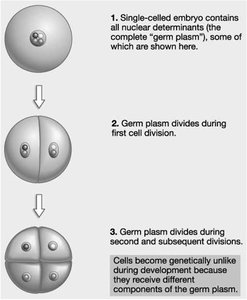
Germ Plasm Theory: Cells lose genes as they develop; differentiated cells are not genetically equivalent.
Differential Expression Theory: All cells retain the full genome but express different genes.
Totipotency and Dedifferentiation in Plants
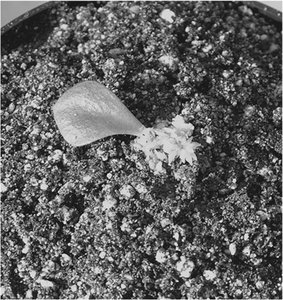
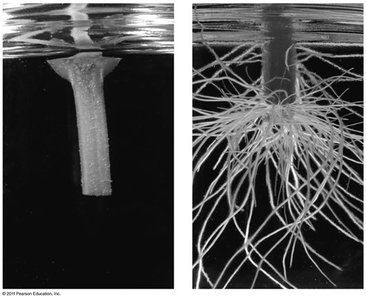
Unlike animal cells, many plant cells retain totipotency and can dedifferentiate and regenerate entire plants from single cells or tissues.
Dedifferentiation: Mature plant cells can revert to a less specialized state.
Applications: Basis for plant cloning and tissue culture.
Animal Cloning and Nuclear Equivalence
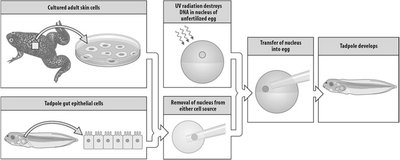
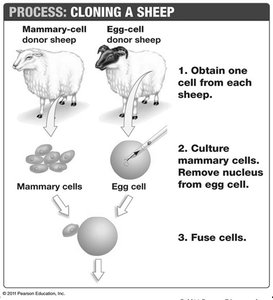
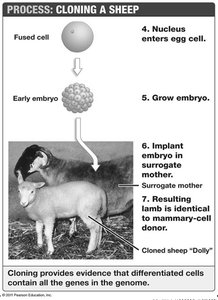
Somatic cell nuclear transfer experiments demonstrated that differentiated animal cells retain the full genetic complement, supporting the differential gene expression theory.
Key Experiments: John Gurdon's frog cloning and the cloning of Dolly the sheep.
Conclusion: Differentiated cells are genetically equivalent; differences arise from gene expression.
Molecular Control of Gene Expression
Transcriptional Regulation
Gene expression is controlled by regulatory DNA sequences called enhancers and by tissue-specific transcription factors. These elements ensure that genes are expressed in the right cells at the right time.
Enhancer Elements: DNA sequences that bind transcription factors and regulate gene transcription.
Tissue-Specific Transcription Factors: Proteins that activate or repress gene expression in specific cell types.
Paracrine Signals: Local signaling molecules that influence gene expression in neighboring cells.
Pattern Formation and Positional Information
Organizers and Morphogens
Pattern formation requires the organization of differentiated cells into tissues and organs. Special groups of cells called organizers secrete morphogens—diffusible molecules that form concentration gradients and provide positional information to surrounding cells.
Organizer Cells: Establish reference points and secrete morphogens.
Morphogen Gradients: Cells interpret morphogen concentration to determine their fate.
Positional Values: Cells adopt specific fates based on their position within the gradient.
Spatial and Temporal Control of Gene Expression
The fate of a cell depends on its spatial location (relative to body axes) and the timing of gene expression. Major body axes include anterior-posterior, dorsal-ventral, and left-right.
Spatial Control: Position within the embryo determines which genes are activated.
Temporal Control: Developmental stage influences gene expression patterns.
Polarity and Pattern Formation
Biological patterns often exhibit polarity, meaning an asymmetric arrangement of elements along an axis. Polarity is typically established by gradients of morphogens from fixed reference points.
Examples: Limb development (upper arm to fingers), body segmentation.
Genetic Control of Animal Development
Genetic Hierarchies in Pattern Formation
Genetic studies in Drosophila melanogaster revealed a hierarchical cascade of gene activity that establishes the body plan:
Maternal Genes: Establish large-scale axes (e.g., anterior-posterior).
Segmentation Genes: Partition the embryo into segments.
Gap Genes: Define broad regions.
Pair-Rule Genes: Define segment boundaries.
Segment Polarity Genes: Define anterior-posterior orientation within segments.
Homeotic (Hox) Genes: Assign unique identities to each segment.
Bicoid and Morphogen Gradients
The bicoid gene is a master regulator in flies, forming a protein gradient that specifies the anterior-posterior axis. Cells interpret the concentration of Bicoid protein to determine their fate.
Mutations: Loss of bicoid leads to mirror-image patterning defects.
Homeotic Genes and Evolution
Hox genes are highly conserved across animals and specify segment identities. Changes in Hox gene expression patterns underlie evolutionary changes in body plans, such as the loss of limbs in snakes.
Orthology: Mammalian and fly Hox genes are orthologous and arranged in the same order on chromosomes.
Evolutionary Developmental Biology (Evo-Devo): Studies how changes in developmental genes drive evolutionary diversity.
Key Concepts and Summary Table
Process | Definition | Key Genes/Mechanisms |
|---|---|---|
Cell Proliferation | Increase in cell number by division | Stem cells, cell cycle genes |
Apoptosis | Programmed cell death | ced genes, caspases |
Differentiation | Specialization of cells | Transcription factors, enhancers |
Pattern Formation | Organization of cells into tissues/organs | Morphogens, organizers, Hox genes |
Cloning | Generation of organism from differentiated cell | Somatic cell nuclear transfer |
Conclusion
Developmental genetics reveals how genetic and molecular mechanisms orchestrate the transformation of a single cell into a complex organism. The interplay of gene regulation, cell signaling, and positional information ensures precise spatial and temporal control of development, with evolutionary implications for the diversity of life forms.
