 Back
BackDiversification of Eukaryotes: Protists and the Eukaryotic Tree of Life
Study Guide - Smart Notes
 Tailored notes based on your materials, expanded with key definitions, examples, and context.
Diversification of Eukaryotes
Tree of Life: Domains and Evolutionary Relationships
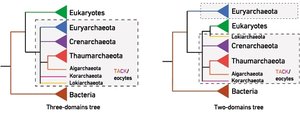
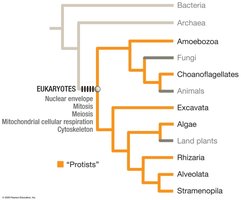
The Tree of Life is a model that illustrates the evolutionary relationships among all living organisms. Traditionally, life is divided into three domains: Bacteria, Archaea, and Eukaryotes. However, recent research suggests a two-domain model, where Eukaryotes are more closely related to Archaea than to Bacteria.
Bacteria: Prokaryotic organisms lacking a nucleus.
Archaea: Prokaryotic, but genetically distinct from Bacteria.
Eukaryotes: Organisms with a membrane-bound nucleus and complex organelles.
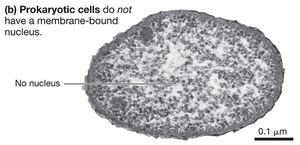
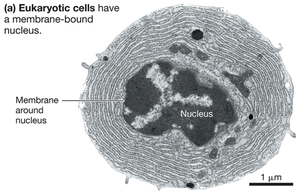
Cellular Differences: Prokaryotes vs. Eukaryotes
Eukaryotic cells are generally larger and more complex than prokaryotic cells. The presence of a nuclear envelope is a defining feature of eukaryotes, separating the genetic material from the cytoplasm. Prokaryotes, including Bacteria and Archaea, lack this membrane-bound nucleus.
Prokaryotic cells: No membrane-bound nucleus, smaller size, simple structure.
Eukaryotic cells: Membrane-bound nucleus, larger size, extensive organelles and cytoskeleton.
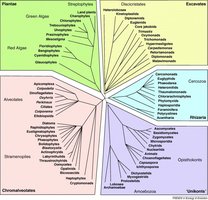
The Eukaryotic Tree of Life
Eukaryotes are a diverse group, including animals, plants, fungi, and protists. The evolutionary relationships among these groups are depicted in phylogenetic trees, which show the divergence and common ancestry of major lineages.
Multicellularity: Evolved multiple times independently in eukaryotes.
Reproduction: Eukaryotes reproduce asexually via mitosis or sexually via meiosis, unlike prokaryotes which use binary fission.
Protists: Diversity and Classification
What Are Protists?
Protists are a paraphyletic group of eukaryotes, meaning they include a common ancestor and some, but not all, of its descendants. They are defined by exclusion: all eukaryotes except land plants, fungi, and animals are considered protists. Protists are highly diverse and do not share unique synapomorphies (shared derived traits).
Paraphyletic group: Contains some, but not all, descendants of a common ancestor.
Abundance: Protists represent about 10% of named eukaryotic species but are extremely abundant in aquatic environments.
Protists and Human Health
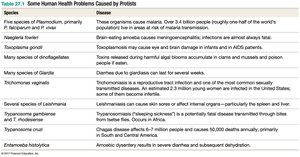
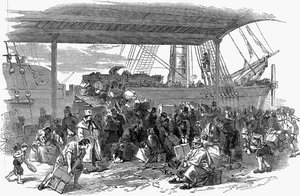
Many protists are important pathogens, causing diseases in humans and crops. For example, Plasmodium species cause malaria, and Phytophthora infestans was responsible for the Irish Potato Famine.
Human diseases: Malaria, sleeping sickness, amoebic dysentery, and more.
Crop diseases: Water molds and other protists can devastate agricultural production.
Species | Health Problem |
|---|---|
Plasmodium spp. | Malaria |
Trypanosoma spp. | Sleeping sickness, Chagas disease |
Phytophthora infestans | Potato blight (Irish Potato Famine) |
Giardia spp. | Giardiasis (intestinal infection) |
Entamoeba histolytica | Amoebic dysentery |
Leishmania spp. | Leishmaniasis |
Toxoplasma gondii | Toxoplasmosis |
Dinoflagellates | Neurotoxic shellfish poisoning |
Protists in Aquatic Ecosystems
Plankton and Primary Producers
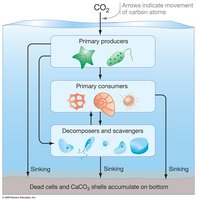
Protists such as diatoms and other planktonic organisms form the base of aquatic food chains. As primary producers, they convert sunlight into chemical energy through photosynthesis, supporting higher trophic levels.
Plankton: Small organisms that drift in water, including diatoms and algae.
Primary producers: Organisms that produce organic compounds from inorganic sources via photosynthesis.
Photosynthesis in Protists
Photosynthesis is the process by which light energy is converted into chemical energy, producing carbohydrates and oxygen. This process is fundamental to life on Earth, as it provides the energy and oxygen required by most organisms.
General equation:
Energy storage: Carbohydrates produced are stored as starch, sugars, or cellulose.
Oxygen source: Photosynthesis is the main source of atmospheric oxygen.
Role in the Global Carbon Cycle
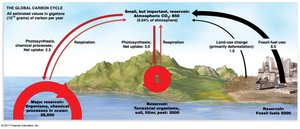
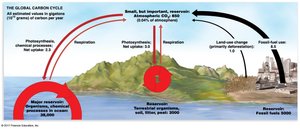
Protists play a crucial role in the global carbon cycle by fixing carbon dioxide during photosynthesis and acting as carbon sinks. Marine protists contribute significantly to the total carbon dioxide fixed on Earth, and their remains form sedimentary rocks and petroleum deposits.
Carbon fixation: Conversion of atmospheric CO2 into organic molecules.
Carbon sinks: Long-term storage of carbon in sedimentary rocks and fossil fuels.
Origin and Evolution of Eukaryotic Organelles
Mitochondria and Endosymbiosis
All eukaryotes possess mitochondria or mitochondrial genes, which are essential for ATP production. The endosymbiosis theory proposes that mitochondria originated from a symbiotic relationship between a host cell and an engulfed bacterium (specifically an alpha-proteobacterium).
Evidence: Mitochondria have their own circular DNA, double membranes, and replicate independently of the cell.
Endosymbiosis: The engulfed bacterium provided the host cell with ATP, while receiving protection and nutrients.

Plastids and Secondary Endosymbiosis
Plastids, such as chloroplasts, are also believed to have originated via endosymbiosis, where a eukaryotic cell engulfed a photosynthetic bacterium. This event enabled the evolution of photosynthetic eukaryotes, including algae and plants.
Multicellularity and Structural Diversity in Protists
Evolution of Multicellularity
Multicellularity evolved independently in several eukaryotic lineages, allowing for cellular specialization and the development of complex body structures. Not all cells in a multicellular organism express the same genes, enabling division of labor.
Support and Protection Structures
Protists exhibit a variety of structures for support and protection, such as shells, cell walls, and internal skeletons. These adaptations contribute to their ecological success and diversity.
Nutrition and Feeding Strategies in Protists
Autotrophy and Heterotrophy
Protists can be autotrophic (producing their own food via photosynthesis) or heterotrophic (obtaining nutrients by consuming other organisms or organic matter).
Ingestive feeding: Engulfing food particles or other organisms (e.g., phagocytosis in amoebas).
Absorptive feeding: Absorbing nutrients directly from the environment, often as decomposers or parasites.
Motility in Protists
Movement Mechanisms
Protists move using various structures, including flagella, cilia, and pseudopodia. These adaptations allow them to find food, escape predators, and disperse in their environments.
Flagella: Long, whip-like structures that propel the cell.
Cilia: Short, hair-like projections that move the cell or circulate fluids.
Pseudopodia: Temporary extensions of the cell used for movement and feeding.
Reproduction and Life Cycles in Protists
Asexual and Sexual Reproduction
Protists exhibit a wide variety of life cycles, including both asexual and sexual reproduction. Asexual reproduction typically involves mitosis, producing genetically identical offspring. Sexual reproduction involves meiosis and the fusion of gametes, increasing genetic diversity.
Mitosis: Cell division resulting in two identical daughter cells.
Meiosis: Cell division that reduces chromosome number by half, producing gametes.
Syngamy: Fusion of gametes to form a new organism.
Example: The relative timing of mitosis and meiosis affects the overall life cycle of protists, with some species spending most of their life in the haploid or diploid state.
