 Back
DNA Fingerprinting and the Molecular Basis of Inheritance
Study Guide - Smart Notes
 Tailored notes based on your materials, expanded with key definitions, examples, and context.
DNA Structure and Function
Overview of DNA
Deoxyribonucleic acid (DNA) is the hereditary material in almost all living organisms. Its structure and properties are fundamental to understanding genetics, inheritance, and molecular biology.
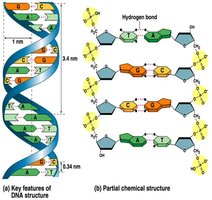
Double Helix: DNA consists of two antiparallel strands forming a right-handed double helix, stabilized by hydrogen bonds between complementary bases.
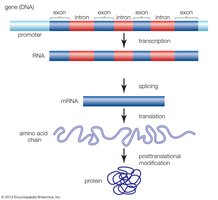
Information Storage: Genes, which are specific sequences of DNA, are transcribed into RNA and then translated into proteins.
Heritability: DNA is passed from parents to offspring and is more chemically stable than RNA.
::
Nitrogenous Bases
DNA is composed of four types of nitrogenous bases, which pair specifically to maintain the structure and function of the molecule.
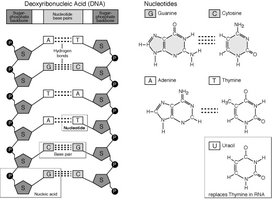
Purines: Adenine (A) and Guanine (G) – each has two fused rings.
Pyrimidines: Cytosine (C) and Thymine (T) – each has a single ring. In RNA, Uracil (U) replaces Thymine.
Base Pairing: A pairs with T via two hydrogen bonds; G pairs with C via three hydrogen bonds. This pairing keeps the DNA width constant.
Phosphate-Sugar Backbone
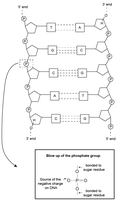
The backbone of DNA is formed by alternating phosphate and deoxyribose sugar units. This structure gives DNA its acidic and hydrophilic properties.
5’ and 3’ Ends: The 5’ phosphate marks the beginning of a strand, while the 3’ hydroxyl marks the end. New nucleotides are added to the 3’ end during synthesis.
Charge: Each phosphate group carries a negative charge, making DNA an acid and allowing it to interact with water.
Mass/Charge Ratio: This constant ratio is exploited in laboratory techniques such as gel electrophoresis.
DNA Organization and Genes
DNA Packing in Eukaryotes
To fit within the nucleus, eukaryotic DNA is highly condensed. The degree of packing affects gene expression and accessibility for transcription.
Chromosomes: Humans have 46 chromosomes (23 pairs). Each chromosome is a single, unique DNA molecule.
Bacterial DNA: Bacteria typically have a single, circular chromosome.
Transcriptional Regulation: Tightly packed DNA is generally inaccessible for transcription, preventing gene expression.
Genes and Alleles
A gene is a segment of DNA that encodes instructions for making a protein. Variations in genes, called alleles, arise from mutations and contribute to genetic diversity.
Traits: Many genes are associated with observable traits (phenotypes).
Protein-Coding DNA: Only about 1% of the human genome codes for proteins.
Alleles: Different versions of a gene, often resulting from mutations. Most mutations do not affect gene function.
Inheritance: Humans inherit 23 chromosomes from each parent, for a total of 46.
DNA Fingerprinting and Restriction Enzymes
Principles of DNA Fingerprinting
DNA fingerprinting is a technique used to distinguish individuals based on variations in their DNA sequences. It relies on the use of restriction enzymes and gel electrophoresis.
Mutations and Alleles: Sequence changes can create or eliminate restriction enzyme recognition sites, resulting in unique DNA fragment patterns for each individual.
Applications: Used in forensic science, paternity testing, and genetic research.
Restriction Enzymes
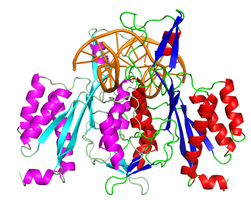
Restriction enzymes are proteins that cut DNA at specific sequences, known as recognition sites. They are essential tools in molecular biology.
Origin: Produced by bacteria as a defense against viruses; bacteria protect their own DNA via methylation.
Recognition Sites: Typically palindromic sequences (read the same 5’ to 3’ on both strands).
Sticky Ends: Some enzymes, like EcoRI, cut DNA to leave overhanging single-stranded ends, which are useful for cloning and recombination.
Experimental Design: Using Multiple Enzymes
Using two different restriction enzymes increases the specificity of DNA fingerprinting, reducing the likelihood of false positives.
Pattern Diversity: Each enzyme cuts at different sites, producing distinct fragment patterns for the same DNA sample.
Interpretation: Comparing patterns from multiple enzymes provides a more reliable identification of individuals.
Gel Electrophoresis
Principle and Application
Gel electrophoresis is a laboratory technique used to separate DNA, RNA, or proteins based on size and charge. It is a key method in DNA fingerprinting.
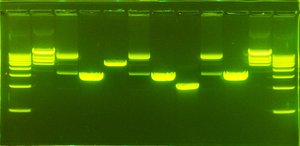
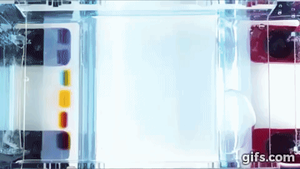
Mechanism: DNA samples are loaded into a gel matrix and subjected to an electric field. Negatively charged DNA moves toward the positive electrode, with smaller fragments migrating faster.
Visualization: DNA fragments are visualized under UV light after staining, revealing distinct banding patterns.
Calculating % Weight/Volume Solutions
Preparing agarose gels for electrophoresis requires accurate calculation of solution concentrations.
Formula: % (w/v) = grams of solute / 100 mL of solution
Examples:
To make 100 mL of a 0.5% solution:
To make 50 mL of a 0.8% solution:
Proper Micropipette Technique
Accurate measurement and transfer of small liquid volumes are essential for molecular biology experiments. Micropipettes are precision instruments used for this purpose.
Handling: Use gentle pressure and proper tips; avoid exceeding the pipette's volume range.
Care: Micropipettes are expensive and should be handled with care to avoid damage.

Safety and Disposal
Laboratory safety is critical when working with chemicals and equipment.
Agarose Gel: Hot agarose can cause burns; allow it to cool before pouring.
Disposal: Used gels should be discarded in designated hazardous waste containers.
Additional Academic Context
Epigenetics: Identical twins may develop differences over time due to epigenetic changes, which alter gene expression without changing the DNA sequence. Environmental factors can influence these changes, sometimes affecting disease risk.
Restriction Fragment Length Polymorphism (RFLP): The basis of DNA fingerprinting is the variation in fragment lengths produced by restriction enzyme digestion, which can be analyzed by gel electrophoresis.
