 Back
DNA, Gene Expression, and Genetic Variation: Study Notes for General Biology
Study Guide - Smart Notes
 Tailored notes based on your materials, expanded with key definitions, examples, and context.
DNA: Life’s Blueprint
Introduction to DNA and Genes
DNA is the genetic material that serves as the blueprint for life, encoding the instructions for building and maintaining organisms. Genes are segments of DNA that determine phenotypes and contribute to heritable variation, which is essential for evolution. - DNA: Deoxyribonucleic acid, the molecule carrying genetic information in all living organisms. - Gene: A sequence of DNA that codes for a specific protein or functional RNA. - Phenotype: Observable traits resulting from gene expression. - Heritable Variation: Differences in genetic material passed from parents to offspring, driving evolution. 
Structure of DNA and Nucleic Acids
Historical Discovery and Evidence
The structure of DNA was elucidated through the work of scientists and X-ray diffraction studies. - Watson and Crick built the first model of DNA’s double helix. - Rosalind Franklin provided critical X-ray diffraction images that revealed DNA’s helical structure. 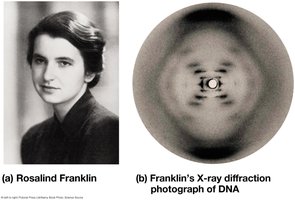
Components of Nucleic Acids
Nucleic acids are polymers called polynucleotides, made up of nucleotide monomers. Each nucleotide consists of: - Nitrogenous base: Cytosine (C), Thymine (T), Uracil (U), Adenine (A), Guanine (G) - Pentose sugar: Deoxyribose in DNA, ribose in RNA - Phosphate group: Links nucleotides together 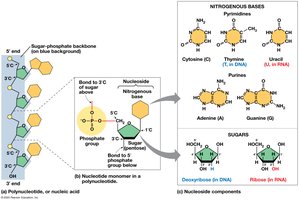
Nucleotide Polymers and Base Pairing
Nucleotides are joined by covalent bonds forming a sugar-phosphate backbone, with nitrogenous bases as appendages. Hydrogen bonds between bases hold the two DNA strands together, enabling complementary base pairing: - Adenine (A) pairs with Thymine (T) - Guanine (G) pairs with Cytosine (C) 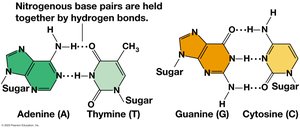
DNA and RNA Structure
- DNA is typically double-stranded, forming a double helix. - RNA is usually single-stranded and contains uracil instead of thymine. 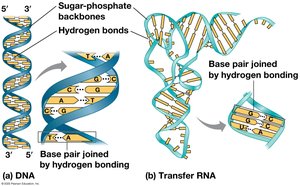
Gene Expression: From Gene to Protein
Overview of Gene Expression
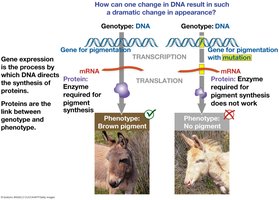
Gene expression is the process by which information from a gene is used to synthesize a functional product, usually a protein. This involves two main stages: transcription and translation. - Transcription: Synthesis of RNA from DNA. - Translation: Synthesis of a polypeptide from mRNA. - Ribosomes: Sites of translation. 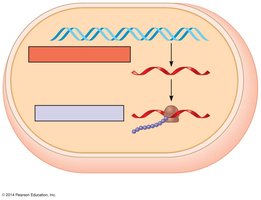
Gene Expression in Prokaryotes and Eukaryotes
- In prokaryotes, transcription and translation occur in the cytoplasm. - In eukaryotes, transcription occurs in the nucleus, and translation occurs in the cytoplasm. RNA processing modifies pre-mRNA before translation. 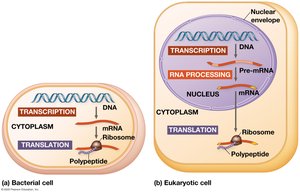
The Central Dogma of Biology
The central dogma describes the flow of genetic information: DNA → RNA → Protein. 
The Genetic Code
Triplet Code and Codons
The genetic code is based on a triplet code, where three nucleotides (codon) correspond to one amino acid. - There are 64 codons: 61 code for amino acids, 3 are stop signals. - The code is redundant but not ambiguous. 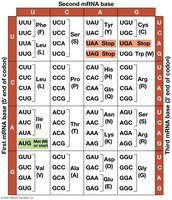
Transcription and Translation Process
- Transcription: DNA template strand is used to synthesize mRNA. - Translation: mRNA codons are read by ribosomes to assemble amino acids into a polypeptide. 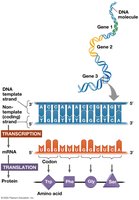
Genetic Variation and Mutation
Genetic Variation and Phenotype
Genetic variation leads to differences in phenotype, providing the basis for evolution. Mutations are changes in the genetic material that can affect gene function. - Point mutations: Change in a single nucleotide pair (silent, missense, nonsense). - Frameshift mutations: Insertion or deletion of nucleotides not in multiples of three. 
Molecular Basis of Sickle-Cell Disease
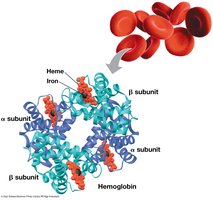
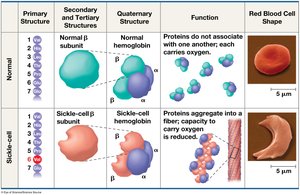
Sickle-cell disease is caused by a point mutation in the gene encoding hemoglobin, resulting in a single amino acid substitution. This change alters the protein’s structure and function, leading to abnormal red blood cell shape. 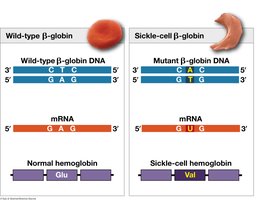
Summary Table: DNA vs. RNA
Feature | DNA | RNA |
|---|---|---|
Sugar | Deoxyribose | Ribose |
Strands | Double-stranded | Single-stranded |
Nitrogenous Bases | A, T, C, G | A, U, C, G |
Recap: Key Concepts
DNA is the genetic material; genes specify proteins.
Gene expression involves transcription and translation.
Genetic variation leads to phenotype variation and drives evolution.
Mutations can alter protein structure and function, sometimes causing disease.
Additional info: Expanded explanations and context were added to clarify concepts and ensure completeness for exam preparation.
