 Back
DNA Replication and Gene Expression: Key Concepts and Enzymes
Study Guide - Smart Notes
 Tailored notes based on your materials, expanded with key definitions, examples, and context.
DNA Replication
Overview of DNA Replication
DNA replication is the process by which a cell copies its DNA before cell division, ensuring that each daughter cell receives a complete genome. This process is highly regulated and involves several specialized enzymes.
Accuracy: DNA polymerases are highly accurate, with only one error per 10 billion nucleotides.
Directionality: DNA polymerases synthesize new DNA only in the 5’ to 3’ direction.
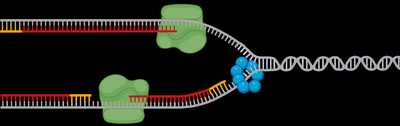
Antiparallel Structure: DNA strands run in opposite directions, requiring two polymerases to work in opposite directions at the replication fork.
Major Enzymes Involved in DNA Replication
The replication process requires a coordinated set of enzymes, each with a specific function.
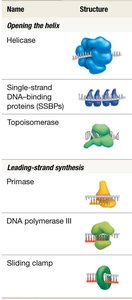
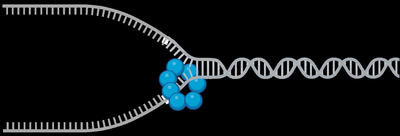
Helicase: Unwinds the DNA double helix.
Single-strand DNA-binding proteins (SSBPs): Stabilize unwound DNA strands.
Topoisomerase: Relieves tension ahead of the replication fork.
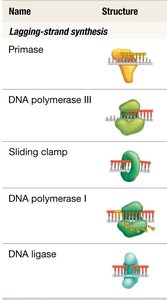
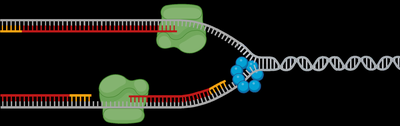
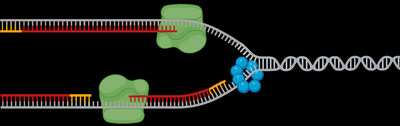
Primase: Synthesizes short RNA primers needed to start DNA synthesis.
DNA Polymerase III: Main enzyme for synthesizing new DNA strands.
Sliding Clamp: Holds DNA polymerase in place during strand extension.
DNA Polymerase I: Removes RNA primers and replaces them with DNA.
DNA Ligase: Joins DNA fragments by forming phosphodiester bonds.
Prokaryotic vs. Eukaryotic Chromosomes
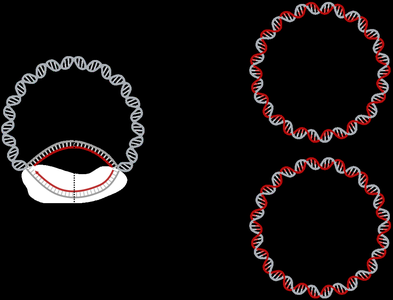
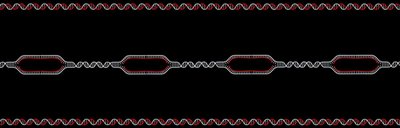
Prokaryotic chromosomes are typically circular, while eukaryotic chromosomes are linear and more complex.
Prokaryotic DNA: Replication starts at a single origin and proceeds bidirectionally.
Eukaryotic DNA: Multiple origins of replication allow for faster copying of large genomes.
Replication Fork and Strand Synthesis
At the replication fork, two template strands are copied:
Leading Strand: Synthesized continuously in the direction of the replication fork.
Lagging Strand: Synthesized discontinuously in short fragments (Okazaki fragments) away from the fork.
RNA Primers and DNA Polymerase
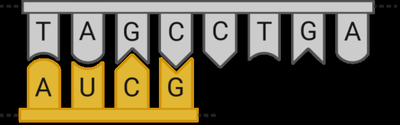
DNA polymerases require an RNA primer to begin synthesis.
RNA Primer: Short RNA sequence (~10 nucleotides) synthesized by primase.
Removal: RNA primers are removed and replaced with DNA by DNA polymerase I.
Directionality and Proofreading
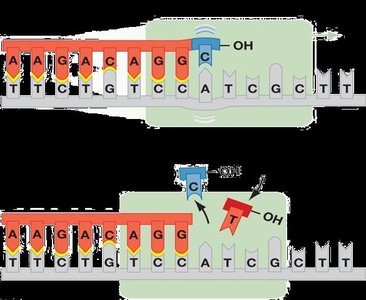
DNA polymerases can only add nucleotides to the 3’ hydroxyl end of a growing strand. They also possess proofreading activity to correct errors.
Directionality: Synthesis occurs from 5’ to 3’.
Proofreading: Incorrect nucleotides are removed and replaced during replication.
DNA Ligase
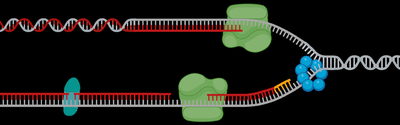
DNA ligase is essential for joining Okazaki fragments on the lagging strand, forming a continuous DNA molecule.
Function: Forms phosphodiester bonds between DNA fragments.
Gene Expression
Overview of Gene Expression
Gene expression is the process by which information from a gene is used to synthesize a functional product, such as a protein or functional RNA. This process links genotype to phenotype.
Transcription: DNA is copied into RNA (mRNA).
Translation: mRNA is used to direct the synthesis of a polypeptide (protein).
Key Terms in Gene Expression
Genome: All genetic information in a cell.
Chromosome: DNA molecule containing many genes.
Gene: Sequence of DNA encoding a functional product (protein or RNA).
Polypeptide: Chain of amino acids; the product of translation.
Transcription
Transcription is the process by which the DNA sequence of a gene is copied into RNA.
Enzyme: RNA polymerase synthesizes RNA from the DNA template.
Product: mRNA, tRNA, or rRNA, depending on the gene.
Translation
Translation is the process that uses the sequence of an mRNA to make a polypeptide (protein).
Ribosome: Site of protein synthesis.
Codons: Three-nucleotide sequences in mRNA specify amino acids.
The Central Dogma of Molecular Biology
The central dogma summarizes the flow of genetic information: DNA → RNA → Protein.
DNA: Permanent information storage.
RNA: Temporary message for gene expression.
Protein: Functional product determining phenotype.
Genetic Code
The genetic code is the set of rules by which the nucleotide sequence of mRNA is translated into the amino acid sequence of a protein.
Codon: Three nucleotides specify one amino acid.
Unambiguous: Each codon specifies only one amino acid.
Redundant: Multiple codons can specify the same amino acid.
Universal: The code is nearly universal across all organisms.
Codon | Amino Acid |
|---|---|
AUG | Met (Start) |
UUU, UUC | Phe |
UUA, UUG, CUU, CUC, CUA, CUG | Leu |
UAA, UAG, UGA | Stop |
... (see full genetic code table for all codons) | ... |
Example: Writing Amino Acid Sequence from mRNA
Given mRNA sequence: AUG UUU UUA UAA
Corresponding amino acids: Met - Phe - Leu - Stop
Modifications to the Central Dogma
Some genes code for functional RNAs that are not translated into proteins.
Reverse transcriptase (in some viruses) can synthesize DNA from an RNA template.
Additional info: The notes above include expanded explanations and context for each enzyme and process, as well as a reconstructed genetic code table for clarity.
