 Back
DNA Replication and Structure: Study Notes for General Biology
Study Guide - Smart Notes
 Tailored notes based on your materials, expanded with key definitions, examples, and context.
DNA Replication and the Central Dogma
The Central Dogma of Molecular Biology
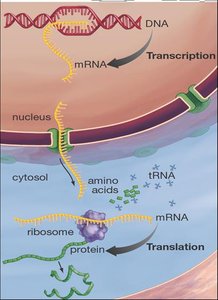
The central dogma describes the flow of genetic information within a biological system. It explains how DNA is transcribed into RNA and then translated into protein, which is essential for cellular function and inheritance.
Transcription: The process by which DNA is used as a template to synthesize messenger RNA (mRNA).
Translation: The process by which mRNA is decoded by ribosomes to produce a specific protein.
Replication: The process by which DNA makes an identical copy of itself before cell division.
Language Change: Information is rewritten from nucleic acid (DNA/RNA) to amino acids (protein).
Properties of Life Related to DNA
Self-replication: DNA can replicate itself, ensuring genetic continuity.
Instruction Storage and Execution: DNA stores genetic instructions and follows them via transcription and translation.
Evolution: DNA undergoes mutations, which are the source of genetic variation and evolution.
DNA Structure and Components
Overview of DNA Structure
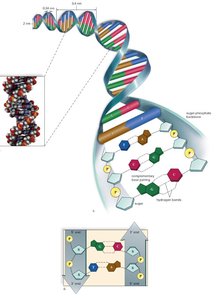
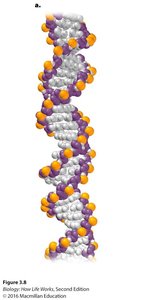
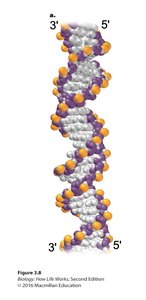
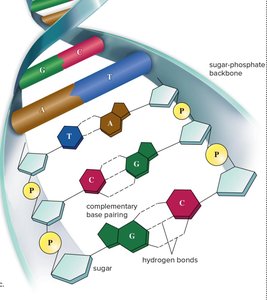
DNA is a double helix composed of two antiparallel strands of nucleotide polymers. Each strand consists of a backbone made of sugar and phosphate groups, with nitrogenous bases forming the rungs of the ladder.
Double Helix: Two twisted strands held together by hydrogen bonds between complementary bases.
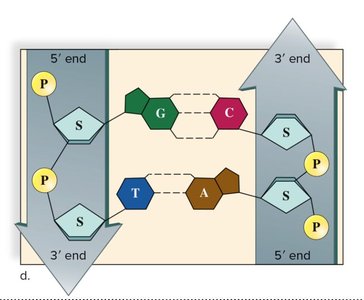
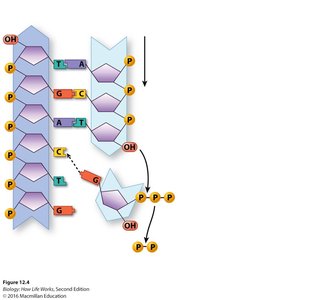
Antiparallel Strands: The two strands run in opposite directions (5' to 3' and 3' to 5').
Backbone: Formed by alternating sugar (deoxyribose) and phosphate groups.
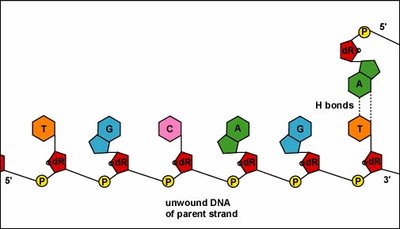
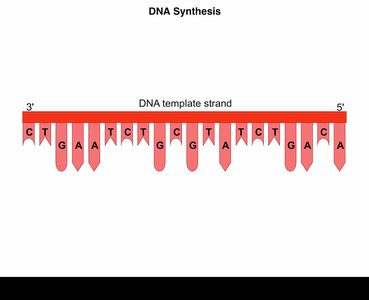
Base Pairs: Adenine (A) pairs with Thymine (T), and Guanine (G) pairs with Cytosine (C).
Nucleotide Structure
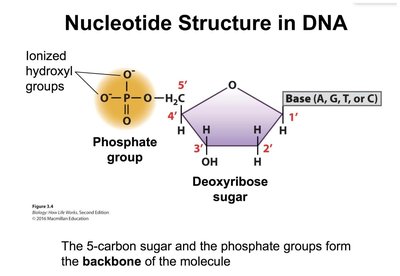
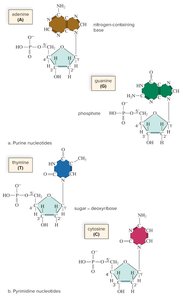
Nucleotides are the building blocks of DNA. Each nucleotide consists of a phosphate group, a deoxyribose sugar, and a nitrogenous base.
Phosphate Group: Attached to the 5' carbon of the sugar.
Deoxyribose Sugar: A five-carbon sugar with carbons labeled 1' to 5'.
Nitrogenous Base: Attached to the 1' carbon; can be A, G, T, or C.
Backbone Formation: The sugar and phosphate groups form the backbone of the molecule.
Types of Nitrogenous Bases
Nitrogenous bases are classified as purines or pyrimidines. Purines include adenine and guanine, while pyrimidines include thymine and cytosine.
Purines: Adenine (A) and Guanine (G)
Pyrimidines: Thymine (T) and Cytosine (C)
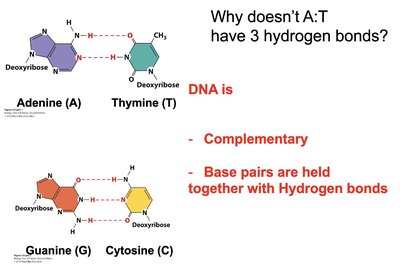
Base Pairing: A pairs with T (2 hydrogen bonds), G pairs with C (3 hydrogen bonds)
Antiparallel and Complementary Strands
DNA strands are antiparallel and complementary, meaning each base on one strand pairs with its specific partner on the opposite strand.
Directionality: One strand runs 5' to 3', the other 3' to 5'.
Complementarity: Ensures accurate replication and transcription.
Hydrogen Bonding in Base Pairs
Hydrogen bonds between base pairs stabilize the DNA double helix. A-T pairs have two hydrogen bonds, while G-C pairs have three.
Complementary Base Pairing: Maintains the integrity of genetic information.
Hydrogen Bonds: Provide stability but allow strand separation during replication.
DNA Replication Process
Overview of DNA Replication
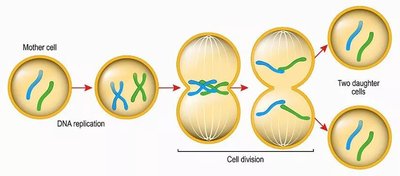
DNA replication is the process by which a cell copies its DNA before cell division. Each chromosome is duplicated, resulting in two identical cells.
Replication Before Cell Division: Ensures genetic continuity.
Identical Copies: Held together and separated during cell division.
Result: Two identical daughter cells.
Mechanism of DNA Replication
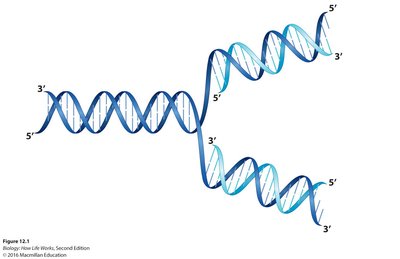
DNA replication is semi-conservative, meaning each new DNA molecule contains one parental strand and one newly synthesized strand.
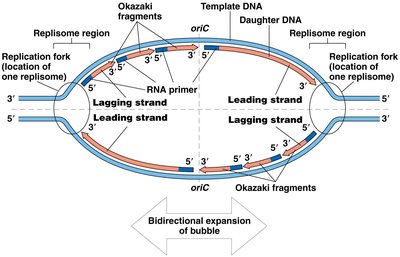
Initiation: Initiator proteins bind to the origin of replication and recruit DNA helicase.
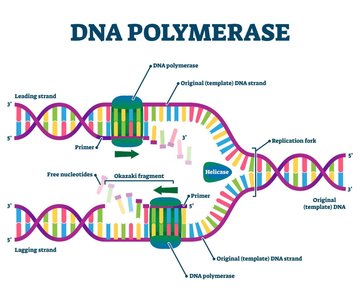
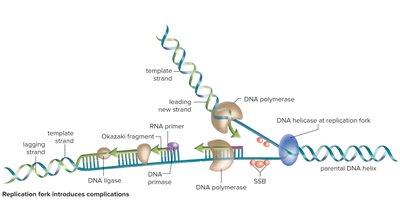
Unwinding: Helicase unwinds the DNA, creating a replication fork.
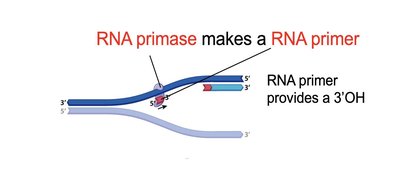
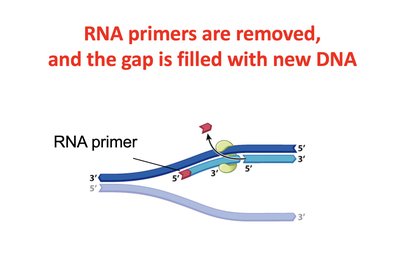
Primer Synthesis: RNA primase synthesizes short RNA primers to provide a 3' OH group for DNA polymerase.
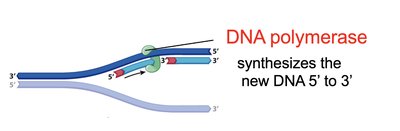
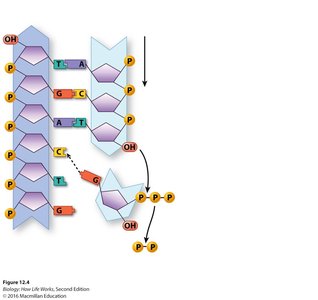
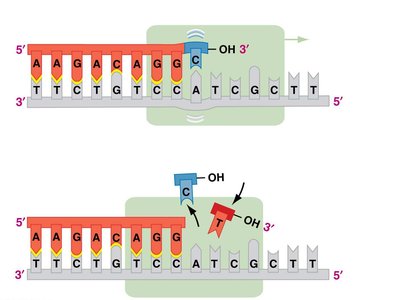
Elongation: DNA polymerase adds nucleotides to the 3' end, synthesizing new DNA in the 5' to 3' direction.
Proofreading: DNA polymerase checks for mismatches and corrects errors.
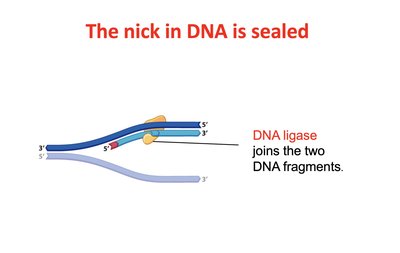
Joining Fragments: DNA ligase seals nicks between DNA fragments.
Directionality and Leading/Lagging Strands
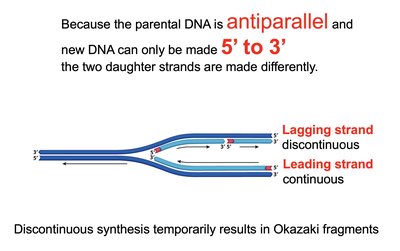
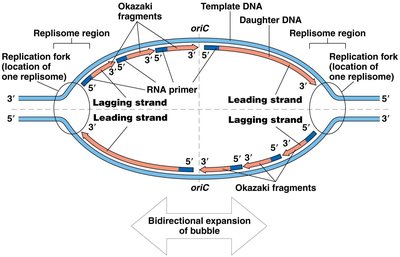
DNA polymerase can only synthesize DNA in the 5' to 3' direction. This results in continuous synthesis on the leading strand and discontinuous synthesis (Okazaki fragments) on the lagging strand.
Leading Strand: Synthesized continuously toward the replication fork.
Lagging Strand: Synthesized discontinuously away from the fork in short fragments.
Okazaki Fragments: Short DNA fragments on the lagging strand, later joined by DNA ligase.
Replication in Prokaryotes vs. Eukaryotes
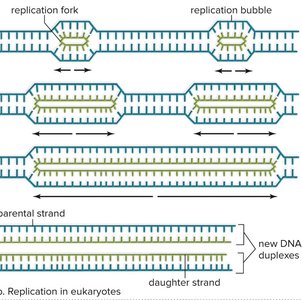
Replication mechanisms are similar in prokaryotes and eukaryotes, but eukaryotes have multiple origins of replication per chromosome, allowing rapid duplication.
Prokaryotes: Single circular chromosome, one origin of replication.
Eukaryotes: Multiple linear chromosomes, thousands of origins per chromosome.
Replication Speed: Multiple origins allow eukaryotic cells to replicate large chromosomes in a few hours.

Summary Table: Key Enzymes in DNA Replication
Enzyme | Function |
|---|---|
DNA Helicase | Unwinds DNA strands at the replication fork |
RNA Primase | Synthesizes RNA primers to provide a 3' OH group |
DNA Polymerase | Adds nucleotides to the growing DNA strand; proofreads |
DNA Ligase | Joins DNA fragments by forming phosphodiester bonds |
Key Equations and Concepts
Phosphodiester Bond Formation: DNA polymerase catalyzes the formation of phosphodiester bonds between nucleotides via dehydration synthesis.
Directionality: New DNA is always synthesized 5' to 3'.
Equation for phosphodiester bond formation:
Equation for base pairing:
Conclusion
Understanding DNA structure and replication is fundamental to biology. The accurate duplication and transmission of genetic information ensure the continuity of life and provide the basis for genetic variation and evolution.
