 Back
DNA Replication and the Molecular Basis of Inheritance
Study Guide - Smart Notes
 Tailored notes based on your materials, expanded with key definitions, examples, and context.
DNA as the Genetic Material
Discovery and Historical Experiments
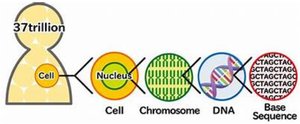
The identification of DNA as the genetic material was a pivotal moment in biology. Early 20th-century experiments established that genes are located on chromosomes, which are composed of DNA and protein. The role of DNA in heredity was elucidated through studies on bacteria and viruses.
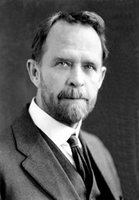
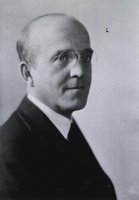
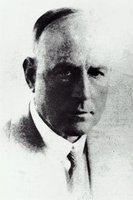
Frederick Griffith (1928): Discovered transformation, where non-pathogenic bacteria became pathogenic by assimilating foreign DNA.
Oswald Avery, Maclyn McCarty, Colin MacLeod (1944): Demonstrated that DNA is responsible for transformation in bacteria.
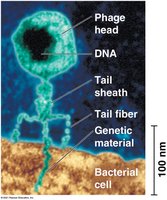
Alfred Hershey and Martha Chase (1952): Showed that DNA, not protein, is the genetic material in phages infecting E. coli.
Evidence from Viruses and Chargaff's Rules
Bacteriophages (phages) provided further evidence for DNA as the genetic material. Erwin Chargaff's studies revealed two key rules:
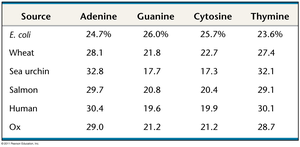
Base composition varies between species.
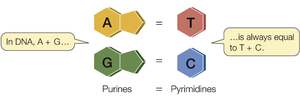
In any species, the number of adenine (A) equals thymine (T), and guanine (G) equals cytosine (C).
Structural Model of DNA
X-ray Crystallography and the Double Helix
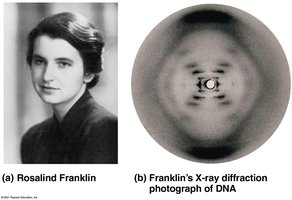
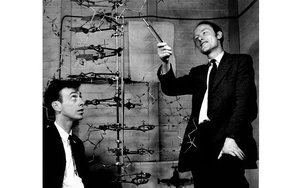
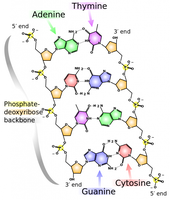
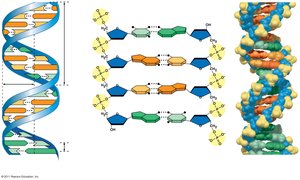
Rosalind Franklin's X-ray diffraction images enabled James Watson and Francis Crick to deduce the double-helical structure of DNA. The molecule consists of two antiparallel strands forming a double helix, with nitrogenous bases paired in the interior.
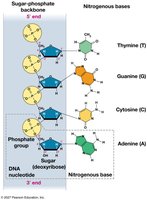
Antiparallel orientation: The two strands run in opposite directions (5' to 3' and 3' to 5').
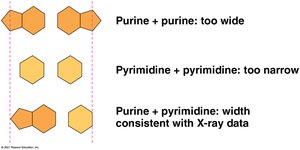
Base pairing: Purines (A, G) pair with pyrimidines (T, C) to maintain uniform width.
Complementary Base Pairing
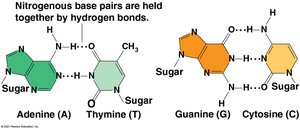
Watson and Crick's model explained Chargaff's rules through specific base pairing:
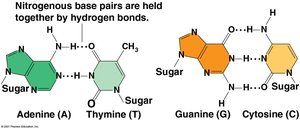
Adenine (A) pairs with Thymine (T) via 2 hydrogen bonds.
Guanine (G) pairs with Cytosine (C) via 3 hydrogen bonds.
Chromosome Structure and DNA Packing
Bacterial vs. Eukaryotic Chromosomes
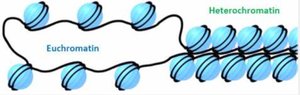
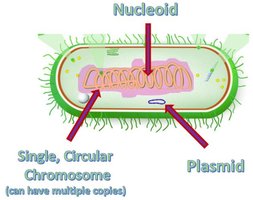
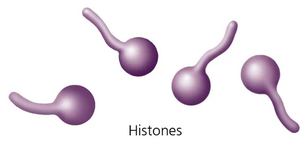
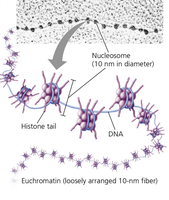
Bacterial chromosomes are circular and found in the nucleoid, while eukaryotic chromosomes are linear and associated with histone proteins, forming chromatin.
Chromatin: Complex of DNA and protein in eukaryotic cells.
Euchromatin: Loosely packed, accessible for transcription.
Heterochromatin: Densely packed, less accessible.
DNA Replication: Mechanism and Enzymes
Semiconservative Model of Replication
Each DNA strand serves as a template for a new strand. The semiconservative model states that each daughter DNA molecule consists of one old strand and one newly synthesized strand.
Replication origin: Specific sites where DNA replication begins.
Replication fork: Y-shaped region where DNA is unwound.
Key Enzymes and Proteins
Topoisomerase: Relieves strain ahead of replication fork.
Helicase: Unwinds the DNA helix.
Single-strand binding proteins: Stabilize unwound DNA.
Primase: Synthesizes RNA primer.
DNA polymerase III: Extends DNA from primer.
DNA polymerase I: Replaces RNA primer with DNA.
DNA ligase: Joins Okazaki fragments on lagging strand.
Antiparallel Elongation and Okazaki Fragments
DNA polymerase can only add nucleotides to the 3' end, so replication proceeds in the 5' to 3' direction. The leading strand is synthesized continuously, while the lagging strand is synthesized in fragments (Okazaki fragments) and joined by DNA ligase.
Proofreading, Repair, and Telomeres
DNA Proofreading and Repair Mechanisms
DNA polymerases proofread newly synthesized DNA. Additional repair mechanisms include mismatch repair and nucleotide excision repair, which correct errors and damage.
Telomeres and Chromosome Ends
Telomeres are repetitive nucleotide sequences at chromosome ends that protect genes from erosion. Telomerase extends telomeres in germ cells, and telomere shortening is associated with aging and cancer.
Summary Table: DNA Base Composition in Different Species
Source | Adenine | Guanine | Cytosine | Thymine |
|---|---|---|---|---|
E. coli | 24.7% | 26.0% | 25.7% | 23.6% |
Wheat | 28.1% | 21.8% | 22.7% | 27.4% |
Sea urchin | 32.8% | 17.7% | 17.3% | 32.1% |
Salmon | 29.7% | 20.8% | 20.4% | 29.1% |
Human | 30.4% | 19.6% | 19.9% | 30.1% |
Ox | 29.0% | 21.2% | 21.2% | 28.7% |
Key Equations and Concepts
Base Pairing: ,
Semiconservative Replication: Each new DNA molecule contains one old strand and one new strand.
Direction of Synthesis: DNA is synthesized in the 5' to 3' direction.
Dehydration Reaction:
Practice Question
Explain the significance of the semiconservative model of DNA replication.
Describe the role of telomeres in chromosome stability.
List the main enzymes involved in DNA replication and their functions.
Additional info: Some historical context and molecular details were expanded for clarity and completeness.
