 Back
BackDNA Replication: Mechanisms and Enzymes
Study Guide - Smart Notes
 Tailored notes based on your materials, expanded with key definitions, examples, and context.
DNA Replication: Mechanisms and Enzymes
Overview of DNA Structure and Replication
DNA (deoxyribonucleic acid) is the hereditary material in almost all living organisms. Its accurate replication is essential for cell division and the transmission of genetic information. The process of DNA replication is highly regulated, rapid, and remarkably accurate, involving a coordinated effort of multiple enzymes and proteins.
Human cells contain approximately 6 billion nucleotide pairs, and DNA replication occurs with an error rate of about one per 10 billion nucleotides.
Replication is fast and accurate, ensuring genetic fidelity.
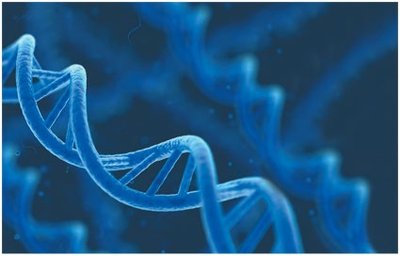
Structure of DNA
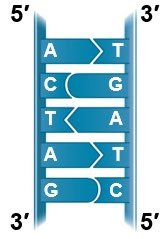
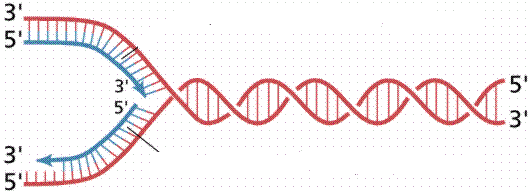
DNA is a double helix composed of two antiparallel strands held together by complementary base pairing (A-T and C-G). Each strand has a directionality, designated as 5' to 3' or 3' to 5', based on the carbon atoms in the deoxyribose sugar.
Antiparallel orientation: One strand runs 5' to 3', the other 3' to 5'.
Base pairing: Adenine (A) pairs with Thymine (T), and Cytosine (C) pairs with Guanine (G).
Evidence That DNA Is the Genetic Material
Experiments in the mid-20th century (e.g., Avery, MacLeod, and McCarty; Hershey and Chase) demonstrated that DNA, not protein, is the molecule responsible for heredity. These findings established the foundation for understanding DNA replication and gene expression.
Mechanism of DNA Replication
General Features
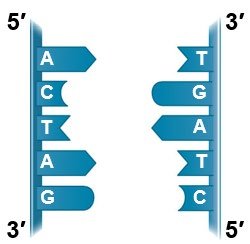
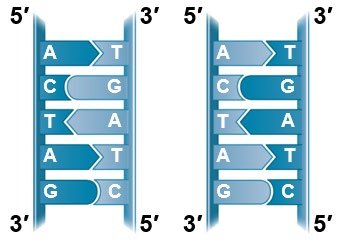
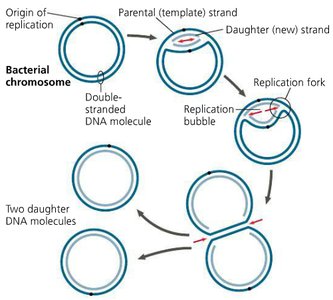
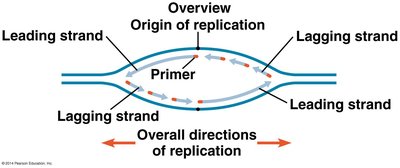
DNA replication is semiconservative: each daughter DNA molecule consists of one parental strand and one newly synthesized strand. Replication begins at specific sites called origins of replication and proceeds bidirectionally.
Semiconservative replication: Each new DNA molecule contains one old and one new strand.
Origins of replication: Specific sequences where replication initiates.
DNA Replication in Prokaryotes (E. coli)
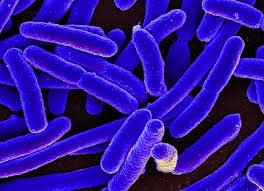
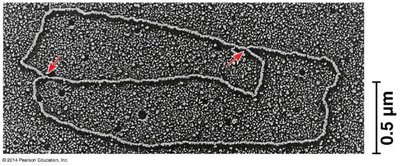
Replication in Escherichia coli (E. coli) has been extensively studied. E. coli has a single, circular chromosome with one origin of replication (oriC). Replication is bidirectional, involving about 30 different proteins.
Single origin (oriC): Replication starts at a unique site.
Bidirectional replication: Two replication forks move in opposite directions.
DNA Replication in Eukaryotes
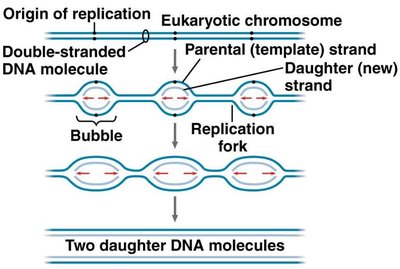
Eukaryotic chromosomes are linear and contain multiple origins of replication, allowing for rapid duplication of large genomes. Replication bubbles form at each origin, and replication forks proceed outward until they meet.
Multiple origins: Hundreds to thousands per chromosome.
Speeds up replication: Allows entire genome to be copied efficiently.
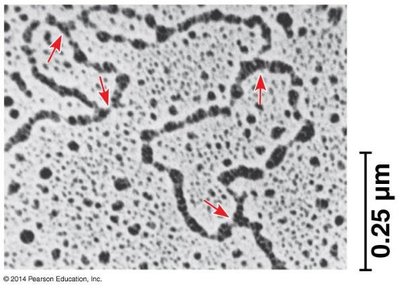
Enzymes and Proteins Involved in DNA Replication
Initiation of Replication
Replication begins with the assembly of a complex of proteins at the origin. Key enzymes and proteins include:
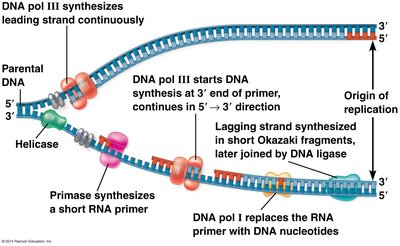
Helicase: Unwinds and separates the DNA strands at the replication fork.
Single-stranded DNA binding proteins (SSBs): Stabilize unwound DNA and prevent reannealing.
Topoisomerase: Relieves supercoiling tension ahead of the replication fork by cutting, swiveling, and rejoining DNA strands.
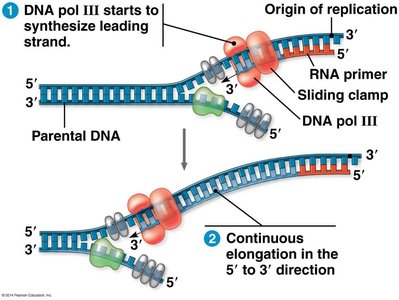
Primase: Synthesizes short RNA primers needed to start DNA synthesis.
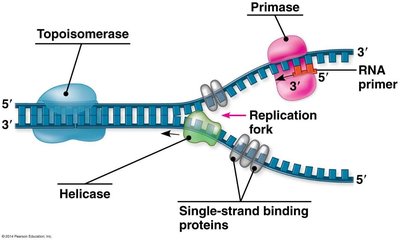
Table: Bacterial DNA Replication Proteins and Their Functions
Protein | Function |
|---|---|
Helicase | Unwinds parental double helix at replication forks |
Single-strand binding protein | Binds to and stabilizes single-stranded DNA until it is used as a template |
Topoisomerase | Relieves overwinding strain ahead of replication forks by breaking, swiveling, and rejoining DNA strands |
Primase | Synthesizes an RNA primer at 5' end of leading strand and at 5' end of each Okazaki fragment of lagging strand |
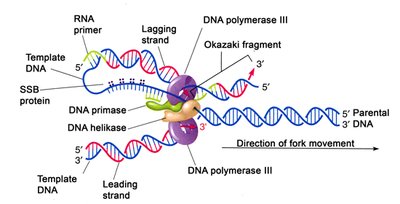
DNA Polymerases
DNA polymerases are enzymes that synthesize new DNA strands by adding nucleotides to a pre-existing chain. In E. coli, DNA polymerase III is the main enzyme for DNA synthesis, while DNA polymerase I removes RNA primers and fills in the gaps with DNA.
DNA polymerase III: Synthesizes DNA in the 5' → 3' direction; requires a template and a free 3' OH group.
DNA polymerase I: Removes RNA primers and replaces them with DNA nucleotides.
DNA ligase: Joins DNA fragments together by forming phosphodiester bonds.
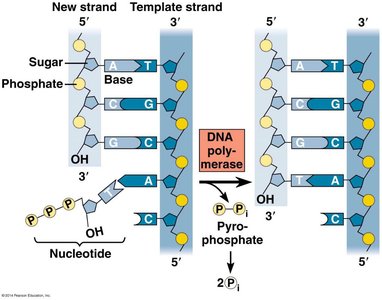
Leading and Lagging Strand Synthesis
Because DNA polymerases can only add nucleotides to the 3' end, the two new strands are synthesized differently:
Leading strand: Synthesized continuously in the direction of the replication fork; requires only one primer.
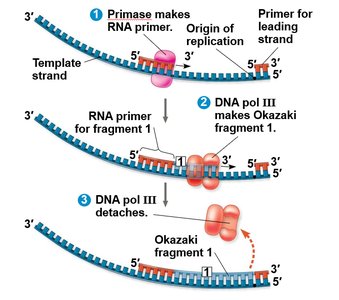
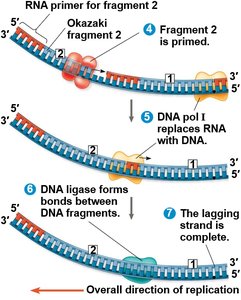
Lagging strand: Synthesized discontinuously in short segments called Okazaki fragments, each requiring a new primer.
Steps in Lagging Strand Synthesis
Primase synthesizes an RNA primer for each Okazaki fragment.
DNA polymerase III extends the fragment from the primer in the 5' → 3' direction.
DNA polymerase I replaces the RNA primer with DNA.
DNA ligase joins the fragments to form a continuous strand.
Proofreading and Error Correction
DNA polymerases possess proofreading activity, which allows them to remove incorrectly paired nucleotides immediately after they are added. This proofreading function greatly increases the fidelity of DNA replication.
3' → 5' exonuclease activity: Removes mismatched bases.
Error rate: Initial error rate is 1 in 105, but proofreading reduces it to 1 in 1010.
Replication Complex
All the proteins involved in DNA replication assemble into a large, multi-enzyme complex called the replisome. This complex coordinates the activities of all the enzymes and ensures efficient and accurate DNA synthesis.
Summary Table: Key Enzymes and Their Functions
Enzyme/Protein | Function |
|---|---|
Helicase | Unwinds DNA at the replication fork |
Single-strand binding protein | Stabilizes single-stranded DNA |
Topoisomerase | Relieves supercoiling tension |
Primase | Synthesizes RNA primers |
DNA polymerase III | Main DNA synthesizing enzyme |
DNA polymerase I | Removes RNA primers, replaces with DNA |
DNA ligase | Joins DNA fragments |
Key Concepts and Applications
DNA replication is essential for cell division and genetic inheritance.
Replication is semiconservative, bidirectional, and highly accurate.
Multiple enzymes and proteins coordinate to ensure efficient and faithful DNA synthesis.
Errors in replication are corrected by proofreading mechanisms, minimizing mutations.
