 Back
DNA Replication: Mechanisms, Enzymes, and Processes
Study Guide - Smart Notes
 Tailored notes based on your materials, expanded with key definitions, examples, and context.
DNA Replication
Overview of DNA Replication
DNA replication is the biological process by which a cell duplicates its DNA, ensuring that each daughter cell receives an identical copy of genetic material. This process is fundamental to cell division and inheritance.
Key Enzymes: DNA polymerases, helicase, primase, ligase, gyrase, and single-stranded binding proteins.
Directionality: DNA is synthesized in the 5' to 3' direction.
Semi-Conservative Replication
Definition and Significance
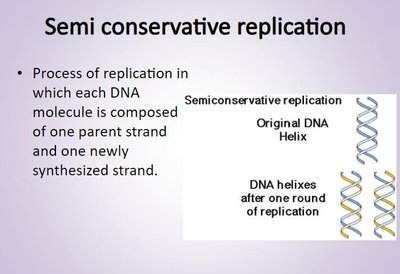
DNA replication is described as semi-conservative because each new DNA molecule consists of one original (parental) strand and one newly synthesized strand. This mechanism preserves genetic information across generations.
After one round of replication, each daughter DNA contains one parental and one new strand.
This model was confirmed by the Meselson-Stahl experiment.
Initiation of DNA Replication
Origin of Replication and Template
Replication begins at specific sequences called origins of replication. The DNA double helix unwinds, exposing single-stranded templates for new DNA synthesis.
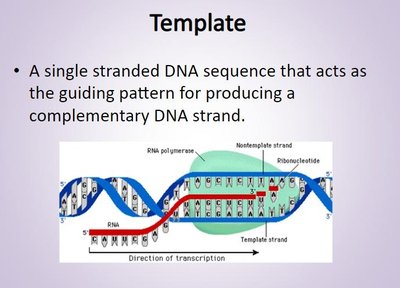
Template strand: The single-stranded DNA that guides the synthesis of a complementary strand.
Key Enzymes and Proteins in DNA Replication
DNA Helicase
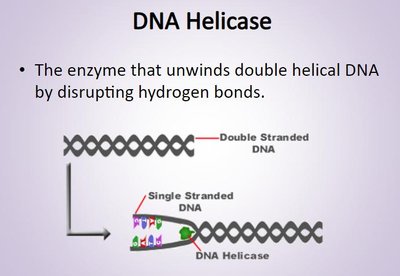
DNA helicase is the enzyme that unwinds the double helix by breaking hydrogen bonds between complementary bases, creating single-stranded DNA templates.
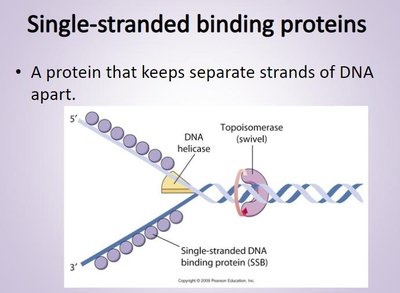
Single-Stranded Binding Proteins (SSBs)
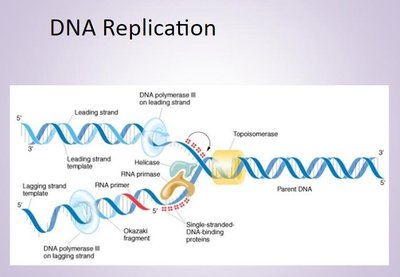
These proteins bind to separated DNA strands to prevent them from re-annealing, keeping them accessible for replication.
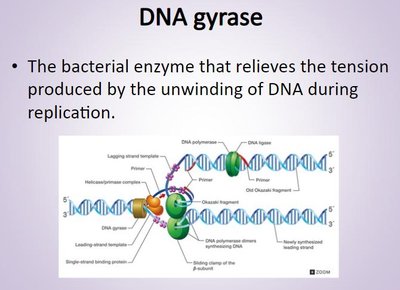
DNA Gyrase (Topoisomerase)
DNA gyrase is a bacterial enzyme that relieves the tension generated by the unwinding of DNA, preventing supercoiling ahead of the replication fork.
Replication Forks and Bubbles
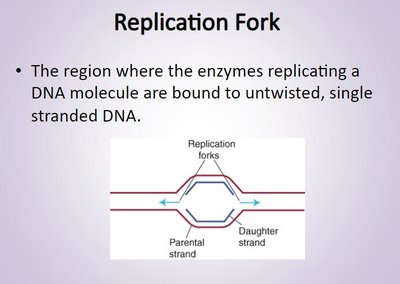
Replication Fork
The replication fork is the Y-shaped region where the DNA is split into two single strands and where new DNA synthesis occurs.
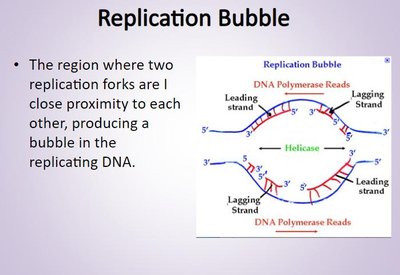
Replication Bubble
A replication bubble forms when two replication forks are in close proximity, creating a bubble-like structure in the DNA where active replication is occurring.
Synthesis of New DNA Strands
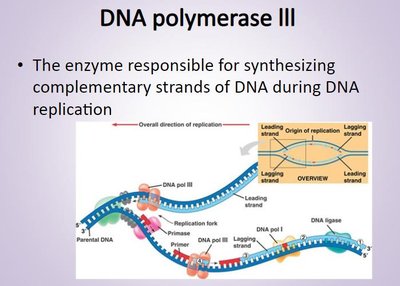
DNA Polymerase III
DNA polymerase III is the main enzyme responsible for synthesizing new DNA strands by adding nucleotides complementary to the template strand.
Requires a primer to initiate synthesis.
Works in the 5' to 3' direction.
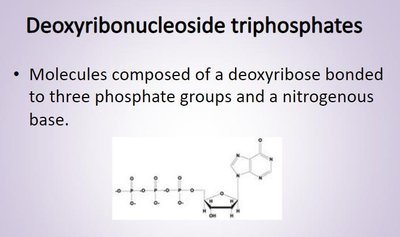
Deoxyribonucleoside Triphosphates (dNTPs)
dNTPs are the building blocks for DNA synthesis, consisting of a deoxyribose sugar, a nitrogenous base, and three phosphate groups.
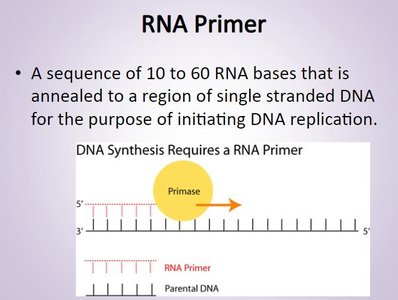
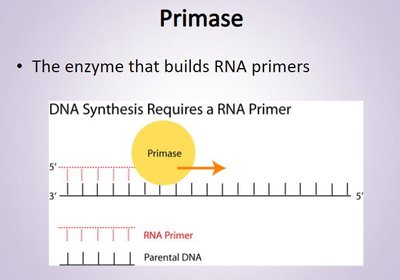
RNA Primer and Primase
DNA polymerases cannot initiate synthesis de novo; they require a short RNA primer. Primase is the enzyme that synthesizes these RNA primers.
RNA primers are typically 10–60 bases long.
Primers provide a free 3'-OH group for DNA polymerase to extend.
Leading and Lagging Strands
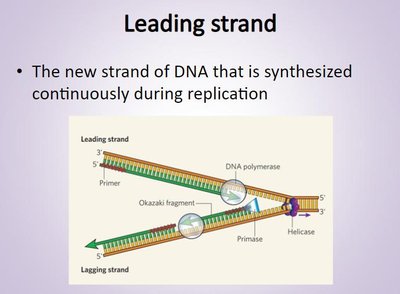
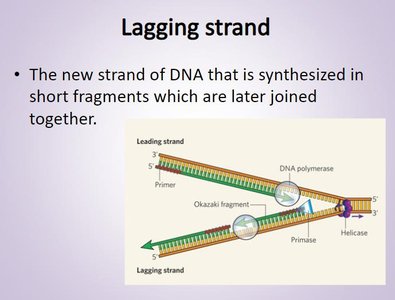
DNA replication is continuous on one strand (leading) and discontinuous on the other (lagging) due to the antiparallel nature of DNA.
Leading strand: Synthesized continuously in the direction of the replication fork.
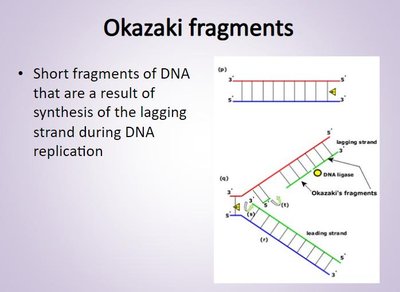
Lagging strand: Synthesized in short fragments (Okazaki fragments) away from the replication fork.
Okazaki Fragments
Short DNA fragments synthesized on the lagging strand, later joined together to form a continuous strand.
Enzymatic Processing and Proofreading
DNA Polymerase I
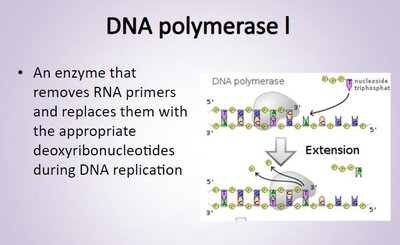
DNA polymerase I removes RNA primers and replaces them with DNA nucleotides.
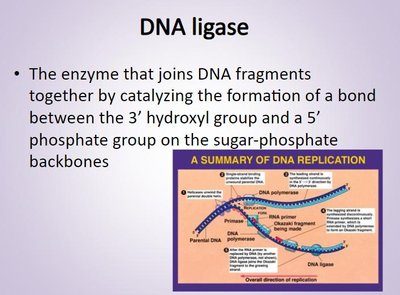
DNA Ligase
DNA ligase joins Okazaki fragments by catalyzing the formation of phosphodiester bonds between adjacent DNA fragments, sealing nicks in the sugar-phosphate backbone.
Exonuclease Activity and Proofreading
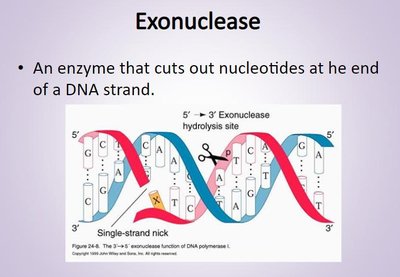
Both DNA polymerase III and I possess exonuclease activity for proofreading. They can remove incorrectly paired nucleotides and replace them with the correct ones, ensuring high fidelity in DNA replication.
Exonucleases cut out nucleotides from the ends of DNA strands.
Proofreading occurs in the 3' to 5' direction.
Summary Table: Key Enzymes and Their Functions in DNA Replication
Enzyme/Protein | Function |
|---|---|
DNA Helicase | Unwinds the DNA double helix |
Single-Stranded Binding Proteins | Stabilize unwound DNA strands |
DNA Gyrase (Topoisomerase) | Relieves supercoiling tension |
Primase | Synthesizes RNA primers |
DNA Polymerase III | Synthesizes new DNA strands |
DNA Polymerase I | Removes RNA primers and replaces with DNA |
DNA Ligase | Joins Okazaki fragments |
Exonuclease | Removes incorrect nucleotides for proofreading |
Additional info:
DNA cannot be fully unwound at once due to the risk of tangling and supercoiling; instead, localized unwinding occurs at replication forks.
Proofreading by DNA polymerases is essential for minimizing mutations and maintaining genetic stability.
