 Back
DNA Replication: Structure, Mechanism, and Biological Significance
Study Guide - Smart Notes
 Tailored notes based on your materials, expanded with key definitions, examples, and context.
DNA Replication
Central Dogma of Molecular Biology
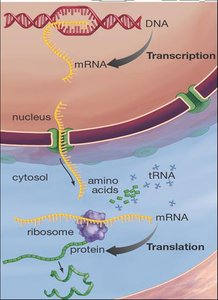
The central dogma describes the flow of genetic information within a biological system. It states that DNA is transcribed into RNA, which is then translated into protein. This process is fundamental to all living organisms and underlies the properties of life, including self-replication, information storage, and evolution.
Transcription: DNA is used as a template to synthesize messenger RNA (mRNA).
Translation: mRNA is decoded by ribosomes to produce proteins.
Replication: DNA makes identical copies of itself before cell division.
Mutation: Changes in DNA sequence provide variation for evolution.
Properties of Life Related to DNA
DNA is essential for life because it can replicate itself, store instructions for cellular processes, and evolve through mutation. These properties ensure continuity and diversity in living organisms.
Self-replication: DNA copies itself before cell division.
Instruction storage: DNA encodes information for protein synthesis.
Evolution: Mutations in DNA lead to genetic variation.
Structure of DNA
Double Helix and Nucleotide Composition
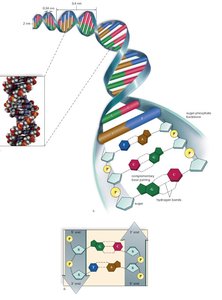
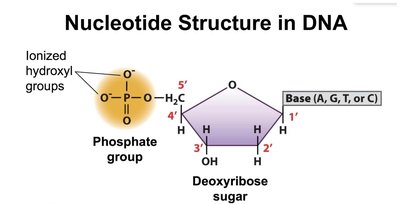
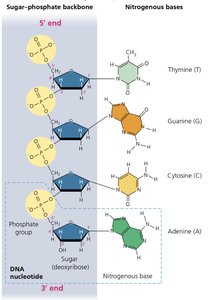
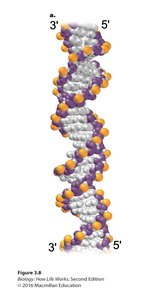
DNA is composed of two antiparallel strands forming a double helix. Each strand is a polymer of nucleotides, which consist of a deoxyribose sugar, a phosphate group, and one of four nitrogenous bases (adenine, thymine, guanine, cytosine).
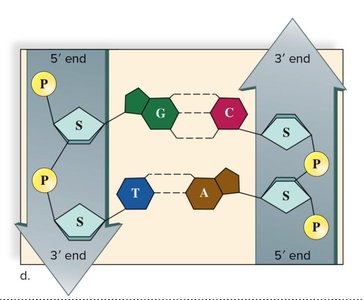
Antiparallel: The two strands run in opposite directions (5' to 3' and 3' to 5').
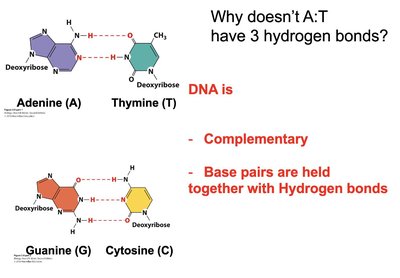
Complementary: Base pairing occurs via hydrogen bonds: A pairs with T, G pairs with C.
Sugar-phosphate backbone: Provides structural stability.
Polarity and Directionality
Each DNA strand has polarity, defined by the orientation of the 5' and 3' ends. This directionality is crucial for replication and transcription.
5' end: Phosphate group attached to the fifth carbon of deoxyribose.
3' end: Hydroxyl group attached to the third carbon of deoxyribose.
Base Pairing and Hydrogen Bonds
Base pairs are held together by hydrogen bonds, ensuring the fidelity of genetic information.
Adenine (A) and Thymine (T): Form two hydrogen bonds.
Guanine (G) and Cytosine (C): Form three hydrogen bonds.
Mechanism of DNA Replication
Overview of Replication Process
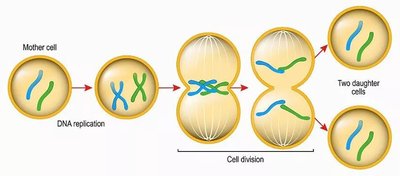
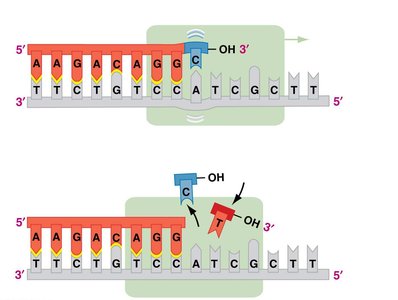
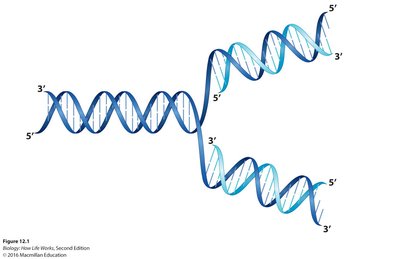
DNA replication is a semi-conservative process, meaning each new DNA molecule contains one original (parental) strand and one newly synthesized strand. Replication occurs before cell division to ensure genetic continuity.
Initiation: Replication begins at specific sites called origins of replication.
Elongation: New DNA strands are synthesized by DNA polymerase.
Termination: Replication ends when the entire DNA molecule is copied.
Replication Fork and Bubble
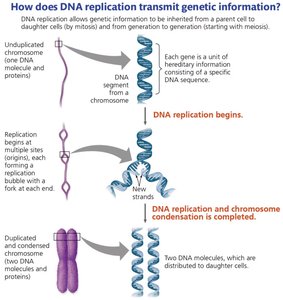
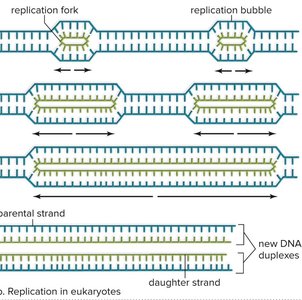
Replication occurs at replication forks, which form a replication bubble. Two forks move in opposite directions, allowing simultaneous synthesis of new DNA strands.
Replication fork: The site where DNA is unwound and new strands are synthesized.
Replication bubble: Region where DNA is actively being replicated.
Enzymes Involved in DNA Replication
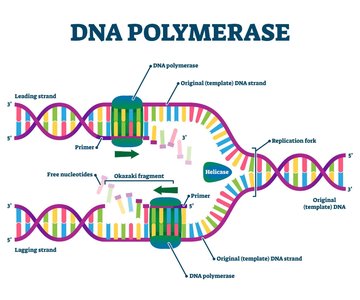
Several enzymes coordinate the replication process:
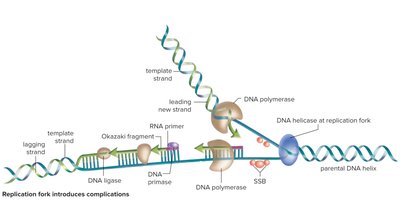
Helicase: Unwinds the DNA double helix.
RNA Primase: Synthesizes short RNA primers to provide a starting point for DNA polymerase.
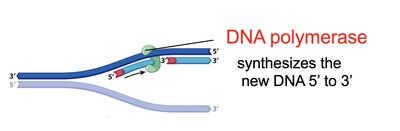
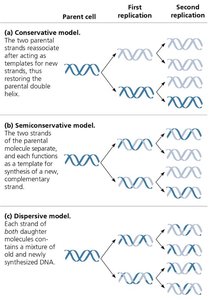
DNA Polymerase: Adds nucleotides to the growing DNA strand and proofreads for errors.
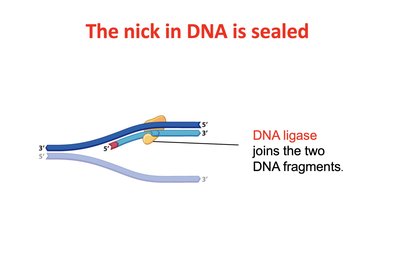
DNA Ligase: Seals nicks in the DNA backbone, joining fragments together.
Directionality of DNA Synthesis
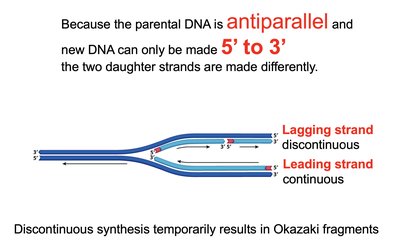
DNA polymerase synthesizes new DNA only in the 5' to 3' direction. This results in continuous synthesis on the leading strand and discontinuous synthesis (Okazaki fragments) on the lagging strand.
Leading strand: Synthesized continuously toward the replication fork.
Lagging strand: Synthesized discontinuously away from the replication fork.
Proofreading and Error Correction
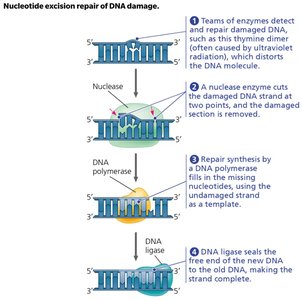
DNA polymerase has proofreading activity to correct mismatched nucleotides. If errors are not corrected, mutations may occur, leading to genetic variation or disease.
Proofreading: DNA polymerase removes incorrectly paired nucleotides.
Mutation: Permanent change in DNA sequence if errors are not fixed.
Models of DNA Replication
Semi-Conservative, Conservative, and Dispersive Models
Three models were proposed for DNA replication: conservative, semi-conservative, and dispersive. Experimental evidence supports the semi-conservative model.
Conservative: Parent strands re-associate after replication.
Semi-conservative: Each new DNA molecule contains one parent and one new strand.
Dispersive: Both strands contain a mix of old and new DNA.
Summary Table: Key Enzymes and Functions in DNA Replication
Enzyme | Function |
|---|---|
Helicase | Unwinds DNA double helix |
RNA Primase | Synthesizes RNA primers |
DNA Polymerase | Adds nucleotides, proofreads, replaces RNA primers |
DNA Ligase | Seals nicks, joins DNA fragments |
Biological Significance of DNA Replication
Transmission of Genetic Information
DNA replication ensures that genetic information is faithfully transmitted from parent to daughter cells during cell division. This process is essential for growth, development, and maintenance of all living organisms.
Cell division: DNA replication precedes mitosis and meiosis.
Genetic continuity: Ensures each cell receives a complete set of genetic instructions.
Additional info:
DNA replication is tightly regulated to prevent errors and maintain genome integrity.
Mutations arising from replication errors can lead to genetic diseases or contribute to evolution.
