 Back
DNA Replication: Structure, Process, and Enzymatic Mechanisms
Study Guide - Smart Notes
 Tailored notes based on your materials, expanded with key definitions, examples, and context.
DNA Replication
Overview of DNA Replication
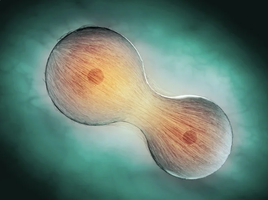
DNA replication is the biological process by which a cell copies its DNA, ensuring genetic information is passed to daughter cells during cell division. This process occurs in the nucleus during the S phase of Interphase in the cell cycle. Each original DNA strand serves as a template for the synthesis of a new complementary strand, resulting in two identical DNA molecules.
Purpose: To ensure each new cell receives an exact copy of the genetic material.
Location: Nucleus (eukaryotes); cytoplasm (prokaryotes).
Timing: S phase of Interphase.
Sister Chromatids
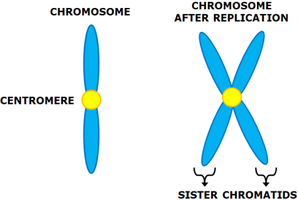
After DNA replication, each chromosome consists of two identical copies called sister chromatids, joined at a region called the centromere. These chromatids are separated during cell division to ensure each daughter cell receives one copy.
Sister chromatids: Identical copies of a chromosome attached at the centromere.
Separation: Occurs during mitosis or meiosis.
When Does a Cell Copy DNA?
Cell Division and DNA Replication
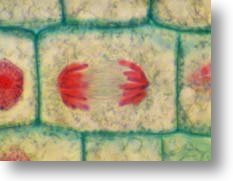
Cells replicate their DNA to prepare for cell division. This occurs in two main contexts:
Mitosis: Produces new somatic (body) cells for growth and repair.
Meiosis: Produces gametes (sperm and egg) for sexual reproduction.
Structure and Directionality of DNA
Nucleotide Structure and DNA Backbone
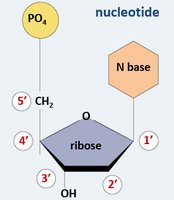
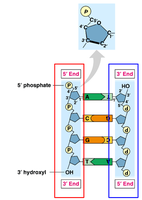
DNA is composed of nucleotides, each consisting of a phosphate group, a deoxyribose sugar, and a nitrogenous base. The carbons in the sugar are numbered 1' to 5' to indicate their positions. Phosphodiester bonds link the 3' carbon of one nucleotide to the 5' carbon of the next, forming the sugar-phosphate backbone.
5' end: Terminates with a phosphate group.
3' end: Terminates with a hydroxyl (OH) group.
Antiparallel Strands
DNA consists of two antiparallel strands, meaning they run in opposite directions. One strand runs 5' to 3', while the complementary strand runs 3' to 5'. This orientation is crucial for replication and enzyme function.
Antiparallel: Strands run in opposite directions.
Base pairing: Adenine pairs with thymine, cytosine pairs with guanine.
Mechanism of DNA Replication
Semi-Conservative Replication
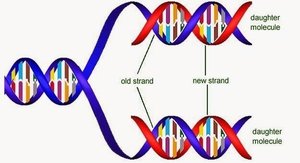
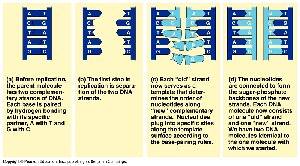
DNA replication is semi-conservative: each new DNA molecule consists of one original (parental) strand and one newly synthesized (daughter) strand. This ensures genetic continuity across generations.
Parent strand: Serves as a template.
Daughter strand: Newly synthesized, complementary to the parent strand.
Replication Fork and Replication Bubble
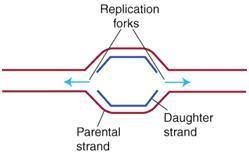
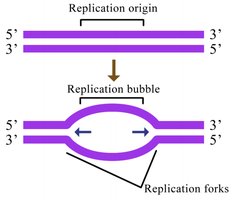
Replication begins at specific sites called origins of replication, forming replication bubbles. The replication fork is the Y-shaped region where the DNA is actively unwound and new strands are synthesized.
Multiple origins: Eukaryotic chromosomes have many origins to speed up replication.
Replication fork: Site of active DNA synthesis.
Prokaryotic vs. Eukaryotic Replication
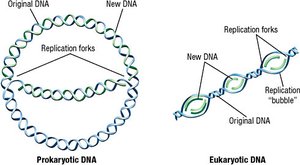
Prokaryotic DNA replication typically starts from a single origin and proceeds bidirectionally around a circular chromosome. Eukaryotic DNA replication involves multiple origins and linear chromosomes, forming several replication bubbles simultaneously.
Feature | Prokaryotes | Eukaryotes |
|---|---|---|
Chromosome shape | Circular | Linear |
Number of origins | One | Multiple |
Replication bubbles | One | Many |
Enzymes and Steps in DNA Replication
Step 1: Initiation and Unwinding
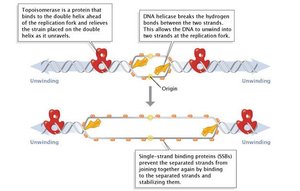
Replication begins with the unwinding of the DNA double helix:
DNA helicase: Unzips the DNA by breaking hydrogen bonds between bases.
Single-strand binding proteins (SSBPs): Stabilize separated strands.
Topoisomerase (gyrase): Relieves supercoiling tension ahead of the fork.
Step 2: Primer Synthesis and Elongation
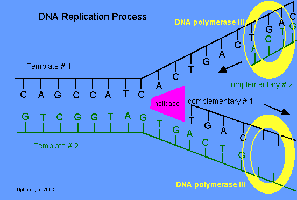
DNA polymerases cannot initiate synthesis de novo; they require a primer:
Primase: Synthesizes short RNA primers to provide a starting point.
DNA Polymerase III: Adds nucleotides to the 3' end of the primer, synthesizing the new DNA strand in the 5' to 3' direction.
Energy for Replication
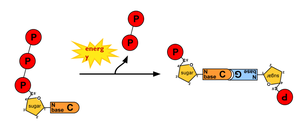
DNA synthesis is an anabolic process requiring energy. Each incoming nucleotide is a nucleoside triphosphate, which releases energy upon the cleavage of its phosphate bonds, driving the formation of new phosphodiester bonds.
Source of energy: Hydrolysis of nucleoside triphosphates (e.g., dATP, dGTP).
Leading and Lagging Strands
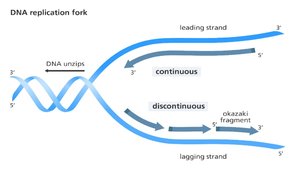
Because DNA polymerase can only synthesize in the 5' to 3' direction, the two new strands are made differently:
Leading strand: Synthesized continuously toward the replication fork.
Lagging strand: Synthesized discontinuously away from the fork in short segments called Okazaki fragments.
Okazaki Fragments and DNA Ligase
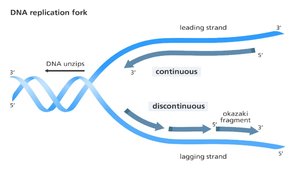
The lagging strand is made in short fragments, each requiring its own RNA primer. DNA ligase joins these Okazaki fragments, sealing the sugar-phosphate backbone to create a continuous strand.
Okazaki fragments: Short DNA segments on the lagging strand.
DNA ligase: Enzyme that joins fragments together.
Editing and Proofreading
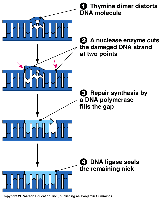
DNA polymerases have proofreading abilities to ensure high fidelity during replication:
DNA Polymerase III: Main enzyme for elongation; has some proofreading ability.
DNA Polymerase I: Removes RNA primers, fills in with DNA, and corrects errors.
Error rate: Reduced from 1 in 10,000 to 1 in 100 million bases due to proofreading.
Efficiency and Accuracy of Replication
Speed and Fidelity
DNA replication is both rapid and highly accurate. For example, E. coli can replicate its 5 million base pair genome in less than an hour, while human cells replicate 6 billion bases in a few hours, with only about 30 errors per cell cycle.
Speed: Up to 1000 bases per second (bacteria).
Accuracy: ~1 error per 100 million bases.
Summary Table: Key Enzymes in DNA Replication
Enzyme | Function |
|---|---|
Helicase | Unwinds DNA double helix |
SSBPs | Stabilize single strands |
Topoisomerase | Relieves supercoiling |
Primase | Synthesizes RNA primers |
DNA Polymerase III | Main DNA synthesis |
DNA Polymerase I | Removes primers, fills gaps, proofreads |
Ligase | Joins Okazaki fragments |
Additional Resources
Definition of 5’ and 3’ ends of DNA
3D Replication of DNA
DNA Replication Video
DNA Replication Overview
DNA Replication – TED Talk
DNA Workshop Interactive
