 Back
DNA Replication, Transcription, and Translation: Molecular Basis of Gene Expression
Study Guide - Smart Notes
 Tailored notes based on your materials, expanded with key definitions, examples, and context.
DNA Structure and Organization
DNA and Chromatin Structure
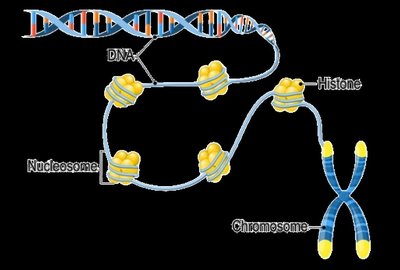
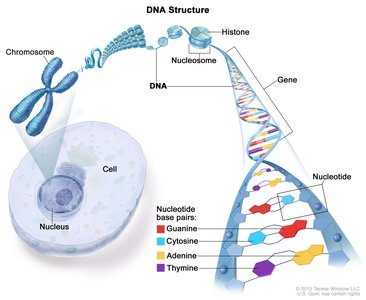
DNA is a double-stranded molecule composed of nucleotide base pairs. In eukaryotic cells, DNA is tightly packed to fit within the nucleus. This packaging involves coiling DNA around proteins called histones, forming a DNA-protein complex known as chromatin. The basic unit of chromatin is the nucleosome, which consists of a segment of DNA wrapped around a histone core. Chromatin further condenses to form chromosomes during cell division.
Histones: Small, positively charged proteins that bind tightly to negatively charged DNA.
Nucleosome: A histone plus the DNA wrapped around it.
Chromosome: Highly condensed chromatin visible during cell division.
DNA Replication
Overview of DNA Replication
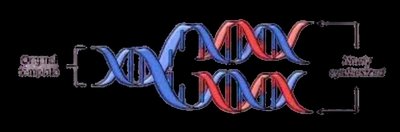
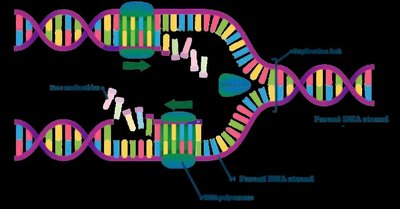
DNA replication is the process by which a cell copies its DNA before cell division. The two strands of DNA are complementary and antiparallel, meaning they run in opposite directions. Replication is semi-conservative, with each new DNA molecule containing one original (parent) strand and one newly synthesized (daughter) strand.
Base Pairing: Adenine (A) pairs with Thymine (T); Guanine (G) pairs with Cytosine (C).
Semi-conservative replication: Each daughter DNA molecule retains half of the parent DNA.
Steps in DNA Replication
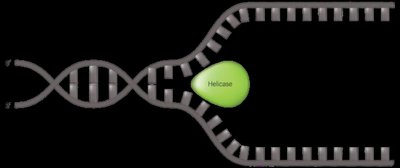
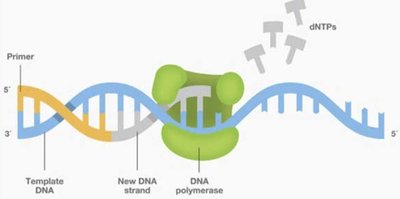
Replication begins with the unwinding of DNA from histones. The enzyme helicase breaks hydrogen bonds between base pairs, creating a replication fork. DNA polymerase then synthesizes new DNA strands by adding nucleotides (dNTPs) in the 5' to 3' direction. One strand, the leading strand, is synthesized continuously, while the lagging strand is synthesized in short fragments called Okazaki fragments, which are joined by DNA ligase.
Helicase: Unwinds DNA at the replication fork.
DNA Polymerase: Synthesizes new DNA by adding dNTPs.
Leading Strand: Synthesized continuously.
Lagging Strand: Synthesized in Okazaki fragments.
DNA Ligase: Joins Okazaki fragments.
Transcription: DNA to RNA
Transcription Process
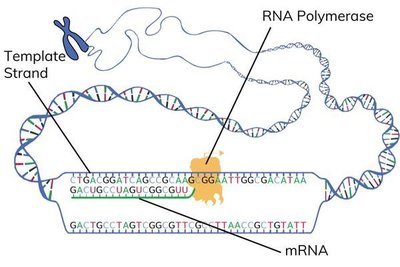
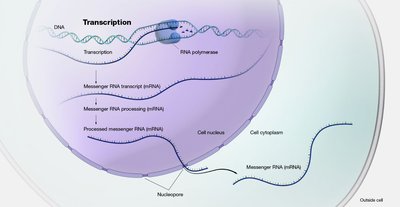
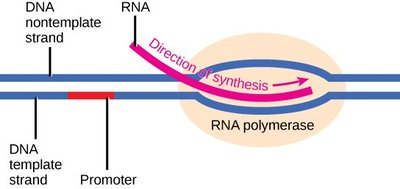
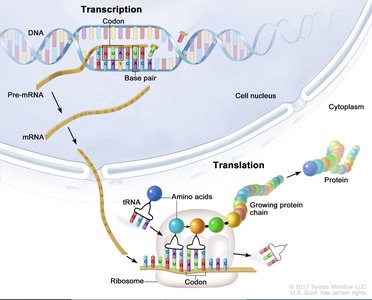
Transcription is the process of synthesizing an RNA copy from a DNA template. The enzyme RNA polymerase binds to a promoter region on DNA and synthesizes a single-stranded RNA molecule. Only one strand of DNA, the template strand, is transcribed. The resulting RNA is called messenger RNA (mRNA), which carries genetic information from the nucleus to the cytoplasm.
RNA Polymerase: Enzyme that synthesizes RNA from DNA.
Promoter: DNA sequence where RNA polymerase binds to initiate transcription.
Template Strand: The DNA strand that is transcribed.
mRNA: The RNA product that carries genetic instructions.
DNA vs. RNA
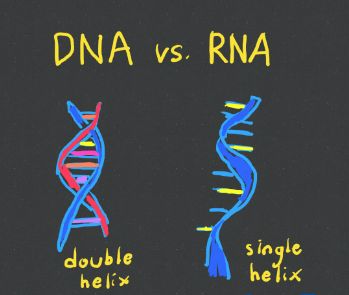
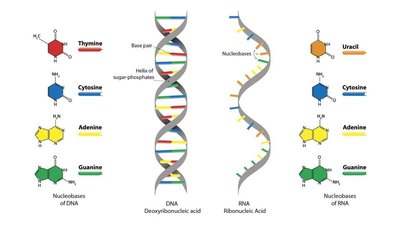
DNA and RNA are both nucleic acids but differ in structure and function. DNA is double-stranded and contains the base thymine, while RNA is single-stranded and contains uracil instead of thymine.
DNA: Double helix, bases A, T, C, G.
RNA: Single strand, bases A, U, C, G.
Types of RNA
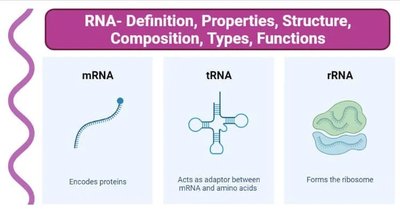
There are three main types of RNA involved in gene expression:
Messenger RNA (mRNA): Carries genetic instructions from DNA to ribosomes.
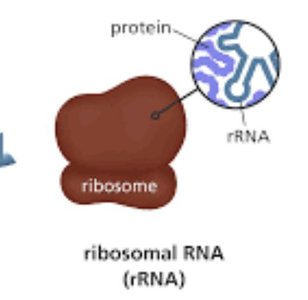
Ribosomal RNA (rRNA): Combines with proteins to form ribosomes, the site of protein synthesis.
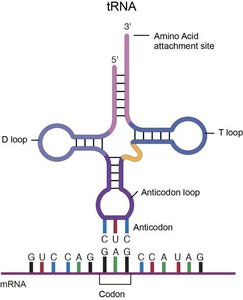
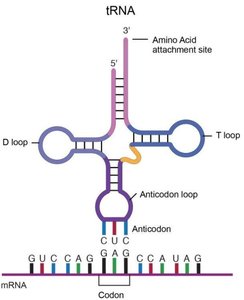
Transfer RNA (tRNA): Brings amino acids to the ribosome during translation.
Translation: RNA to Protein
Translation Process
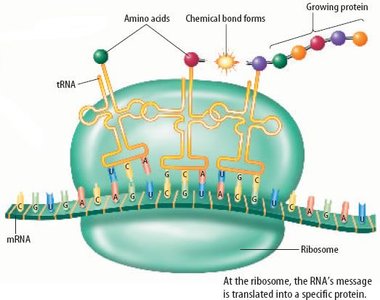
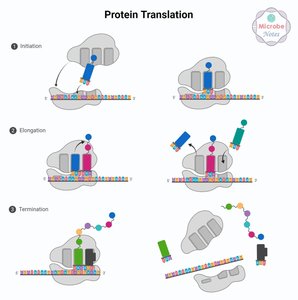
Translation is the process by which the sequence of an mRNA molecule is decoded to produce a polypeptide (protein). This occurs in the cytoplasm at the ribosome. Translation involves three main steps: initiation, elongation, and termination.
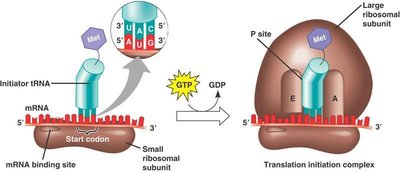
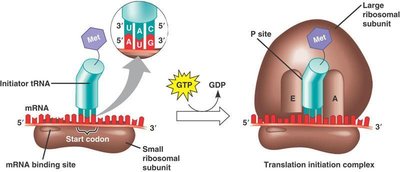
Initiation: The ribosome assembles at the start codon (AUG) on the mRNA, and the initiator tRNA binds.
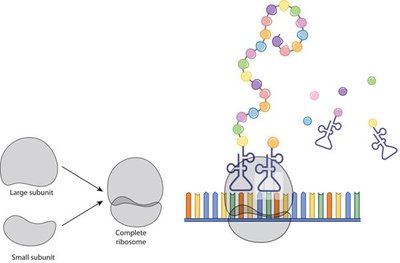
Elongation: tRNA molecules bring amino acids to the ribosome, matching their anticodon to the mRNA codon. The ribosome links amino acids to form a growing polypeptide chain.
Termination: When a stop codon is reached, the translation machinery disassembles, and the completed polypeptide is released.
Codons and the Genetic Code
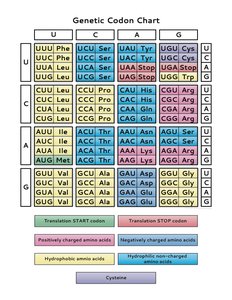
The genetic code is composed of codons, which are sequences of three nucleotides in mRNA. Each codon specifies a particular amino acid or a stop signal. There are 64 codons, 61 of which code for amino acids and 3 for stop signals. The code is redundant, meaning multiple codons can code for the same amino acid.
Start Codon: AUG (methionine)
Stop Codons: UAG, UAA, UGA
Redundancy: Minimizes effects of mutations
Codon | Amino Acid |
|---|---|
AUG | Methionine (Start) |
UAA, UAG, UGA | Stop |
UUU, UUC | Phenylalanine |
UUA, UUG | Leucine |
... (see codon chart for full list) | ... |
The Central Dogma of Biology
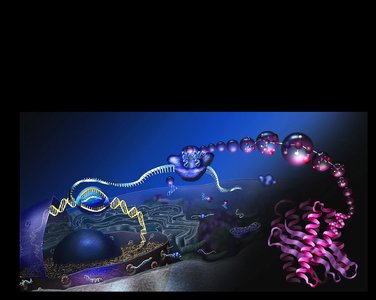
The central dogma describes the flow of genetic information: DNA is transcribed into RNA, which is then translated into protein. This process is fundamental to gene expression and the manifestation of traits.
DNA → RNA → Protein
Transcription: DNA to RNA
Translation: RNA to Protein
Summary Table: DNA Replication, Transcription, and Translation
Process | Main Enzyme | Template | Product | Location |
|---|---|---|---|---|
Replication | DNA Polymerase | DNA | DNA | Nucleus |
Transcription | RNA Polymerase | DNA | RNA | Nucleus |
Translation | Ribosome | mRNA | Protein | Cytoplasm |
Additional info: The redundancy of the genetic code is crucial for minimizing the impact of mutations. The process of protein folding and modification after translation is essential for functional protein formation.
