 Back
BackDNA Structure and Replication: Mechanisms and Experimental Evidence
Study Guide - Smart Notes
 Tailored notes based on your materials, expanded with key definitions, examples, and context.
DNA Structure and the Flow of Genetic Information
Overview of Nucleic Acids and DNA Structure
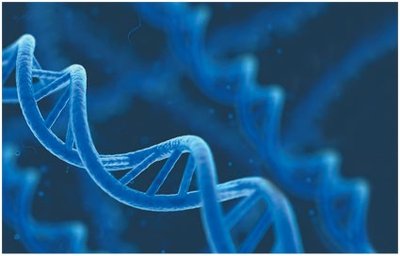
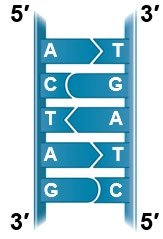
Deoxyribonucleic acid (DNA) is the hereditary material in almost all living organisms, encoding the instructions for cellular structure and function. DNA is a type of nucleic acid, composed of nucleotide monomers, each containing a phosphate group, a deoxyribose sugar, and a nitrogenous base. The structure of DNA is a double helix, with two antiparallel strands held together by complementary base pairing.
Nucleotides: The building blocks of DNA, consisting of adenine (A), thymine (T), cytosine (C), and guanine (G).
Base Pairing: Adenine pairs with thymine (A-T) and cytosine pairs with guanine (C-G) via hydrogen bonds.
Antiparallel Strands: The two DNA strands run in opposite directions, designated 5' to 3' and 3' to 5'.
Evidence That DNA Is the Genetic Material
Multiple experiments throughout the 20th century established DNA as the molecule responsible for heredity. The most direct evidence came from experiments demonstrating that DNA, not protein, carries genetic information.
Transformation Experiments: Showed that DNA could transfer genetic traits between bacteria.
Additional info: The Hershey-Chase experiment used bacteriophages to confirm DNA as the genetic material.
DNA Replication
Mechanism and Models of DNA Replication
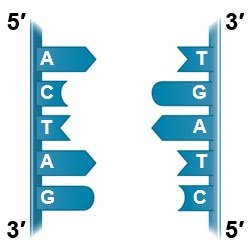
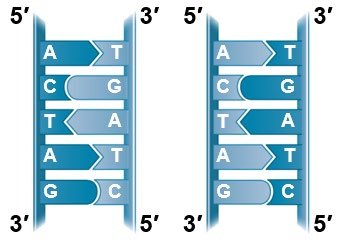
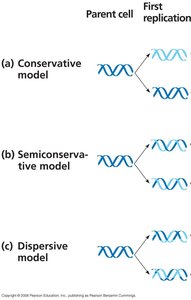
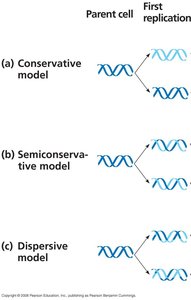
For genetic information to be transmitted to the next generation, DNA must be accurately copied. Watson and Crick's model of DNA structure suggested a mechanism for replication based on complementary base pairing. Three models were proposed for DNA replication:
Conservative Model: The parental DNA remains intact, and an entirely new molecule is synthesized.
Semiconservative Model: Each daughter DNA molecule consists of one parental strand and one newly synthesized strand.
Dispersive Model: Each strand of both daughter molecules contains a mixture of old and new DNA.
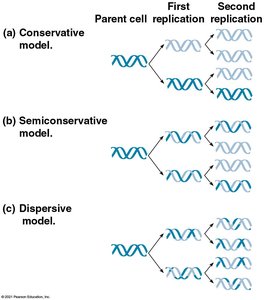
Experimental Evidence: The Meselson-Stahl Experiment
In 1958, Matthew Meselson and Franklin Stahl provided experimental proof that DNA replication is semiconservative. They used isotopes of nitrogen to distinguish old and new DNA strands in Escherichia coli (E. coli).
Experimental Design: E. coli were grown in medium containing heavy nitrogen (15N), then transferred to medium with light nitrogen (14N).
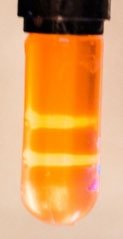
Density Gradient Centrifugation: DNA molecules of different densities were separated by centrifugation, allowing visualization of hybrid and light DNA bands.
Results: After one generation in 14N, all DNA had intermediate density (hybrid), supporting the semiconservative model. After two generations, both hybrid and light DNA were observed.
Summary Table: Models of DNA Replication
Model | First Replication | Second Replication | Experimental Support |
|---|---|---|---|
Conservative | 1 old, 1 new | 1 old, 3 new | No |
Semiconservative | 2 hybrid | 2 hybrid, 2 light | Yes |
Dispersive | 2 mixed | 4 mixed | No |
Key Concepts and Applications
Semiconservative Replication: Biological Significance
Semiconservative replication ensures that each daughter cell receives one strand of parental DNA, preserving genetic information across generations. This mechanism is fundamental to heredity and genetic stability.
Each new DNA molecule: Contains one parental (old) strand and one newly synthesized strand.
Genetic Fidelity: Reduces the risk of mutations and errors during cell division.
Practice Questions
After one generation in 14N, what percent of DNA is hybrid (one light, one heavy strand)? Answer: 100%
After three generations in 14N, what percent of DNA is hybrid? Answer: 25%
Which model is supported by the Meselson-Stahl experiment? Answer: Semiconservative replication
Additional info:
DNA replication is tightly regulated and involves multiple enzymes, including DNA polymerases, helicases, and ligases.
Errors in replication can lead to mutations, which are the basis for genetic variation and evolution.
