 Back
DNA Structure, Replication, and Nucleic Acids: Study Notes for General Biology
Study Guide - Smart Notes
 Tailored notes based on your materials, expanded with key definitions, examples, and context.
DNA Structure and Function
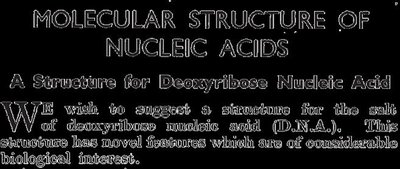
Historical Discovery of DNA as the Genetic Material
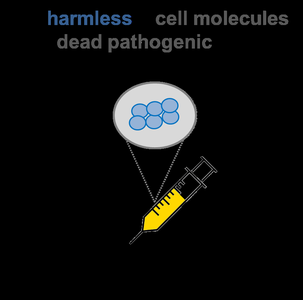
The identification of DNA as the information-carrying molecule was a result of numerous experiments and the collaborative efforts of many scientists. Early experiments demonstrated that the process used to remove cell molecules did not destroy the information molecule(s), suggesting DNA's role in heredity.
Key Point: DNA is the molecule responsible for storing and transmitting genetic information.
Example: Experiments with harmless and pathogenic bacteria showed that DNA could transfer genetic traits.
Additional info: The classic experiment by Avery, MacLeod, and McCarty built on Griffith's work, confirming DNA as the transforming principle.
Contributions of Scientists
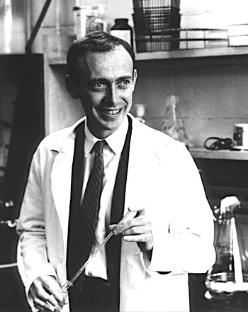
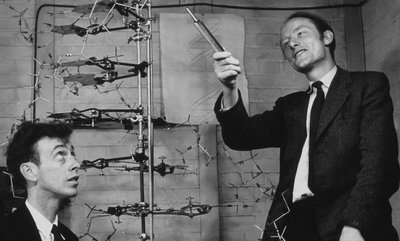
Many scientists contributed to the understanding of DNA's structure, including Linus Pauling, Maurice Wilkins, Rosalind Franklin, James Watson, and Francis Crick. Their discoveries were built upon each other's work, culminating in the elucidation of the double helix structure.
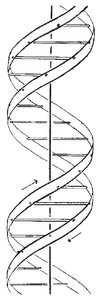
Key Point: The double helix model explained how genetic information is stored, copied, and used to direct protein synthesis.


Importance of Molecular Structure
Understanding the structure of DNA was crucial for explaining its function in heredity, replication, and protein synthesis.
Key Point: The double helix structure allows for accurate copying and storage of genetic information.

Nucleic Acids: DNA and RNA
Structures of Nucleotides
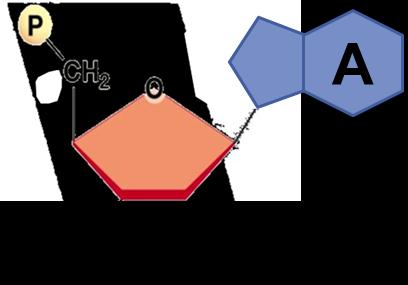
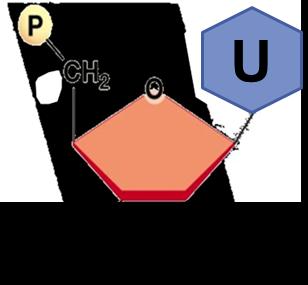
Nucleotides are the building blocks of nucleic acids. Each nucleotide consists of three components: a phosphate group, a five-carbon sugar (deoxyribose in DNA, ribose in RNA), and a nitrogenous base.
Key Point: DNA and RNA differ in their sugar and nitrogenous bases.
Example: DNA contains adenine (A), guanine (G), cytosine (C), and thymine (T); RNA contains A, G, C, and uracil (U).
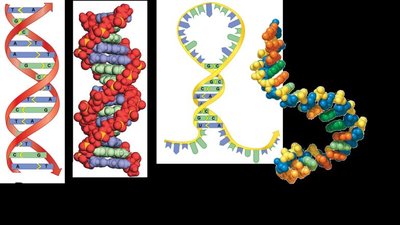
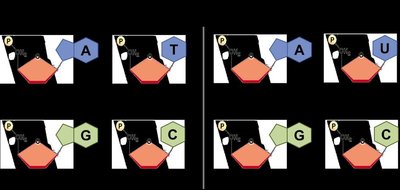
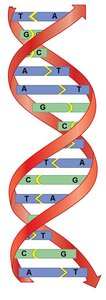
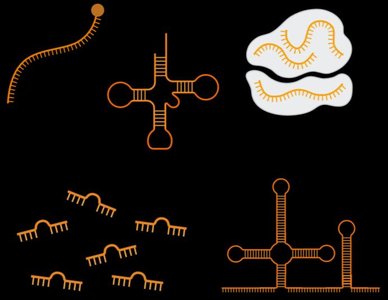
Comparison of DNA and RNA
DNA serves as the primary information storage molecule, while RNA has multiple roles, including acting as information messengers, regulating gene expression, and catalyzing reactions.
Key Point: DNA is double-stranded and stable; RNA is single-stranded and versatile.
Nucleotide Connections and Strand Directionality
Nucleotides are connected by phosphodiester bonds, forming nucleic acid strands. These strands have directionality, with a 5' phosphate end and a 3' hydroxyl end.
Key Point: The directionality is essential for replication and transcription.
Example: DNA and RNA strands are synthesized from 5' to 3'.
DNA Replication
Semiconservative Replication
DNA replication is described as semiconservative because each new DNA molecule consists of one original (parental) strand and one newly synthesized strand.
Key Point: This mechanism ensures accurate transmission of genetic information.
Example: During cell division, genes are passed from one cell to the next.
Models of DNA Replication
Three models were proposed: conservative, semiconservative, and dispersive. Experimental evidence supported the semiconservative model.
Key Point: Each daughter DNA molecule contains one parental strand.
Mechanism of DNA Replication
Replication begins at specific sites called origins of replication (ORI). Prokaryotic chromosomes have one ORI, while eukaryotic chromosomes have many, allowing rapid replication.
Key Point: Replication proceeds in both directions from each ORI, forming replication bubbles.
Example: Humans have chromosomes averaging ~150 million base pairs, requiring multiple ORIs.
Replication Fork and Strand Synthesis
At the replication fork, the DNA helix opens, and new strands are synthesized. The leading strand is formed continuously toward the replication fork, while the lagging strand is formed in fragments (Okazaki fragments) away from the fork.
Key Point: DNA strands are antiparallel, requiring synthesis in opposite directions.
Enzymes Involved in DNA Replication
Several enzymes are essential for DNA replication:
DNA helicase: Unwinds the DNA strands.
DNA polymerase: Synthesizes new DNA strands, requires a template and RNA primer, and proofreads for errors.
RNA primase: Synthesizes short RNA primers to initiate DNA synthesis.
DNA ligase: Joins fragments of the lagging strand.
Directionality of DNA Synthesis
DNA polymerases can only add nucleotides to the 3' hydroxyl end, synthesizing DNA in the 5' to 3' direction.
Key Point: The antiparallel nature of DNA requires two polymerases to move in opposite directions along the template strands.
Accuracy and Proofreading
DNA polymerases are highly accurate, with proofreading abilities that remove and replace incorrect nucleotides.
Key Point: Completed DNA molecules have only one error per 10 billion nucleotides.
Summary Table: DNA vs. RNA
Feature | DNA | RNA |
|---|---|---|
Sugar | Deoxyribose | Ribose |
Strands | Double-stranded | Single-stranded |
Bases | A, T, G, C | A, U, G, C |
Function | Information storage | Multiple roles (messenger, regulation, catalysis) |
Stability | Stable | Less stable |
Review and Follow-Up Questions
Key Concepts for Study
Three components of nucleotides and differences between DNA and RNA nucleotides
Phosphodiester bonds in DNA and RNA strands
Directionality of nucleic acid strands
Structure of DNA helix and types of bonds
Base pairing and strand separation
Percentage calculations for nucleotide composition
Comparison table for DNA and RNA
Feature of DNA's structure enabling replication
Effect of additional ORIs in prokaryotic chromosomes
Roles of DNA replication enzymes
Directionality of DNA synthesis
Diagram of DNA replication at a replication fork
Additional info: Students should be able to explain the semiconservative model, identify replication enzymes, and describe the directionality and accuracy of DNA synthesis.
