 Back
DNA Structure, Replication, Gene Expression, and Regulation: General Biology Study Guide
Study Guide - Smart Notes
 Tailored notes based on your materials, expanded with key definitions, examples, and context.
DNA Structure and Components
Basic Structure of DNA
DNA is the hereditary material in all living organisms, composed of two strands forming a double helix. Each strand consists of a backbone made of phosphate and deoxyribose sugar, with nitrogenous bases attached.
Double Helix: Alternating major and minor grooves.
Phosphate Backbone: Provides structural stability.
Nucleotide Bases: Adenine (A), Thymine (T), Guanine (G), Cytosine (C).
Base Pairing: A pairs with T (2 hydrogen bonds), G pairs with C (3 hydrogen bonds).
Purines: Adenine and Guanine (larger, 2-ring structure).
Pyrimidines: Thymine and Cytosine (smaller, 1-ring structure).
Pairing Rule: Purine always pairs with pyrimidine to maintain uniform width.
Example: In any species, the number of A equals T, and G equals C (Chargaff's rule).
Types of DNA Duplication
DNA replication can occur in three theoretical modes:
Conservative: One daughter DNA is entirely new, the other is the original parent.
Semi-conservative: Each daughter DNA contains one old strand and one new strand (actual biological method).
Dispersive: Both strands are mixtures of old and new DNA segments.
Directionality and Antiparallelism
DNA strands have directionality, designated as 5' to 3' and 3' to 5'. Replication occurs in the 5' to 3' direction, and the two strands are antiparallel.
Leading Strand: Synthesized continuously toward the replication fork.
Lagging Strand: Synthesized discontinuously away from the fork, forming Okazaki fragments.
Polymerase Directionality: DNA polymerase adds nucleotides to the 3' end only.
DNA Replication Machinery
Key Enzymes and Proteins
DNA replication requires a coordinated set of enzymes and proteins:
Helicase: Unwinds the double helix at the replication fork.
Primase: Synthesizes RNA primers to initiate replication.
Topoisomerase: Relieves overwinding ahead of the fork.
Single-Stranded Binding Proteins (SSB): Stabilize unwound DNA.
DNA Ligase: Joins Okazaki fragments on the lagging strand.
DNA Polymerase I: Removes RNA primers and replaces them with DNA.
DNA Polymerase III: Main enzyme for synthesizing new DNA.
DNA Polymerase II: Proofreads and repairs errors.
Example: If helicase is absent, DNA cannot be unwound, halting replication.
Differences Between Prokaryotic and Eukaryotic DNA Replication
Eukaryotes: Linear chromosomes, associated with histone proteins, possess telomeres.
Prokaryotes: Circular chromosomes, lack telomeres.
DNA Repair Mechanisms
Nucleotide Excision Repair: Nuclease removes damaged DNA, replaced by DNA polymerase.
Proofreading: DNA polymerase and other enzymes correct errors during replication.
Telomeres and Telomerase
Telomeres: Repetitive sequences at chromosome ends, protect genes from erosion.
Telomerase: Enzyme that extends telomeres in germ cells, preventing excessive shortening.
DNA Packing and Chromatin Structure
Levels of DNA Packing
Nucleosomes: DNA wrapped around histone octamers.
30 nm Fiber: Nucleosomes coiled into a thicker fiber.
Looped Domains: Fibers looped around a central core.
Chromosome: Highly condensed structure visible during cell division.
Chromatin: DNA-protein complex; can be loosely packed (euchromatin) or densely packed (heterochromatin).
Euchromatin: Accessible, active in gene expression.
Heterochromatin: Inaccessible, gene expression silenced.
Transcription and Translation
Central Dogma and One Gene-One Protein Hypothesis
The central dogma describes the flow of genetic information: DNA → RNA → Protein. Each gene encodes a specific polypeptide.
Key Terms and Components
Transcription: Synthesis of RNA from DNA template.
Translation: Synthesis of polypeptide from mRNA template.
RNA Polymerase: Enzyme for RNA synthesis.
mRNA: Messenger RNA, carries genetic code.
Exons: Coding regions, expressed in proteins.
Introns: Non-coding regions, removed by splicing.
RNA Splicing: Removal of introns, joining exons.
tRNA: Transfer RNA, brings amino acids to ribosome.
rRNA: Ribosomal RNA, structural component of ribosome.
Poly-A Tail: Added to 3' end of mRNA, stability and export.
5' Cap: Added to 5' end of mRNA, protection and ribosome binding.
Base Pairing Rules: A-T/U, G-C.
Steps in Transcription
Initiation: RNA polymerase binds to promoter, unwinds DNA.
Elongation: RNA polymerase synthesizes RNA, unwinding and rewinding DNA.
Termination: RNA transcript released, polymerase detaches.
Steps in Translation
Initiation: mRNA, tRNA, and ribosomal subunits assemble.
Elongation: Amino acids added to growing chain, codon recognition, peptide bond formation, translocation.
Termination: Stop codon reached, release factor triggers polypeptide release.
Ribosome Structure and Function
Large and Small Subunits: Made of proteins and rRNA.
A Site: Arrival site for tRNA with amino acid.
P Site: Peptidyl site, holds growing polypeptide.
E Site: Exit site for discharged tRNA.
Mutations and Their Effects
Types of Mutations
Point Mutations: Change in a single base pair.
Silent: No effect on protein.
Missense: Changes amino acid, may affect function.
Nonsense: Introduces premature stop codon.
Insertion/Deletion: Adds or removes nucleotides, may cause frameshift.
Frameshift: Alters reading frame, often severe.
Mutagens: Physical/chemical agents causing mutations.
Gene Regulation and Expression
Regulatory Elements and Factors
Enhancers: Distal control elements, increase transcription.
Control Elements: Noncoding DNA, binding sites for transcription factors.
Transcription Factors: Proteins that regulate gene expression.
Activators/Repressors: Proteins binding to enhancers, modulate transcription.
Promoter: Start site for transcription, recognized by RNA polymerase.
Types of Regulatory Control
Chromatin Regulation: Packing affects gene accessibility.
Transcriptional Regulation: Control of RNA synthesis.
Post-Transcriptional Regulation: mRNA processing, stability.
Translational Regulation: Control of protein synthesis.
Post-Translational Regulation: Protein modification, degradation.
Epigenetics
Epigenetics studies heritable changes in gene expression not caused by DNA sequence changes. Mechanisms include DNA methylation and histone modification.
Non-Coding RNAs
piRNA: Silences transposable elements, regulates gene expression in germ cells.
miRNA: Blocks or degrades mRNA, regulates gene expression.
siRNA: Similar to miRNA, perfect binding, not conserved.
Development, Stem Cells, and Cancer
Maternal Effect, Cytoplasmic Determinants, Axes Polarities
Maternal effect genes encode cytoplasmic determinants that establish body axes in early development. Axes polarities define spatial orientation in organisms.
Maternal Effect: Genes from mother influence embryo development.
Cytoplasmic Determinants: Substances in egg affecting cell fate.
Axes Polarities: Anterior-posterior, dorsal-ventral, left-right axes.
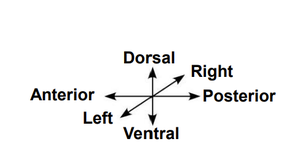
Determination, Differentiation, and Morphogenesis
Determination: Commitment of cell to final fate.
Differentiation: Specialization of cell structure and function.
Morphogenesis: Physical process shaping the organism.
Pattern Formation: Spatial organization of tissues and organs.
Stem Cells
Stem Cells: Unspecialized cells capable of indefinite division and differentiation.
Function: Regeneration and repair, potential for specialized cell types.
Cancer and Gene Regulation
Cancer: Results from genetic changes affecting cell cycle control.
Oncogenes: Cancer-causing genes, often mutated proto-oncogenes.
Tumor Suppressor Genes: Prevent uncontrolled cell growth; mutations increase cancer risk.
p53 Gene: Key tumor suppressor, mutations found in over 50% of cancers.
Multiple Mutations: Required for full cancer development.
Treatment: Surgery, radiation, chemotherapy, immunotherapy.
Genetic Code and Sample Problems
Codons and Reading Frame
Codon: Three-base sequence specifying an amino acid.
Start Codon: AUG (methionine).
Stop Codons: UAA, UGA, UAG.
Redundancy: Multiple codons for same amino acid, no codon codes for two amino acids.
Reading Frame: Correct grouping of codons is essential for proper translation.
Sample Problems and Answers
Question | Answer |
|---|---|
How does telomerase replicate chromosome ends? | C: Catalyzes lengthening of telomeres |
Difference between leading and lagging strands? | A: Leading synthesized toward fork, lagging opposite |
Eukaryotic chromosome description? | D: Single linear molecule of double-stranded DNA plus proteins |
Effect of no histone proteins? | B: DNA can't be packed into nucleus |
Alternative RNA splicing? | B: Produces proteins of different sizes/functions from single mRNA |
Mutant tRNA with lysine instead of phenylalanine? | B: Lysine replaces phenylalanine at UUU codons |
First event in eukaryotic translation? | D: Small ribosomal subunit attaches to 5' cap of mRNA |
Most serious mutation after AUG start? | B: Deletion of two nucleotides |
Nonsense mutation effect? | C: Introduces premature stop codon |
Bicoid gene product in Drosophila? | D: Anterior-posterior axis information |
Equations and Formulas
Base Pairing: ,
Central Dogma:
Additional info: Some explanations and context were expanded for clarity and completeness based on standard General Biology curriculum.
