 Back
BackDNA Structure, Replication, Gene Expression, Regulation, and Mutation
Study Guide - Smart Notes
 Tailored notes based on your materials, expanded with key definitions, examples, and context.
DNA and Gene Expression
Introduction to DNA
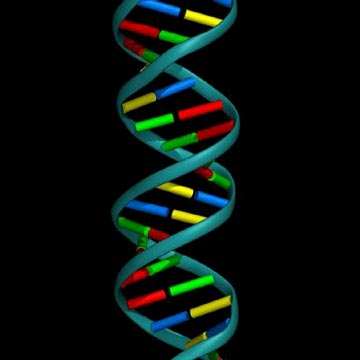
Deoxyribonucleic acid (DNA) is the hereditary material in all living organisms and is considered the most significant biological discovery of the 20th century. DNA encodes the instructions for building and maintaining an organism, and its structure underlies the mechanisms of inheritance and gene expression.
Genome: The complete set of DNA in an organism.
Chromosome: A single, long DNA molecule containing many genes.
Gene: A sequence of DNA that codes for a specific protein.
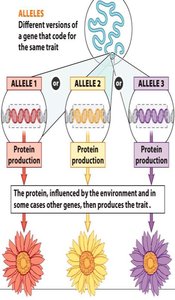
Allele: Different versions of a gene that code for the same trait.
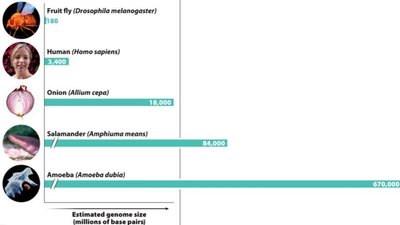
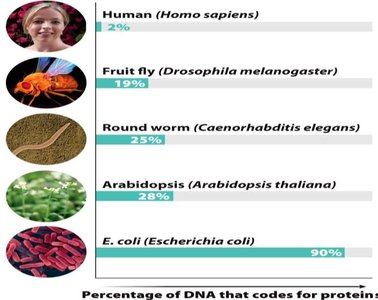
Key Point: Genes are universal in living things, but there is no direct relationship between genome size and organismal complexity. The proportion of DNA that codes for proteins varies widely among organisms.
DNA Structure
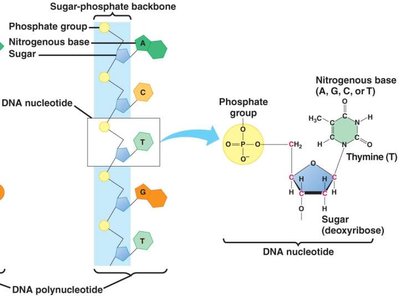
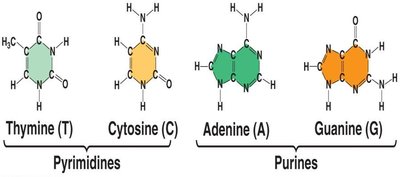
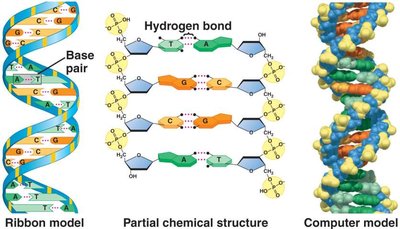
DNA is a polymer composed of nucleotides, each consisting of a phosphate group, a deoxyribose sugar, and a nitrogenous base. The structure is a double helix, with two strands held together by hydrogen bonds between complementary bases.
Nitrogenous Bases: Adenine (A), Thymine (T), Cytosine (C), Guanine (G)
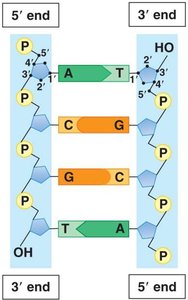
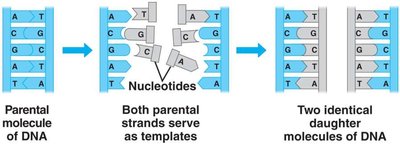
Base Pairing: A pairs with T, and G pairs with C via hydrogen bonds.
Orientation: Each DNA strand has a 5’ end (phosphate group) and a 3’ end (hydroxyl group).
DNA Replication
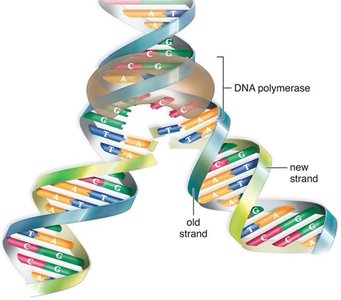
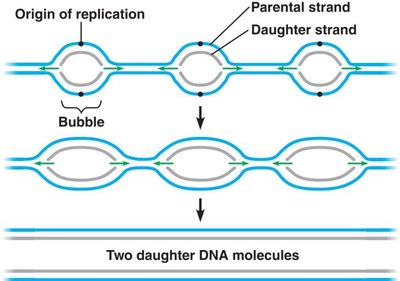
DNA replication is the process by which a cell copies its DNA before cell division. It is semiconservative, meaning each new DNA molecule consists of one old strand and one new strand. Replication involves several enzymes and occurs at multiple origins in eukaryotic chromosomes.
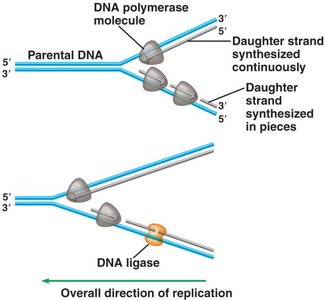
Key Enzymes: DNA helicase (unwinds helix), DNA polymerase (synthesizes new strand and proofreads), DNA ligase (joins fragments).
Directionality: DNA polymerase adds nucleotides only to the 3’ end.
Accuracy: Errors occur about 1 in 10 billion base pairs and are usually corrected by repair enzymes.
Gene Expression
Overview of Gene Expression
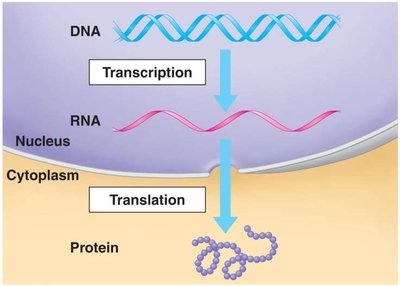
Gene expression is the process by which information from a gene is used to synthesize a functional gene product, typically a protein. This involves two main steps: transcription and translation.
Transcription: DNA is transcribed into messenger RNA (mRNA) in the nucleus.
Translation: mRNA is translated into a polypeptide (protein) at the ribosome in the cytoplasm.
Transcription
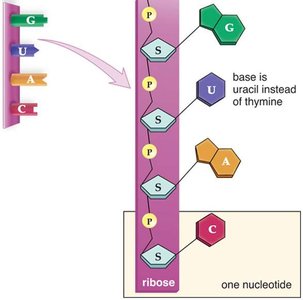
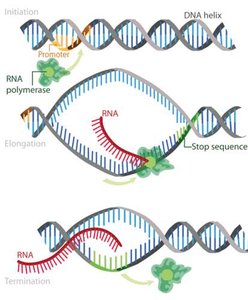
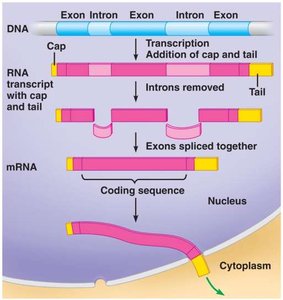
During transcription, RNA polymerase synthesizes a complementary RNA strand from a DNA template. Transcription factors bind to the promoter region to initiate transcription. The initial RNA transcript (pre-mRNA) is processed by splicing to remove introns, forming mature mRNA.
Promoter: DNA sequence where RNA polymerase binds to start transcription.
Transcription Factors: Proteins that help initiate transcription.
RNA Processing: Addition of a cap and tail, and removal of introns.
Translation
Translation is the process by which the sequence of codons in mRNA is decoded to build a polypeptide chain. Each codon (a sequence of three nucleotides) specifies a particular amino acid. Transfer RNA (tRNA) molecules bring the correct amino acids to the ribosome, matching their anticodon to the mRNA codon.
Codon: A triplet of nucleotides in mRNA that codes for an amino acid.
tRNA: Adapter molecule with an anticodon and attached amino acid.
Ribosome: Site of protein synthesis, reads mRNA 5’ to 3’.
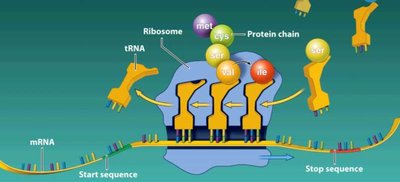
From DNA to Protein
Proteins are synthesized either free in the cytoplasm or targeted to specific organelles. After translation, proteins fold into their functional three-dimensional structures.
Protein Folding: Essential for biological activity.
Endomembrane System: Directs proteins to their cellular destinations.
Gene Regulation
Overview of Gene Regulation
Gene regulation determines whether a gene is expressed (turned on) or not. All cells in an organism contain the same DNA, but only a subset of genes is expressed in each cell type, depending on environmental and developmental signals.
Prokaryotic Regulation: Often uses operons (e.g., lac operon in E. coli).
Eukaryotic Regulation: Involves activators, repressors, mRNA degradation, translation inhibition, and protein processing.
Operon Structure (Prokaryotes):
Promoter: Site for RNA polymerase binding.
Operator: Site for repressor binding.
Regulatory Genes: Code for repressor proteins.
Example: In the lac operon, lactose binds to the repressor protein, preventing it from binding to the operator, thus allowing RNA polymerase to transcribe lactose-digesting genes.
Gene Mutation
Types and Effects of Mutations
Mutations are changes in the DNA sequence. They can be spontaneous or induced by radiation or chemicals. Mutations are essential for evolution but can also cause diseases.
Point Mutations: Change in a single nucleotide (substitution, insertion, deletion).
Chromosomal Aberrations: Large-scale changes affecting chromosome structure or number.
Effects: Can be silent, missense, nonsense, or frameshift, affecting the resulting protein in various ways.
Example: A missense mutation in a start codon can prevent translation initiation, resulting in no protein product.
Causes of Mutation:
Spontaneous errors during DNA replication
Exposure to radiation
Chemical mutagens
Substitution mutations are generally less likely to cause a mistranslated protein compared to insertions or deletions, which can cause frameshifts.
