 Back
DNA Synthesis and Repair: Structure, Function, and Replication
Study Guide - Smart Notes
 Tailored notes based on your materials, expanded with key definitions, examples, and context.
DNA Synthesis and Repair
Introduction to DNA as Genetic Material
Deoxyribonucleic acid (DNA) is the molecule that encodes hereditary information in all living organisms. Its discovery and structural elucidation revolutionized biology, providing the foundation for understanding inheritance, development, and cellular function.
Hereditary Information: DNA contains instructions for biochemical, anatomical, physiological, and some behavioral traits.
Historical Context: Early 20th-century biologists sought to identify the molecules responsible for inheritance, focusing on chromosomes composed of DNA and protein.
The Search for Genetic Material
Scientific inquiry into the nature of genetic material involved experiments with bacteria and viruses, leading to the conclusion that DNA, not protein, is the carrier of genetic information.
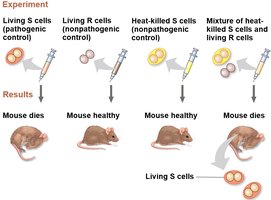
Frederick Griffith's Experiment (1928): Demonstrated transformation of non-pathogenic bacteria into pathogenic forms, suggesting a "transformation factor" (later identified as DNA).
T. H. Morgan's Group: Located genes on chromosomes, making DNA and protein candidates for genetic material.
Evidence That Viral DNA Can Program Cells
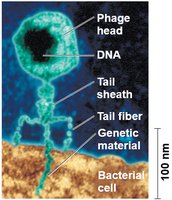
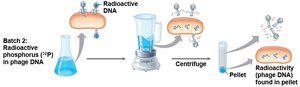
Viruses called bacteriophages provided key evidence that DNA is the genetic material. When phages infect bacteria, they reprogram the host to produce more viruses.
Bacteriophages: Viruses that infect bacteria, used extensively in molecular genetics research.
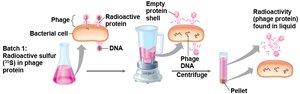
Hershey-Chase Experiment (1952): Showed that only DNA, not protein, enters the bacterial cell during infection, confirming DNA as the genetic material.
Chemical Components and Structure of DNA
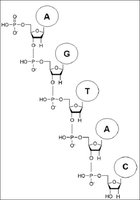
DNA is a polymer composed of nucleotides, each containing a nitrogenous base, a sugar (deoxyribose), and a phosphate group. The four bases are adenine (A), thymine (T), guanine (G), and cytosine (C).
Nucleotide Structure: Each nucleotide consists of a phosphate group, deoxyribose sugar, and a nitrogenous base.
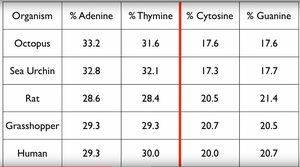
Chargaff's Rules: The amount of A equals T, and G equals C in DNA, supporting the idea of complementary base pairing.
Chargaff's Law Table
Chargaff's analysis of DNA from various organisms revealed species-specific base composition, but always A = T and G = C.
Organism | % Adenine | % Thymine | % Cytosine | % Guanine |
|---|---|---|---|---|
Octopus | 33.2 | 31.6 | 17.6 | 17.6 |
Sea Urchin | 32.8 | 32.1 | 17.3 | 17.7 |
Rat | 28.6 | 28.4 | 20.5 | 21.4 |
Grasshopper | 29.3 | 29.3 | 20.7 | 20.5 |
Human | 29.3 | 30.0 | 20.0 | 20.7 |
The Discovery of the Double Helix
The structure of DNA was elucidated through X-ray diffraction studies and model building. The double helix model explained how DNA could store and replicate genetic information.
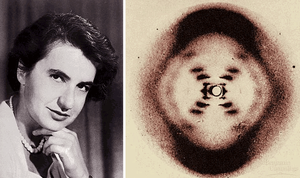
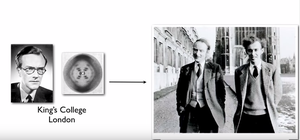
Rosalind Franklin's Photo 51: Provided critical evidence for the helical structure of DNA.
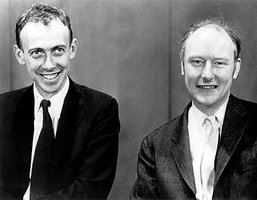
Watson and Crick's Model (1953): Proposed antiparallel strands and specific base pairing, earning the Nobel Prize.
Antiparallel Strands: One strand runs 5' to 3', the other 3' to 5'.
Base Pairing and Complementarity
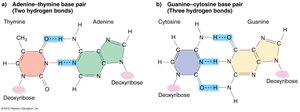
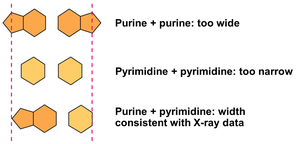
Base pairing is fundamental to DNA structure and replication. Purines (A, G) pair with pyrimidines (T, C), maintaining uniform width and complementarity.
Base Pairing: A pairs with T via two hydrogen bonds; G pairs with C via three hydrogen bonds.
Complementary Strands: Each strand serves as a template for replication.
DNA Replication: The Semiconservative Model
DNA replication is semiconservative, meaning each new DNA molecule consists of one old (parental) strand and one newly synthesized strand. This mechanism ensures accurate transmission of genetic information.
Replication Process: The double helix unwinds, and each strand serves as a template for a new complementary strand.
Competing Models: Conservative (both old strands stay together), dispersive (mixed segments), semiconservative (one old, one new strand).
Key Enzymes in DNA Replication
Several enzymes are involved in the process of DNA replication, each with a specific function:
Helicase: Unwinds the DNA double helix.
Topoisomerase: Relieves strain caused by unwinding.
DNA Polymerase III: Synthesizes new DNA strands by adding nucleotides.
DNA Polymerase I: Removes RNA primers and replaces them with DNA.
Primase: Synthesizes RNA primers needed to start DNA synthesis.
DNA Ligase: Joins Okazaki fragments on the lagging strand.
DNA Repair Mechanisms
DNA can be damaged or mismatched during replication. Cells have evolved repair mechanisms to detect and correct these errors, ensuring genetic fidelity.
Mismatch Repair: Corrects errors missed during replication.
Excision Repair: Removes damaged DNA segments and replaces them.
Proofreading: DNA polymerases check and correct their own errors.
Summary Table: DNA Replication Models
Model | Description | Result after Replication |
|---|---|---|
Conservative | Parent strands stay together; new strands form separate double helix | One old, one new double helix |
Semiconservative | Each double helix has one old and one new strand | Two hybrid double helices |
Dispersive | Each strand is a mix of old and new DNA | Mixed segments in both helices |
Learning Objectives – Chapter 15: DNA Synthesis and Repair
Describe the chemical components and structure of DNA.
Explain semiconservative DNA replication.
Identify and explain key components of a replication bubble: origin of replication, replication fork, leading and lagging strands, replisome, Okazaki fragments.
Describe the function of major enzymes in DNA replication.
Explain DNA damage detection and repair mechanisms.
Additional info: Some details about DNA repair mechanisms and replication bubble components were inferred from standard biology textbooks to ensure completeness.
