 Back
DNA Technology and Genetic Engineering: Study Notes for General Biology
Study Guide - Smart Notes
 Tailored notes based on your materials, expanded with key definitions, examples, and context.
DNA Technology and Genetic Engineering
Introduction to Biotechnology and Genetic Engineering
Biotechnology and genetic engineering are foundational concepts in modern biology, involving the manipulation of living organisms and their genetic material for practical applications. These fields have revolutionized medicine, agriculture, and research.
Biotechnology: The manipulation of living organisms or their components to produce useful products.
Recombinant DNA technology: The applied science of cutting, splicing, and creating DNA for various purposes.
Genetic engineering: The manipulation of the genetic makeup of cells or whole organisms.
DNA technology: Modern laboratory techniques used to study and manipulate genetic material.
Transgenic Organisms and Genetic Modification
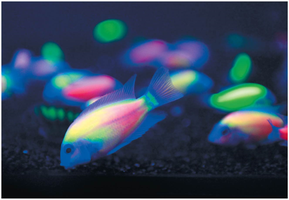
Transgenic organisms, also known as genetically modified organisms (GMOs), are created by introducing foreign genes from other species. This process is widely used in bacteria, yeast, plants, and animals to produce valuable products and traits.
Transgenic bacteria and yeast: Used to produce insulin, human growth hormone, erythropoietin, tissue plasminogen activator (tPA), and vaccines.
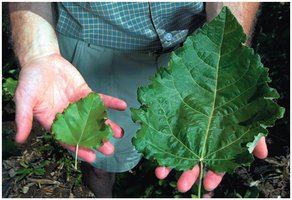
Transgenic plants: Engineered for increased resistance to freezing, longer shelf life, increased vitamin A, edible vaccines, human proteins, pest resistance, herbicide resistance, and drought resistance.
Transgenic animals: More challenging to produce due to difficulties in introducing foreign DNA. Methods include microinjection and CRISPR-Cas9. Examples include pigs with healthier fats, mice with human ACE2 gene for disease modeling, and "gene pharming" for producing human proteins in milk.
DNA Sequencing and Genomics
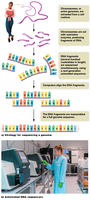
DNA sequencing determines the precise order of nucleotide bases in DNA, enabling the study of genes and genomes. The Human Genome Project was a landmark achievement, and newer sequencing methods have made genome analysis faster and more affordable.
Sanger dideoxy chain termination method: The traditional method for DNA sequencing.
Next-generation sequencing: Automated, high-throughput methods that sequence many DNA fragments simultaneously.
Human Genome Project: Completed in 2001, sequenced the entire human genome.
Proteomics: The study of the full set of proteins encoded by a genome, including their functions and interactions.
Recombinant DNA Technology: Tools and Methods
Recombinant DNA technology involves cutting, splicing, and copying DNA to isolate and clone genes. Key tools include restriction enzymes, DNA ligases, and plasmids.
Restriction enzymes: Cut DNA at specific sites, often palindromic sequences.
DNA ligases: Join DNA fragments together.
Plasmids: Small circular DNA molecules used as vectors to carry genes into bacteria for amplification.
Gene Cloning and Production of Human Insulin
Gene cloning involves inserting a gene of interest into a plasmid, which is then taken up by bacteria. The bacteria reproduce, creating clones that express the desired gene, such as human insulin.
Recombinant DNA: DNA molecules formed by joining genes from two sources in vitro.
Bacterial plasmids: Used as vectors to carry genes of interest.
Transformation: The process by which bacteria take up recombinant plasmids.
CRISPR-Cas9 Gene Editing
The CRISPR-Cas9 system allows precise editing of genes within living cells. It originated as a bacterial defense mechanism and is now a powerful tool for genetic engineering.
Guide RNA: Directs the Cas9 protein to the target DNA sequence.
Cas9 protein: Cuts both strands of the targeted DNA.
DNA repair mechanisms can introduce errors (knockout genes) or correct mutations (restore function).
Polymerase Chain Reaction (PCR)
PCR is a technique used to amplify specific DNA sequences rapidly, making billions of copies from a single molecule. It is essential for DNA profiling, sequencing, and diagnostics.
Components: DNA template, primers, nucleotides, heat-stable DNA polymerase.
Process: Repeated heating and cooling cycles allow for rapid amplification.
Applications: Forensic analysis, disease diagnosis, sequencing, detection of pathogens.
DNA Profiling and Gel Electrophoresis
DNA profiling analyzes genetic markers to identify individuals. Gel electrophoresis separates DNA fragments by size, creating unique band patterns for comparison.
Short tandem repeats (STRs): Hypervariable regions used for profiling.
Electrophoresis: DNA fragments move through a gel; smaller fragments travel faster.
Uses: Criminal investigations, paternity determination, identification of human remains.
Gene Therapy
Gene therapy aims to treat or eliminate diseases by introducing corrective genes into human cells. Delivery methods include viral vectors, liposomes, and naked DNA.
Ex vivo gene therapy: Cells are removed, modified, and returned to the patient.
In vivo gene therapy: Genes are delivered directly into the patient.
Applications: Treatment of severe combined immunodeficiency (SCID), blindness caused by RPE65 mutations (Luxturna).
Summary Table: Applications of DNA Technology
Application | Organism/Method | Purpose |
|---|---|---|
Transgenic Bacteria | Recombinant DNA | Produce insulin, hormones, vaccines |
Transgenic Plants | Genetic modification | Enhanced nutrition, pest resistance |
Transgenic Animals | Microinjection, CRISPR | Disease models, "gene pharming" |
DNA Sequencing | Next-generation sequencing | Genome analysis, disease research |
PCR | Polymerase chain reaction | DNA amplification for profiling, diagnostics |
Gene Therapy | Viral vectors, liposomes | Treat genetic diseases |
Key Equations and Concepts
PCR amplification: Where is the final number of DNA molecules, is the initial number, and is the number of cycles.
Gel electrophoresis: DNA fragments are separated by size due to their negative charge, moving toward the positive electrode.
Additional info:
CRISPR-Cas9 is revolutionizing gene editing due to its precision and efficiency.
Gene therapy is still experimental but has shown promise in treating inherited disorders.
Proteomics complements genomics by studying protein expression and function.
