 Back
BackDNA Technology and Genomics: Principles and Applications
Study Guide - Smart Notes
 Tailored notes based on your materials, expanded with key definitions, examples, and context.
DNA Technology and Genomics
Overview: Understanding and Manipulating Genomes
DNA technology has revolutionized biology by enabling the manipulation and analysis of genetic material. The sequencing of the human genome, completed in 2003, was a landmark achievement made possible by advances in recombinant DNA technology. Biotechnology, the use of organisms or their components to produce useful products, relies heavily on these molecular tools.
DNA Cloning and Its Applications
Gene Cloning: Principles and Process
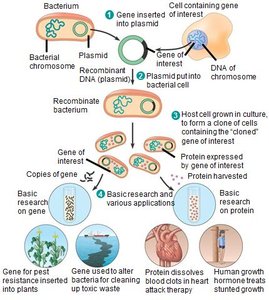
Gene cloning allows scientists to produce multiple copies of a specific gene or DNA segment. This process typically involves the use of bacteria and their plasmids as vectors to carry foreign DNA into host cells, where it can be replicated and expressed.
Cloning Vector: A DNA molecule (often a plasmid) that can carry foreign DNA into a host cell and replicate there.
Applications: Cloned genes can be used for basic research, protein production, gene therapy, and genetic modification of organisms.
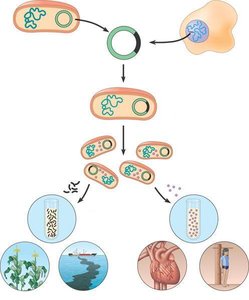
Steps in Gene Cloning
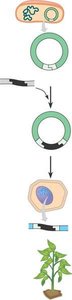
Gene of interest is inserted into a plasmid.
Plasmid is introduced into a bacterial cell.
Host cell is grown in culture to form a clone of cells containing the cloned gene.
Cloned genes or proteins can be harvested for various applications.
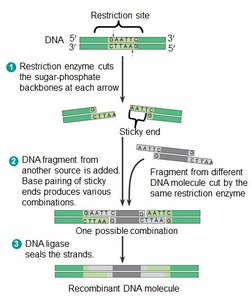
Restriction Enzymes and Recombinant DNA
Restriction enzymes are bacterial proteins that cut DNA at specific sequences called restriction sites, generating fragments with 'sticky ends' that can be joined with DNA from other sources. DNA ligase seals these fragments, creating recombinant DNA molecules.
Sticky Ends: Single-stranded overhangs that facilitate the joining of DNA fragments from different sources.
DNA Ligase: Enzyme that seals the sugar-phosphate backbone, forming stable recombinant DNA.
Selection and Screening of Recombinant Clones
After transformation, bacterial cells are plated on selective media. Only cells with plasmids (often carrying antibiotic resistance genes) survive. Further screening (e.g., blue/white screening using the lacZ gene) distinguishes recombinant from non-recombinant clones.
Blue/White Screening: Disruption of the lacZ gene by insertion of foreign DNA results in white colonies (recombinant), while blue colonies contain non-recombinant plasmids.
DNA Libraries
DNA libraries are collections of cloned DNA fragments. A genomic library contains DNA fragments representing an organism's entire genome, while a cDNA library is made from mRNA and represents only expressed genes.
Genomic Library: Created by cloning DNA fragments into vectors (plasmids or bacteriophages).
cDNA Library: Made by reverse transcribing mRNA into DNA, then cloning.
Amplifying DNA: The Polymerase Chain Reaction (PCR)
PCR: Principles and Steps
The polymerase chain reaction (PCR) is a technique for amplifying specific DNA sequences in vitro. It uses sequence-specific primers, a heat-stable DNA polymerase, and repeated cycles of denaturation, annealing, and extension.
Denaturation: Heating separates DNA strands.
Annealing: Cooling allows primers to bind to target sequences.
Extension: DNA polymerase synthesizes new DNA strands.
Equation: After n cycles, the number of DNA molecules is .
Analyzing DNA: Restriction Fragment Analysis and Gel Electrophoresis
Restriction Fragment Length Polymorphisms (RFLPs)
RFLPs are variations in DNA sequence that alter restriction enzyme sites, resulting in fragments of different lengths. These can serve as genetic markers for mapping and diagnosis.
Gel Electrophoresis
Gel electrophoresis separates DNA fragments by size. DNA samples are loaded into a gel, and an electric current causes fragments to migrate; shorter fragments move faster.
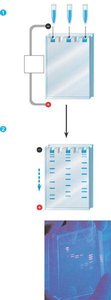
Southern Blotting
Southern blotting transfers DNA fragments from a gel to a membrane, where they can be probed with labeled DNA to detect specific sequences. This is useful for identifying genetic variants and diagnosing diseases.
Mapping and Sequencing Genomes
Genetic and Physical Mapping
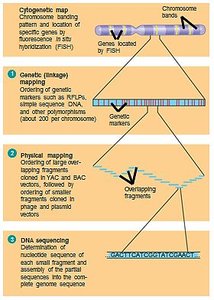
Genome mapping involves determining the order of genetic markers and the physical distances between them. Linkage maps are based on recombination frequencies, while physical maps use overlapping DNA fragments.
DNA Sequencing: Dideoxy Chain-Termination Method
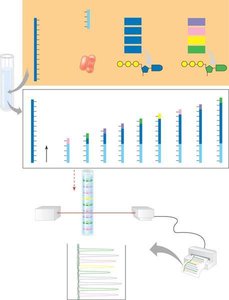
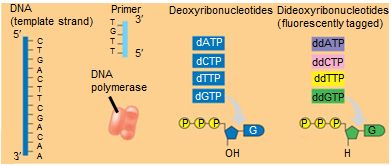
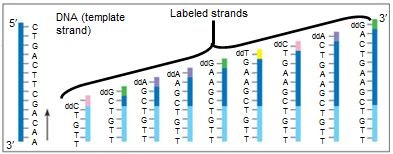
The dideoxy (Sanger) method uses chain-terminating nucleotides (ddNTPs) to generate DNA fragments of varying lengths, which are then separated and analyzed to determine the sequence.
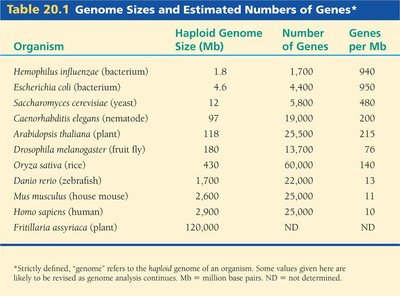
Genome Sizes and Gene Numbers
Genome projects have revealed the sizes and gene counts of various organisms. The human genome contains about 25,000 genes, but the number of proteins is much larger due to alternative splicing and post-translational modifications.
Organism | Haploid Genome Size (Mb) | Number of Genes | Genes per Mb |
|---|---|---|---|
H. influenzae | 1.8 | 1,700 | 940 |
E. coli | 4.6 | 4,300 | 950 |
S. cerevisiae | 12 | 5,800 | 480 |
C. elegans | 97 | 19,000 | 200 |
A. thaliana | 118 | 25,500 | 215 |
D. melanogaster | 180 | 13,600 | 75 |
O. sativa | 430 | 46,000 | 140 |
D. rerio | 1,700 | 25,000 | 15 |
M. musculus | 2,600 | 25,000 | 10 |
H. sapiens | 2,900 | 25,000 | 9 |
F. assyriaca | 120,000 | ND | ND |
Genomics and Functional Analysis
DNA Microarrays
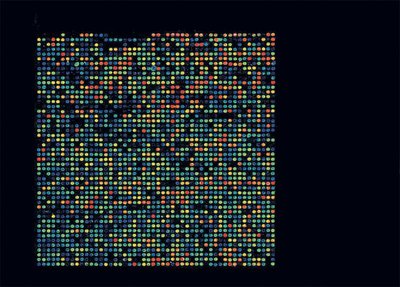
DNA microarrays allow simultaneous measurement of expression levels for thousands of genes. This technology is used to compare gene expression in different tissues, developmental stages, or disease states.
Comparative Genomics and Proteomics
Comparing genomes across species reveals evolutionary relationships and helps identify gene functions. Proteomics, the study of all proteins encoded by a genome, complements genomics by focusing on functional molecules.
Applications of DNA Technology
Medical Applications
Diagnosis of Diseases: PCR and DNA sequencing are used to detect mutations associated with genetic disorders.
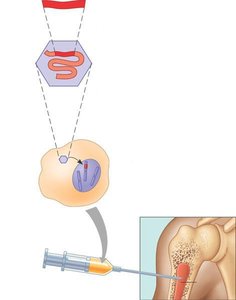
Gene Therapy: Involves altering an individual's genes to treat disease, often using viral vectors to deliver normal alleles.
Forensic Applications
DNA fingerprinting uses RFLP analysis or PCR to generate unique banding patterns for individuals, aiding in criminal investigations and paternity testing.
Environmental and Agricultural Applications
Bioremediation: Genetically engineered microbes can degrade pollutants or extract minerals.
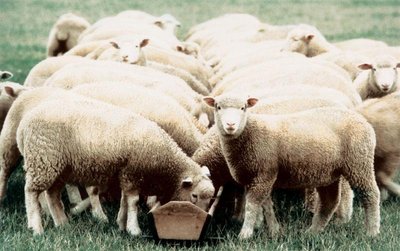
Transgenic Plants and Animals: Genes for desirable traits (e.g., pest resistance, improved nutrition) are introduced into crops and livestock.
Ethical and Safety Considerations
The use of DNA technology raises important ethical questions, particularly regarding genetically modified organisms (GMOs) and the potential risks to human health and the environment. Ongoing public debate and regulatory oversight are essential to balance benefits and risks.
