 Back
DNA Tools and Biotechnology: Concepts, Techniques, and Applications
Study Guide - Smart Notes
 Tailored notes based on your materials, expanded with key definitions, examples, and context.
Chapter 20: DNA Tools and Biotechnology
Introduction to Genetic Engineering and Biotechnology
Genetic engineering is the direct and deliberate modification of an organism’s genome. This is possible because the genetic code is universal, allowing genes from one organism (donor) to be expressed in another (host). Biotechnology refers to the manipulation of organisms or their components to produce useful products, often using recombinant DNA technology, which combines DNA from different sources.
Genetic Engineering: Direct manipulation of DNA to alter genetic makeup.
Recombinant DNA: DNA molecules formed by laboratory methods of genetic recombination to bring together genetic material from multiple sources.
Biotechnology: Application of biological systems or living organisms to develop products.
Universal Genetic Code and Protein Expression
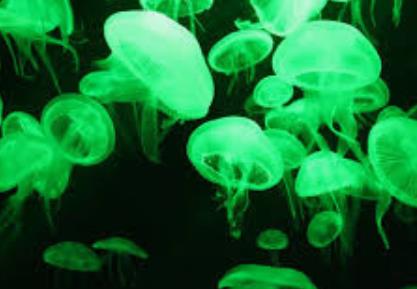
The universality of the genetic code means that a gene from one organism can be expressed in another, producing the same protein. For example, the GFP (Green Fluorescent Protein) gene from jellyfish can be inserted into various organisms, resulting in fluorescence.
Example: The GFP gene works in all organisms to produce the same fluorescent protein.
Commercial and Agricultural Applications of Genetic Engineering
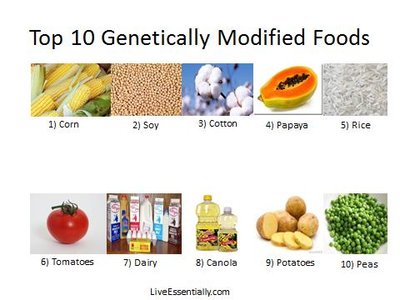
Genetic engineering has led to the development of genetically modified organisms (GMOs) for commercial and agricultural use. GMOs are organisms whose genomes have been altered to express desirable traits, such as pest resistance or enhanced nutrition.
GloFish: Fluorescent fish sold as pets, created by inserting fluorescent protein genes.
Genetically Modified Foods: Crops like corn, soy, and rice are engineered for improved yield, pest resistance, or nutritional value.
Recent Advances: Enhancing beef cells with plant nutrients for healthier cultivated meat.

DNA Technology: Sequencing and Cloning
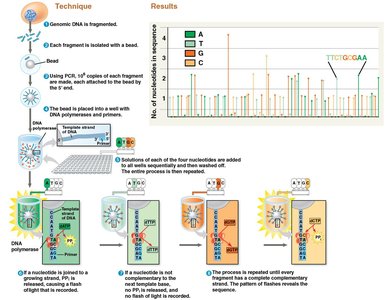
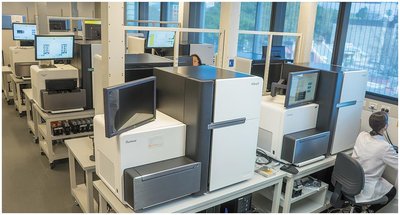
DNA technology encompasses methods for sequencing and manipulating DNA. DNA sequencing determines the order of nucleotides in DNA, while DNA cloning allows for the production of multiple copies of a gene or DNA segment.
DNA Sequencing: Determining the precise order of nucleotides in a DNA molecule.
Dideoxy (Sanger) Sequencing: An early method for sequencing DNA using chain-terminating nucleotides.
Next-Generation Sequencing: Modern, rapid, and cost-effective sequencing technologies.
DNA Cloning: Production of multiple identical copies of a DNA segment, often using plasmids as vectors.
Gene Cloning and Recombinant DNA Technology
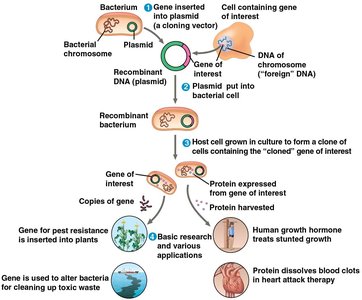
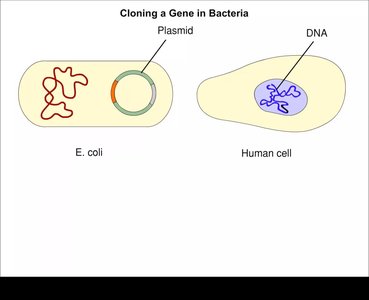
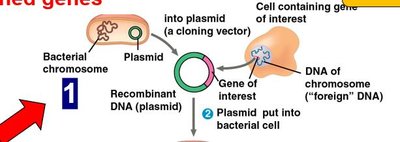
Gene cloning involves inserting a gene of interest into a plasmid vector, which is then introduced into a bacterial cell. The bacteria replicate, producing many copies of the gene. This process is fundamental for producing proteins such as insulin or for research purposes.
Plasmids: Small, circular DNA molecules used as cloning vectors.
Recombinant DNA: DNA formed by combining DNA from different organisms.
Gene Cloning: Amplification of a specific gene for research or therapeutic use.
Restriction Enzymes and DNA Ligation
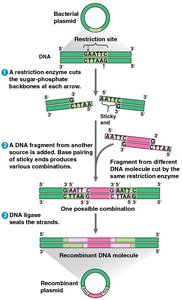
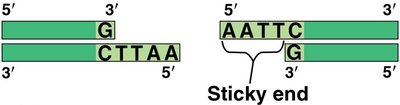
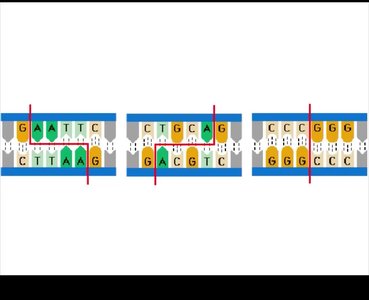
Restriction enzymes are proteins that cut DNA at specific sequences called restriction sites, producing fragments with 'sticky ends' that can be joined with DNA from other sources. DNA ligase seals these fragments, creating recombinant DNA molecules.
Restriction Enzymes: Molecular scissors that cut DNA at specific sequences.
Sticky Ends: Single-stranded overhangs that facilitate the joining of DNA fragments.
DNA Ligase: Enzyme that seals the sugar-phosphate backbone, joining DNA fragments.
Gel Electrophoresis
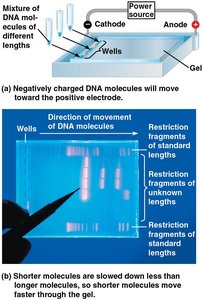
Gel electrophoresis is a technique used to separate DNA fragments by size. DNA samples are loaded into a gel matrix and subjected to an electric field; smaller fragments move faster toward the positive electrode.
Principle: DNA is negatively charged and moves toward the positive pole.
Application: Used to analyze restriction fragments, verify cloning, and compare DNA samples.
Polymerase Chain Reaction (PCR)
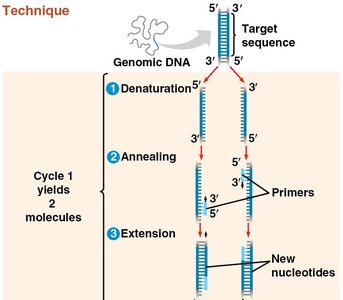
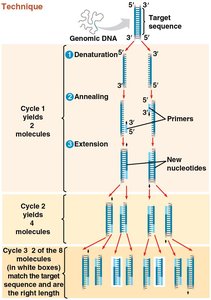
PCR is a method to amplify a specific DNA segment rapidly. It involves repeated cycles of denaturation, annealing of primers, and extension by a heat-stable DNA polymerase (Taq polymerase), resulting in exponential amplification of the target sequence.
Steps: Denaturation (heating), Annealing (cooling), Extension (synthesis).
Applications: Forensics, medical diagnostics, research, and ancient DNA analysis.
Key Enzyme: Taq polymerase, which withstands high temperatures.
Analyzing Gene Expression
Gene expression analysis helps determine when and where genes are active. Techniques include nucleic acid hybridization, in situ hybridization, and RT-PCR.
Nucleic Acid Hybridization: Uses labeled probes to detect specific DNA or RNA sequences.
In Situ Hybridization: Localizes specific mRNAs within tissues using fluorescent probes.
RT-PCR: Reverse transcriptase synthesizes cDNA from mRNA, allowing quantification of gene expression.
Gene Editing: CRISPR-Cas9 System
The CRISPR-Cas9 system is a revolutionary gene-editing tool derived from a bacterial defense mechanism. It allows precise modification, knockout, or repair of genes in living cells and organisms.
CRISPR: Clustered Regularly Interspaced Short Palindromic Repeats, sequences in bacterial DNA.
Cas9: An enzyme that cuts DNA at targeted locations guided by RNA.
Applications: Gene knockout, gene repair, and control of disease vectors (e.g., sterile mosquitoes).
Cloning and Stem Cells
Organismal cloning produces genetically identical organisms, while stem cells are undifferentiated cells capable of giving rise to various cell types. Nuclear transplantation is used in animal cloning, and plant cells can dedifferentiate and regenerate whole plants.
Organismal Cloning: Producing a new organism genetically identical to the donor.
Stem Cells: Cells that can self-renew and differentiate into specialized cell types.
Applications: Agriculture, medicine, and research.
Applications of DNA Technology
DNA technology and genetic engineering have broad applications in medicine, forensics, environmental science, and agriculture.
Medicine: Production of pharmaceuticals, gene therapy, and disease diagnosis.
Forensics: DNA profiling using short tandem repeats (STRs) for individual identification.
Agriculture: Development of pest-resistant and nutritionally enhanced crops.
Environmental Cleanup: Engineering organisms to degrade pollutants.
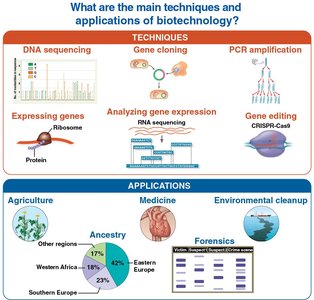
Summary Table: Main Techniques and Applications of Biotechnology
Technique | Application |
|---|---|
DNA Sequencing | Genomics, evolutionary studies, diagnostics |
Gene Cloning | Protein production, gene function studies |
PCR Amplification | Forensics, medical diagnostics, research |
Gene Editing (CRISPR-Cas9) | Gene therapy, functional genomics, agriculture |
Gel Electrophoresis | DNA analysis, genotyping, molecular diagnostics |
