 Back
DNA Tools and Biotechnology: Techniques, Applications, and Ethical Considerations
Study Guide - Smart Notes
 Tailored notes based on your materials, expanded with key definitions, examples, and context.
DNA Tools and Biotechnology
Introduction to DNA Technology
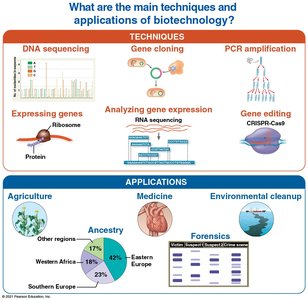
DNA technology encompasses the main techniques for sequencing and manipulating DNA, forming the foundation of modern genetic engineering and biotechnology. The complementarity of DNA strands enables nucleic acid hybridization, which is essential for many molecular biology techniques. Genetic engineering refers to the direct manipulation of genes for practical purposes, including research, medicine, and agriculture.
DNA Sequencing and Cloning
DNA Sequencing Methods
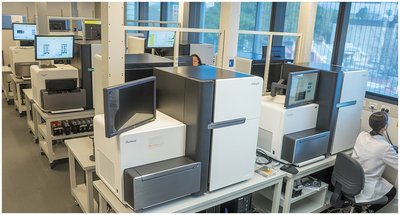
DNA sequencing determines the precise order of nucleotides in a DNA molecule. The first automated sequencing method was the dideoxy (chain termination) technique developed by Frederick Sanger. Modern sequencing methods include:
Next-generation sequencing: High-throughput, parallel sequencing of thousands of DNA fragments, allowing rapid and inexpensive analysis.
Third-generation sequencing: Sequences single long DNA molecules as they pass through nanopores, detecting bases by changes in electric current.
DNA Cloning and Recombinant DNA
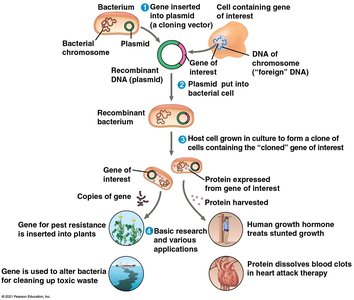
DNA cloning involves making multiple identical copies of a specific DNA segment. Plasmids, small circular DNA molecules in bacteria, are commonly used as cloning vectors. Recombinant DNA molecules contain DNA from different sources, and their replication in host cells enables gene cloning.
Restriction Enzymes and Recombinant DNA
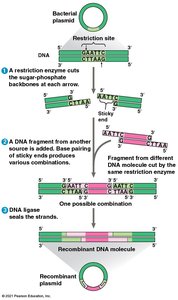
Restriction enzymes cut DNA at specific sequences (restriction sites), generating fragments with sticky ends that can be joined with DNA ligase to form recombinant DNA molecules.
Gel Electrophoresis
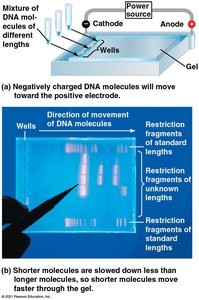
Gel electrophoresis separates DNA fragments by size using an electric field. Shorter fragments move faster through the gel matrix, allowing visualization and analysis of DNA fragments.
Polymerase Chain Reaction (PCR)
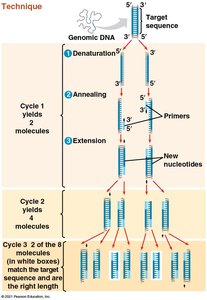
PCR amplifies specific DNA sequences using cycles of denaturation, annealing, and extension. It requires sequence-specific primers and a heat-stable DNA polymerase (e.g., Taq polymerase). PCR is widely used for cloning, diagnostics, and forensic analysis.
Gene Expression and Analysis
Studying Gene Expression
Gene expression analysis reveals when and where genes are active. Techniques include:
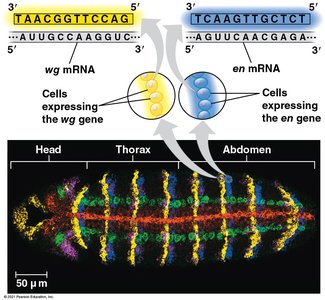
Nucleic acid hybridization: Uses labeled probes to detect specific mRNAs.
In situ hybridization: Visualizes mRNA location in tissues using fluorescent probes.
Reverse Transcriptase PCR (RT-PCR) and Quantitative RT-PCR (qRT-PCR)
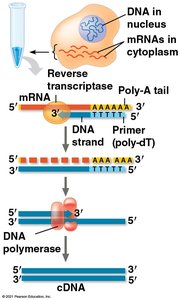
RT-PCR converts mRNA to cDNA using reverse transcriptase, followed by PCR amplification. qRT-PCR quantifies mRNA levels using fluorescent dyes, providing quantitative gene expression data.
RNA Sequencing (RNA-seq) and Microarrays
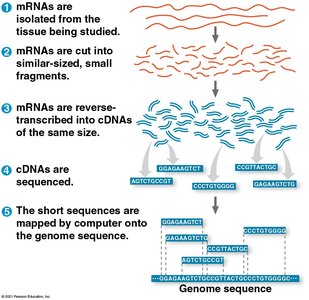
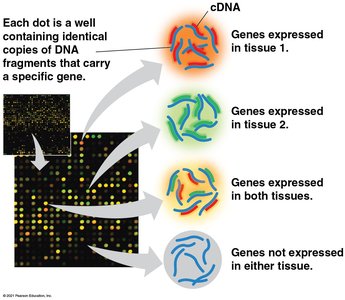
RNA-seq sequences cDNA from mRNA, allowing comprehensive analysis of gene expression across tissues or developmental stages. DNA microarrays compare expression patterns of thousands of genes simultaneously.
Gene Function and Genome Editing
Gene Knockout and CRISPR-Cas9
Gene function can be studied by disabling (knocking out) genes using in vitro mutagenesis or genome editing tools like CRISPR-Cas9. CRISPR-Cas9 enables precise gene editing and is used for gene knockout, repair, and gene drive applications.
RNA Interference (RNAi)
RNAi uses double-stranded RNA to silence gene expression by degrading or blocking target mRNA.
Genome-Wide Association Studies (GWAS) and SNPs
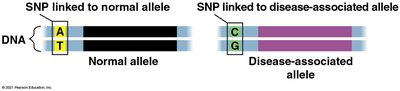
GWAS identify genetic markers (such as SNPs) associated with diseases by comparing genomes of affected and unaffected individuals.
Cloning and Stem Cells
Organismal Cloning and Nuclear Transplantation
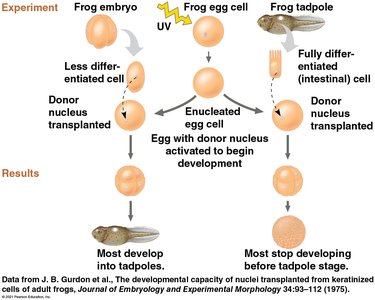
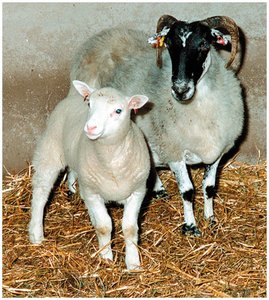
Organismal cloning produces genetically identical organisms. Nuclear transplantation replaces the nucleus of an egg with that from a differentiated cell. Success rates decrease with donor cell age due to epigenetic changes.

Stem Cells: Types and Applications
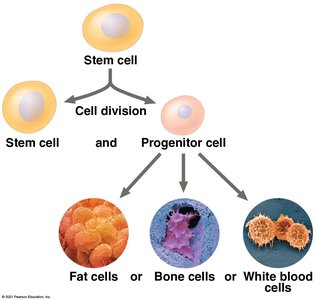
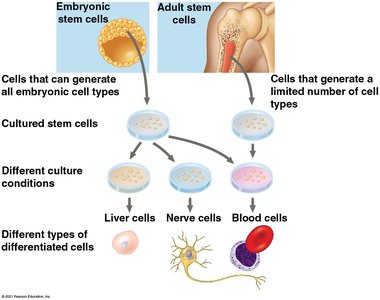
Stem cells are unspecialized cells capable of self-renewal and differentiation. Embryonic stem (ES) cells are pluripotent, while adult stem cells are multipotent. Stem cells are used in research, regenerative medicine, and therapeutic cloning.
Induced Pluripotent Stem (iPS) Cells
iPS cells are generated by reprogramming differentiated cells to a pluripotent state using specific regulatory genes. They offer potential for disease modeling and regenerative therapies with fewer ethical concerns than ES cells.
Applications of DNA Technology
Medical Applications
DNA technology is used to diagnose genetic disorders, identify carriers, and develop personalized medicine. Gene therapy introduces functional genes to treat diseases, while pharmacogenetics tailors drug treatments to individual genetic profiles.
Forensic and Environmental Applications
DNA profiling using short tandem repeats (STRs) is used in forensics for identification and paternity testing. Genetically engineered microorganisms are used for environmental cleanup, such as degrading toxic wastes.
Agricultural Applications
Genetic engineering improves crop traits (e.g., pest resistance, nutritional value) and accelerates animal breeding. Projects like C4 Rice aim to enhance photosynthetic efficiency and crop yield.
Safety and Ethical Considerations
Regulation and Public Concerns
Guidelines regulate recombinant DNA technology to prevent hazards. Public concerns focus on genetically modified organisms (GMOs), food safety, environmental impact, and ethical issues related to gene editing and cloning. Ongoing debate surrounds the use of biotechnology in agriculture, medicine, and industry.
Ethical Questions in Gene Editing
Gene therapy and genome editing raise ethical questions, especially regarding germline modifications and potential eugenics. Responsible use and regulation are essential as biotechnology advances.
