 Back
DNA Tools and Biotechnology: Techniques, Applications, and Ethical Considerations
Study Guide - Smart Notes
 Tailored notes based on your materials, expanded with key definitions, examples, and context.
DNA Tools and Biotechnology
Overview of DNA Technology and Genetic Engineering
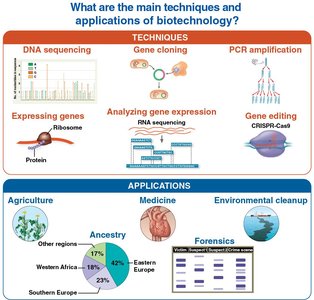
DNA technology encompasses the main methods for sequencing and manipulating DNA, forming the foundation for genetic engineering. The complementarity of DNA strands enables nucleic acid hybridization, which is essential for many molecular techniques. Genetic engineering refers to the direct manipulation of genes for practical purposes, including research, medicine, and agriculture.
DNA sequencing: Determining the complete nucleotide sequence of a gene.
Gene cloning: Making multiple identical copies of a DNA segment.
PCR amplification: Producing many copies of a specific DNA segment.
Gene editing: Modifying genes using technologies like CRISPR-Cas9.
DNA Sequencing Techniques
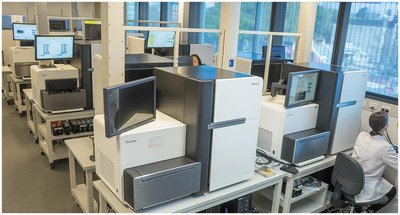
DNA sequencing allows scientists to determine the precise order of nucleotides in a DNA molecule. The first automated sequencing method was dideoxy (chain termination) sequencing, developed by Frederick Sanger. Modern "next-generation" and "third-generation" sequencing techniques are rapid, high-throughput, and cost-effective.
Sequencing by synthesis: DNA fragments are copied and sequenced in parallel, producing large amounts of data.
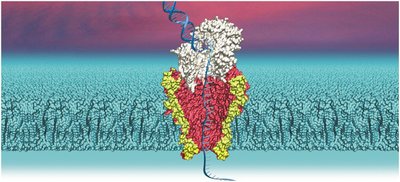
Nanopore sequencing: Single DNA molecules are sequenced as they pass through a nanopore, interrupting an electric current to identify bases.
DNA Cloning and Recombinant DNA Technology
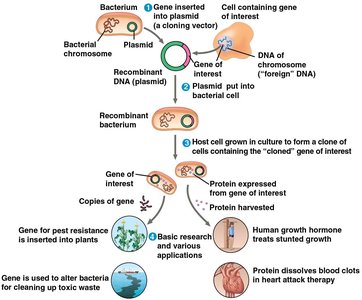
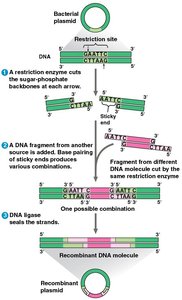
DNA cloning involves preparing well-defined DNA segments in multiple identical copies. Plasmids, small circular DNA molecules, are commonly used as cloning vectors. Recombinant DNA molecules contain DNA from two different sources, enabling gene cloning and expression in host cells.
Gene cloning: Amplifies genes for protein production or research.
Cloning vectors: Plasmids used to carry foreign genes.
Restriction enzymes: Cut DNA at specific sites, producing sticky ends for recombination.
DNA ligase: Seals bonds between DNA fragments.
Gel Electrophoresis
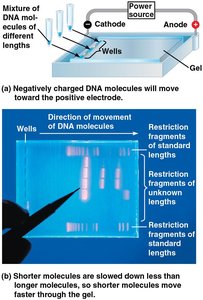
Gel electrophoresis separates DNA fragments by size using a polymer gel. Shorter fragments move faster through the gel, allowing visualization and analysis of DNA samples.
Restriction fragments: Produced by restriction enzymes and separated by gel electrophoresis.
Visualization: DNA fragments are visualized as bands in the gel.
Polymerase Chain Reaction (PCR)
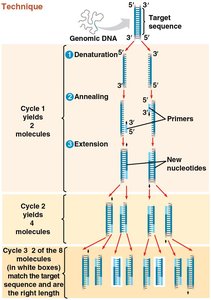
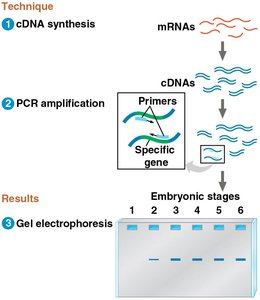
PCR is a technique for amplifying specific DNA segments. It involves cycles of denaturation, annealing, and extension, using heat-stable DNA polymerases like Taq polymerase. PCR is essential for cloning, diagnostics, and forensic analysis.
Primers: Short DNA sequences that initiate replication.
Exponential amplification: Each cycle doubles the number of DNA molecules.
Combining PCR and Cloning
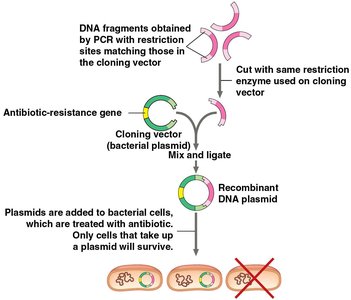
PCR products can be designed with restriction sites for cloning into plasmid vectors. This allows for the selection of error-free inserts and efficient gene cloning.
Applications of PCR
PCR has revolutionized biological research and genetic engineering. It enables DNA amplification from diverse sources, including ancient samples, forensic evidence, and single cells.
Forensics: DNA from crime scenes.
Medical diagnostics: Detection of pathogens and genetic mutations.
Expressing Cloned Genes
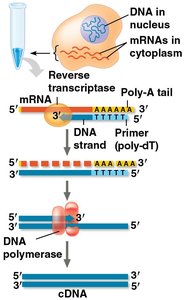
Cloned genes can be expressed in bacterial or eukaryotic cells. Expression vectors with active promoters are used to overcome differences in gene regulation. cDNA, synthesized from mRNA, is used to avoid introns in eukaryotic genes.
Bacterial expression systems: Efficient for protein production.
Eukaryotic expression systems: Yeast, mammalian, or insect cells for complex proteins.
Gene Expression Analysis
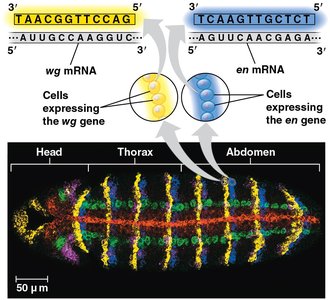
Studying gene expression provides insights into gene function. mRNA detection by nucleic acid hybridization uses probes to identify specific transcripts. In situ hybridization and RT-PCR are key techniques.
In situ hybridization: Uses fluorescent probes to localize mRNAs in tissues.
RT-PCR: Reverse transcriptase synthesizes cDNA from mRNA, followed by PCR amplification.
Quantitative RT-PCR and RNA Sequencing
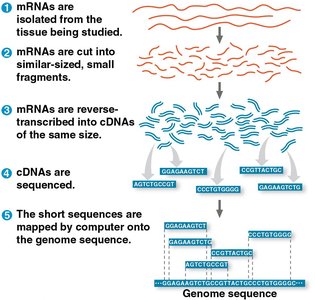
Quantitative RT-PCR (qRT-PCR) measures mRNA levels using fluorescent dyes. RNA sequencing (RNA-seq) allows genome-wide analysis of gene expression, providing detailed information about transcript abundance and tissue specificity.
DNA Microarray Assays
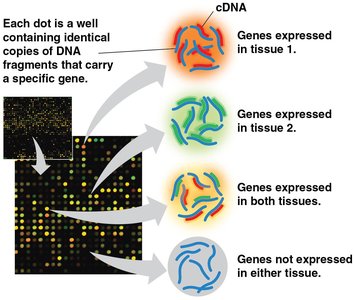
DNA microarrays compare gene expression patterns across tissues or conditions. cDNAs are labeled and hybridized to arrays containing DNA fragments, revealing which genes are expressed.
Gene Function and Editing
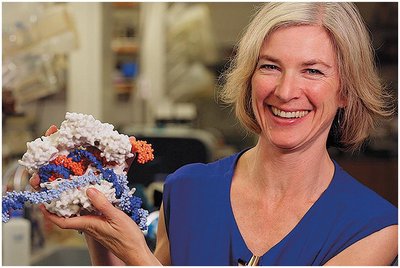
Gene function can be determined by disabling genes and observing phenotypic consequences. In vitro mutagenesis and CRISPR-Cas9 are powerful tools for gene editing and functional studies.
CRISPR-Cas9: Enables targeted gene knockout and repair.
Gene drive: Promotes inheritance of engineered alleles in populations.
RNA Interference (RNAi)
RNAi silences gene expression by degrading or blocking mRNA using synthetic double-stranded RNA molecules.
Genome-Wide Association Studies and SNPs
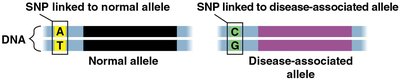
Researchers analyze genomes for genetic markers associated with diseases. Single nucleotide polymorphisms (SNPs) are key markers for identifying disease-linked alleles.
Cloning and Stem Cells
Organismal cloning produces genetically identical organisms. Stem cells are unspecialized cells capable of indefinite reproduction and differentiation. Embryonic stem cells (ES) are pluripotent, while adult stem cells are multipotent.
Plant cloning: Totipotent cells can generate complete organisms.
Nuclear transplantation: Used for animal cloning.
Therapeutic cloning: Produces ES cells for disease treatment.
Induced pluripotent stem (iPS) cells: Differentiated cells reprogrammed to act like ES cells.
Biotechnology Applications
Biotechnology has broad applications in medicine, forensics, environmental cleanup, and agriculture.
Medical applications: Diagnosis, treatment, and personalized medicine.
Gene therapy: Introduction of therapeutic genes into patients.
Pharmaceutical products: Protein production in cell cultures and transgenic animals.
Forensic evidence: STR analysis for genetic profiles.
Environmental cleanup: Engineered microorganisms degrade toxic waste.
Agricultural applications: Transgenic plants and animals for improved traits.
Safety and Ethical Considerations
DNA technology raises important safety and ethical questions, especially regarding GMOs, gene editing, and therapeutic cloning. Guidelines and regulations are in place to ensure safe practices, but ongoing debate continues about the risks and benefits.
GMOs: Concerns about environmental impact and food safety.
Gene editing: Ethical issues related to human germ line modification.
Biotechnology regulation: Legal frameworks for safe use.
Additional info: These notes expand on the lecture content with definitions, examples, and context for each major technique and application in DNA technology and biotechnology, suitable for General Biology students.
