Back
Early Life and the Diversification of Prokaryotes
Study Guide - Smart Notes
 Tailored notes based on your materials, expanded with key definitions, examples, and context.
Chapter 24: Early Life and the Diversification of Prokaryotes
What are Prokaryotes?
Prokaryotes are single-celled organisms that belong to the domains Bacteria and Archaea. They are the most abundant organisms on Earth and can thrive in environments that are too extreme for most other life forms, such as highly acidic, salty, cold, or hot habitats. Some prokaryotes also colonize the bodies of other organisms.
Fossil Evidence of Early Life: Stromatolites
Stromatolites are layered structures formed by the activities of prokaryotes, especially cyanobacteria. Fossil evidence shows that stromatolites date back to 3.5 billion years ago, indicating that prokaryotes were among the earliest life forms. Cyanobacteria were the main photosynthetic organisms for over a billion years, releasing oxygen and transforming Earth's atmosphere. Surviving prokaryote lineages adapted to the newly aerobic environment, and by 2.5 billion years ago, diverse communities of cyanobacteria populated the oceans.
Conditions on Early Earth and the Origin of Life
Stages in the Origin of Life
Chemical and physical processes on early Earth may have produced simple cells through four main stages:
Abiotic synthesis of small organic molecules
Joining of these molecules into macromolecules
Packaging of molecules into protocells (membrane-bound droplets with internal chemistry distinct from their surroundings)
Origin of self-replicating molecules
Earth's early atmosphere had little oxygen and was rich in water vapor and volcanic gases. Experiments have shown that amino acids and RNA monomers can form spontaneously under such conditions, supporting the hypothesis that life's building blocks could arise abiotically.
Protocells and the First Genetic Material
Protocells likely had semi-permeable membranes and could maintain internal chemistry, absorb molecules, and metabolize reagents. The first genetic material was probably RNA, which can have catalytic functions (ribozymes) and self-replicate. Eventually, DNA became the primary genetic material due to its greater stability and accuracy in replication.
Diverse Structural and Metabolic Adaptations in Prokaryotes
Structural Diversity
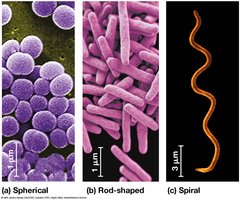
Most prokaryotes are unicellular, though some form colonies. They are typically much smaller than eukaryotic cells (0.5–5 μm vs. 10–100 μm). Prokaryotes exhibit a variety of shapes:
Cocci (spherical)
Bacilli (rod-shaped)
Spirilla (spiral-shaped)
Cellular Structures
Cell wall: Provides protection, maintains shape, and prevents bursting in hypotonic environments. Bacterial cell walls contain peptidoglycan; archaeal cell walls lack peptidoglycan.
Capsule: Sticky layer aiding in adherence and immune evasion.
Flagella: Used for movement.
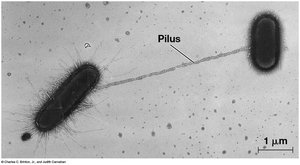
Fimbriae and Pili: Hairlike appendages for attachment and DNA transfer (conjugation).
Circular chromosome and plasmids: Genetic material is not membrane-bound; plasmids carry additional genes.
Adaptations for Survival
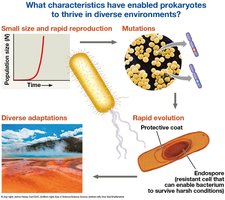
Prokaryotes thrive in diverse environments due to several key characteristics:
Small size and rapid reproduction
High mutation rates
Protective structures (e.g., endospores)
Diverse metabolic pathways
Metabolic Diversity in Prokaryotes
Nutritional Modes
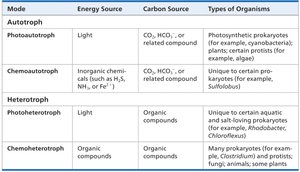
Prokaryotes display a wide range of nutritional strategies, classified by their energy and carbon sources:
Mode | Energy Source | Carbon Source | Types of Organisms |
|---|---|---|---|
Photoautotroph | Light | CO2, HCO3-, or related compound | Photosynthetic prokaryotes (e.g., cyanobacteria); plants; certain protists (e.g., algae) |
Chemoautotroph | Inorganic chemicals (e.g., H2S, NH3, Fe2+) | CO2, HCO3-, or related compound | Unique to certain prokaryotes (e.g., Sulfolobus) |
Photoheterotroph | Light | Organic compounds | Unique to certain aquatic and salt-loving prokaryotes (e.g., Rhodobacter, Chloroflexus) |
Chemoheterotroph | Organic compounds | Organic compounds | Many prokaryotes (e.g., Clostridium and protists); fungi; animals; some plants |
Role of Oxygen in Metabolism
Obligate aerobes: Require O2 for cellular respiration.
Obligate anaerobes: Poisoned by O2; use fermentation or anaerobic respiration.
Facultative anaerobes: Can use O2 when present or switch to anaerobic metabolism.
Nitrogen Metabolism
Nitrogen is essential for amino acids and nucleic acids. Some prokaryotes can fix atmospheric nitrogen (N2) into ammonia (NH3), making it available to other organisms. Specialized cells called heterocysts in cyanobacteria carry out nitrogen fixation.
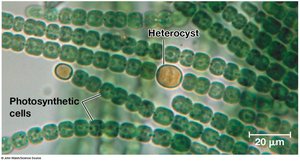
Metabolic Cooperation
Prokaryotes often cooperate metabolically, forming biofilms—surface-coating colonies that can cause chronic infections, tooth decay, and contamination of medical devices.
Genetic Diversity in Prokaryotes
Mechanisms Promoting Diversity
Prokaryotes exhibit high genetic diversity due to:
Rapid reproduction (binary fission)
High mutation rates
Genetic recombination (horizontal gene transfer)
Horizontal gene transfer includes transformation, transduction, and conjugation.
Transformation and Transduction
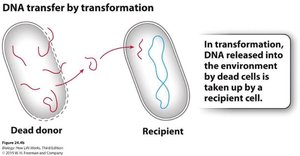
Transformation: Prokaryotic cells take up foreign DNA from their environment.
Transduction: Genes are transferred between prokaryotic cells by bacteriophages (viruses that infect bacteria).
Conjugation and Plasmids
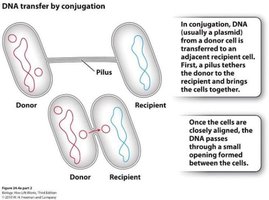
Conjugation: Direct transfer of genetic material (usually plasmids) between prokaryotic cells via a pilus. In E. coli, the donor cell attaches to the recipient via a pilus and transfers DNA.
Antibiotic Resistance
Genes for antibiotic resistance are often carried on R plasmids. Natural selection increases the frequency of resistant bacteria in populations exposed to antibiotics, leading to the rise of antibiotic-resistant strains.
Phylogeny and Diversity of Prokaryotes
Prokaryotic Phylogeny
Prokaryotes have radiated into a diverse set of lineages, inhabiting every environment that supports life. Horizontal gene transfer has played a key role in their evolution, making phylogenetic relationships complex.

Major Groups of Bacteria
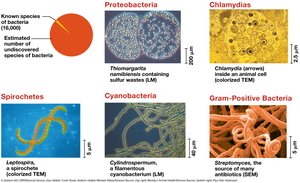
Bacteria include a vast array of species with diverse nutritional and metabolic modes. Major groups include Proteobacteria, Chlamydias, Spirochetes, Cyanobacteria, and Gram-Positive Bacteria.
Archaea
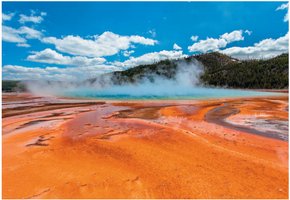
Archaea share traits with both bacteria and eukaryotes and include many extremophiles:
Extreme halophiles: Thrive in highly saline environments.
Extreme thermophiles: Thrive in very hot environments, such as hot springs and hydrothermal vents.
Methanogens: Produce methane as a waste product and live in anoxic environments.
Comparison of the Three Domains of Life
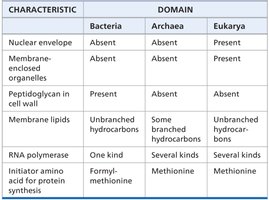
Characteristic | Bacteria | Archaea | Eukarya |
|---|---|---|---|
Nuclear envelope | Absent | Absent | Present |
Membrane-enclosed organelles | Absent | Absent | Present |
Peptidoglycan in cell wall | Present | Absent | Absent |
Membrane lipids | Unbranched hydrocarbons | Some branched hydrocarbons | Unbranched hydrocarbons |
RNA polymerase | One kind | Several kinds | Several kinds |
Initiator amino acid for protein synthesis | Formyl-methionine | Methionine | Methionine |
Ecological Roles and Applications of Prokaryotes
Roles in Ecosystems
Decomposers: Break down dead organic material, recycling nutrients.
Producers: Some prokaryotes produce sugars via photosynthesis.
Nitrogen fixers: Convert atmospheric nitrogen into forms usable by plants.
Ecological Interactions
Prokaryotes often form symbiotic relationships with other organisms:
Mutualism: Both organisms benefit (e.g., bacteria in human intestines).
Commensalism: One benefits, the other is unaffected.
Parasitism: Parasite harms the host; disease-causing parasites are called pathogens.
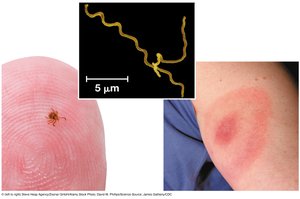
For example, Mycobacterium tuberculosis causes lung disease, and Lyme disease is caused by a bacterium transmitted by ticks.
Prokaryotes in Research and Technology
Prokaryotes are used in DNA technology (e.g., CRISPR-Cas9 for gene editing).
Some bacteria are used to produce biodegradable plastics.
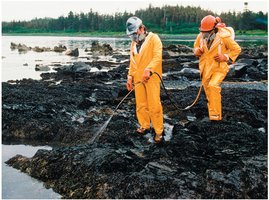
Bioremediation: Use of prokaryotes to remove pollutants from the environment.