 Back
BackEarth’s Physical Systems: Chemistry Foundations for Biology
Study Guide - Smart Notes
 Tailored notes based on your materials, expanded with key definitions, examples, and context.
Chemistry Foundations for Biology
Matter and Elements
Matter is anything that has mass and occupies space, existing as solids, liquids, or gases. Chemistry is the study of matter and how different types of matter interact. The Law of Conservation of Matter states that matter cannot be created or destroyed, only transformed from one form to another.
Element: A pure substance that cannot be broken down into other substances by chemical means. There are 92 naturally occurring elements and over 20 synthetic ones.
Common Elements: Oxygen (O), Carbon (C), Hydrogen (H), Silicon (Si), and Nitrogen (N) are most abundant in Earth's systems.
Atoms: Structure and Properties
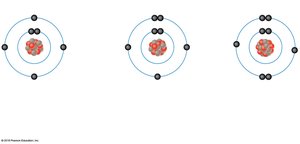
An atom is the smallest unit of an element that retains its chemical properties. Atoms are composed of:
Protons: Positively charged particles in the nucleus
Neutrons: Neutral particles in the nucleus
Electrons: Negatively charged particles orbiting the nucleus
The atomic number is the number of protons in an atom, which defines the element. The mass number is the sum of protons and neutrons.
Isotopes and Radioisotopes
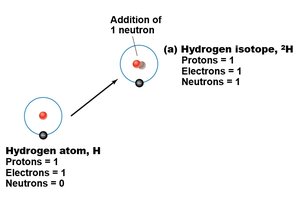
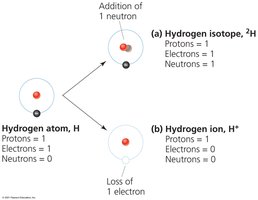
Isotopes are atoms of the same element with different numbers of neutrons. Some isotopes are unstable and are called radioisotopes, which decay over time, emitting radiation. The rate of decay is measured by the half-life, the time it takes for half of the atoms to decay. Radioisotopes have applications in medicine and energy production.
Ions
An ion is an atom or molecule that has gained or lost electrons, resulting in a net charge. Atoms that lose electrons become positively charged (cations), while those that gain electrons become negatively charged (anions).
Molecules, Compounds, and Chemical Bonds
Molecules are two or more atoms bonded together. If the atoms are of different elements, the molecule is also a compound. Chemical bonds hold atoms together:
Covalent bonds: Electrons are shared between atoms.
Ionic bonds: Electrons are transferred from one atom to another, creating ions that are held together by opposite charges.
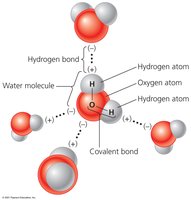
Hydrogen bonds: Weak attractions between the positive and negative regions of polar molecules, especially important in water.
Water: Structure and Properties
Water is a polar molecule, with oxygen attracting shared electrons more strongly than hydrogen. This polarity leads to hydrogen bonding between water molecules, giving water unique properties:
Excellent solvent for polar molecules and ions
High heat capacity, buffering temperature changes
Cohesion (water molecules stick together)
Ice is less dense than liquid water, so it floats
pH Scale and Acidity
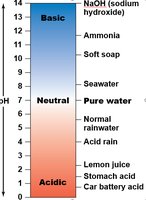
The pH scale measures the concentration of hydrogen ions (H+) in a solution. Water can dissociate into H+ and OH- ions. The scale ranges from 0 (most acidic) to 14 (most basic), with 7 being neutral. Each step represents a tenfold change in H+ concentration.
Acidic: [H+] > [OH-] (pH < 7)
Basic: [H+] < [OH-] (pH > 7)
Neutral: [H+] = [OH-] (pH = 7)
Organic Compounds and Macromolecules
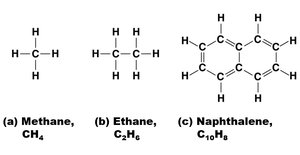
Organic compounds contain carbon atoms covalently bonded to other elements, often hydrogen. They are the basis of life. Hydrocarbons are organic molecules consisting only of carbon and hydrogen.
Macromolecules are large molecules essential for life, including:
Proteins: Polymers of amino acids
Carbohydrates: Polymers of simple sugars
Nucleic acids: Polymers of nucleotides (sugar, phosphate, nitrogenous base)
Lipids: Diverse group, not always polymers
Polymers are long chains of repeated units (monomers).
Energy and Thermodynamics
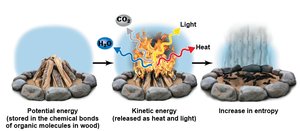
Energy is the capacity to do work. It exists in two main forms:
Kinetic energy: Energy of motion
Potential energy: Stored energy due to position or composition
The First Law of Thermodynamics states that energy cannot be created or destroyed, only transformed. The Second Law of Thermodynamics states that energy transformations increase disorder (entropy) unless energy is added to maintain order. No energy conversion is 100% efficient; some energy is always lost as heat or light.
Energy Input to Earth’s Living Systems
Earth receives energy from several sources:
Sunlight: Captured by plants via photosynthesis and stored in chemical bonds
Gravitational pull from the moon: Drives tides
Geothermal heating: Some bacteria use geothermal energy through chemosynthesis
Plate Tectonics
Plate tectonics describes the movement of Earth's lithospheric plates. There are 15 major plates, moving a few inches per year. Plate boundaries are sites of significant geological activity, including mountain formation, earthquakes, and volcanoes.
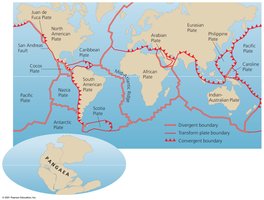
Table: Types of Chemical Bonds
Bond Type | Description | Strength | Example |
|---|---|---|---|
Covalent | Electrons shared between atoms | Strong | H2O (water) |
Ionic | Electrons transferred; ions attracted by opposite charges | Moderate | NaCl (salt) |
Hydrogen | Weak attraction between polar molecules | Weak | Between water molecules |
Table: Major Classes of Macromolecules
Macromolecule | Monomer | Function |
|---|---|---|
Protein | Amino acid | Structure, enzymes, transport |
Carbohydrate | Monosaccharide | Energy, structure |
Nucleic acid | Nucleotide | Genetic information |
Varied (often fatty acids) | Energy storage, membranes |
Key Equations
Mass number:
pH:
Additional info: Academic context and tables were added to clarify and expand on the original notes for completeness.
