 Back
Ecological Principles and Biomes: Study Guide for General Biology
Study Guide - Smart Notes
 Tailored notes based on your materials, expanded with key definitions, examples, and context.
Ecological Principles
Ecology: Definition and Levels of Study
Ecology is the scientific study of how organisms interact with both biotic (living) and abiotic (non-living) factors in their environment. The term derives from the Greek 'oikos' (house) and 'logia' (study). Ecological studies can be conducted at several hierarchical levels:
Organism: Focuses on individual organisms and their immediate environment.
Population: Examines groups of individuals of the same species within a local habitat.
Community: Studies interacting populations of different species in a specific geographic area.
Ecosystem: Considers interacting communities and their abiotic environment.
Biosphere: Encompasses all ecosystems globally.

Abiotic Factors
Abiotic factors are non-living components that influence ecosystems. Key abiotic factors include:
Atmospheric Conditions: Weather and climate, including temperature, precipitation, humidity, wind direction, and speed.
Seasonality: Latitude affects photoperiod, temperature, and precipitation patterns.
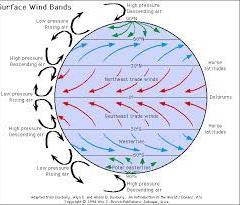
Global Air Circulation: Driven by solar energy and Earth's rotation, affecting climate and weather patterns.
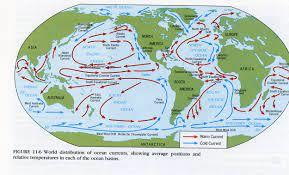
Global Ocean Currents: Influenced by continental positions, water temperature, and density; moderate climate by transporting heat.
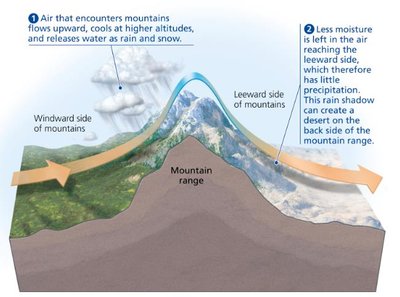
Topography: Variation in elevation affects water flow, precipitation, temperature, pressure, light penetration, and oxygen concentration.
Seasonality and Solar Energy
Seasonality
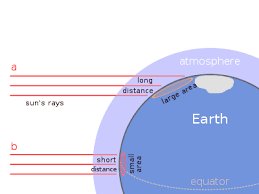
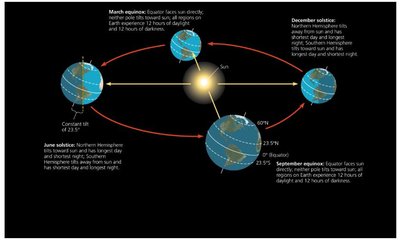
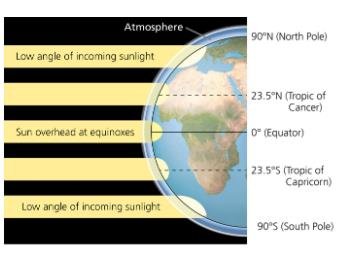
Seasonality is caused by Earth's tilt and orbit, resulting in variations in sunlight, temperature, and day length throughout the year. This affects biological processes and ecosystem dynamics.
Global Air Circulation
Mechanisms of Air Circulation
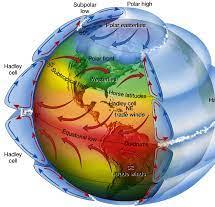
Solar energy drives global air circulation patterns. As the sun heats the tropics, hot moist air rises, cools, and releases water as precipitation. Earth's rotation affects the direction and speed of air masses, creating distinct wind bands and climate zones.
Hadley Cells: Circulation cells near the equator, responsible for tropical climates.
Trade Winds: Winds that move toward the equator and are deflected west.
Westerlies: Winds moving toward the poles, deflected east.
Global Ocean Currents
Ocean Currents and Climate
Surface ocean currents are driven by prevailing winds and are deflected by continents. Water's high heat capacity allows it to moderate climate by transporting warm or cold water between the poles and equator.
Warm Currents: Carry heat from equator to poles.
Cold Currents: Bring cold water from poles to equator.
Topography
Effects of Topography on Climate
Topography refers to the variation in elevation of Earth's surface. It influences local climate and ecosystem characteristics:
Mountains: Higher elevations are cooler; rain shadows create dry areas on the leeward side.
Valleys: Trap heat, leading to warmer temperatures.
Aquatic Depressions: Depth affects pressure, light penetration, and water movement.
Vegetation and Climate
Effects of Vegetation on Regional Climate
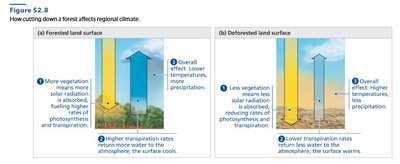
Vegetation influences climate by affecting the absorption of solar radiation, rates of photosynthesis, transpiration, and precipitation. Deforestation can lead to higher temperatures and reduced precipitation.
Forested Land: More vegetation absorbs solar radiation, increases transpiration, and cools the surface.
Deforested Land: Less vegetation leads to higher temperatures and less precipitation.
Climate Change
Atmospheric CO2 Trends
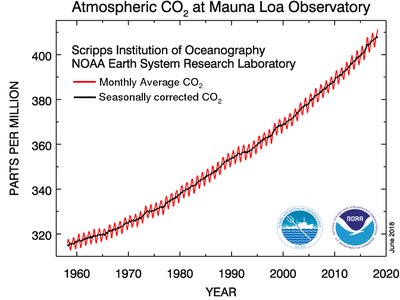
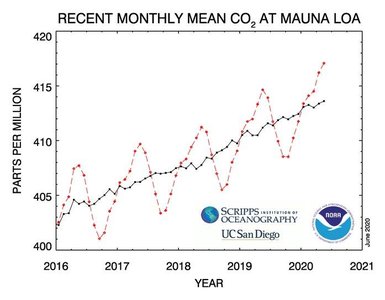
Climate change is driven by increasing atmospheric CO2 levels, which are monitored at observatories such as Mauna Loa. Rising CO2 contributes to global warming and changes in ecosystem dynamics.
Long-term Trends: Steady increase in CO2 since 1960.
Seasonal Variation: CO2 levels fluctuate annually due to plant growth cycles.
Biomes
Definition and Types of Biomes
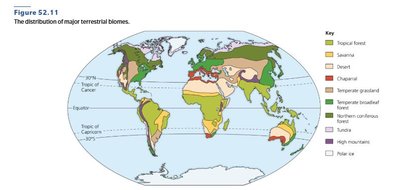
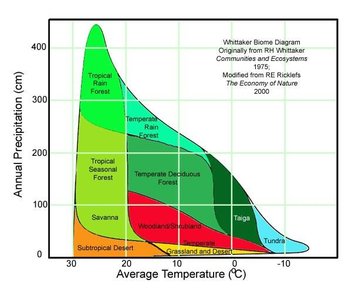
A biome is a distinct physical environment inhabited by ecologically similar organisms with similar adaptations. Biomes are shaped by convergent evolution and are generally determined by temperature and precipitation.
Aquatic Biomes: Freshwater and marine environments.
Desert Biomes: Hot & dry, semi-arid, coastal, cold.
Grasslands: Savannas (tropical), temperate.
Tundra: Arctic, alpine.
Forests: Tropical, temperate, boreal.
Temperate Deciduous Forest
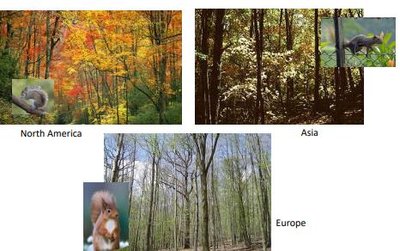
Temperate deciduous forests are characterized by moderate temperatures and precipitation, with trees that lose their leaves seasonally. These forests are found in North America, Asia, and Europe.
Key Features: Seasonal leaf drop, diverse animal and plant species.
Adaptations: Organisms adapt to seasonal changes in temperature and light.
Aquatic Biomes
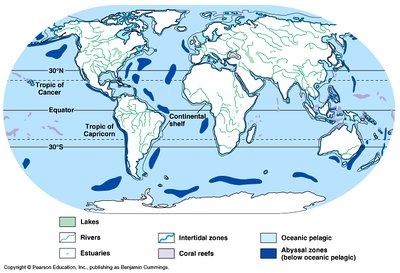
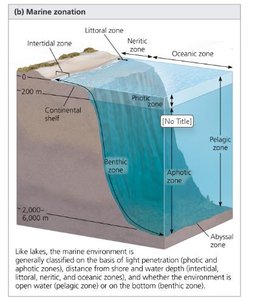
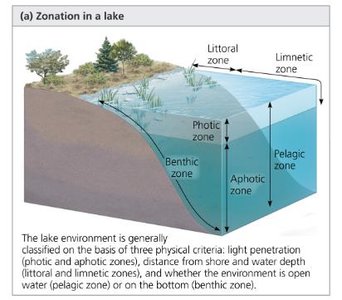
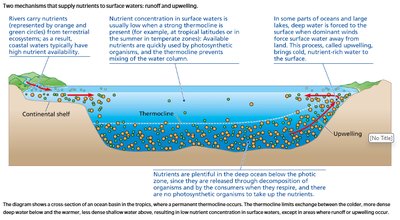
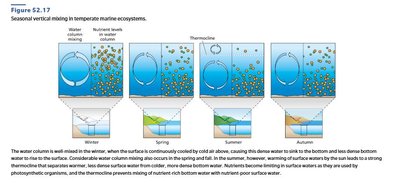
Aquatic biomes include lakes, rivers, estuaries, intertidal zones, oceanic pelagic zones, abyssal zones, and coral reefs. These biomes are classified based on light penetration, water depth, and distance from shore.
Freshwater: Lakes, rivers.
Marine: Oceanic pelagic, abyssal, coral reefs, estuaries.
Dispersal & Distribution
Factors Affecting Distribution
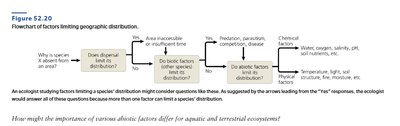
The distribution of organisms is influenced by both biotic and abiotic factors:
Biotic Factors: Predation, competition, disease.
Abiotic Factors: Temperature, water, oxygen, salinity, sunlight, rocks, soil.
Walter Climate Diagrams
Climate Diagrams and Interpretation
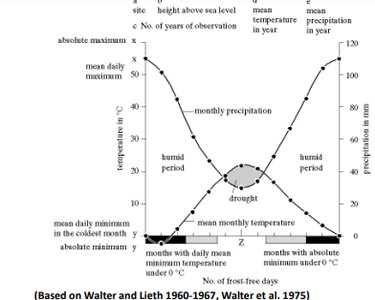
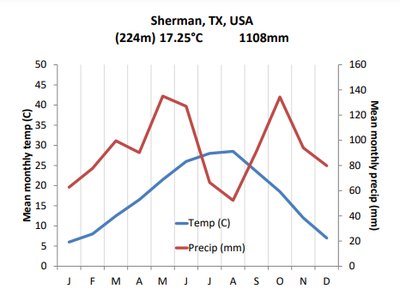
Walter climate diagrams graphically represent the relationship between temperature and precipitation throughout the year for a given location. These diagrams help identify humid and drought periods, and are useful for understanding biome characteristics.
Axes: Temperature (°C) and precipitation (mm).
Interpretation: Humid periods occur when precipitation exceeds temperature; drought periods occur when temperature exceeds precipitation.
Summary Table: Levels of Ecological Study
Level | Description | Example |
|---|---|---|
Organism | Individual and its environment | A single kangaroo in the Australian outback |
Population | Group of same species | All kangaroos in a region |
Community | Interacting populations | Kangaroos, emus, and eucalyptus trees in a forest |
Ecosystem | Communities + abiotic factors | Forest with animals, plants, soil, water |
Biosphere | All ecosystems globally | Earth's living systems |
Key Equations
Photosynthesis:
Population Growth:
Additional info: Academic context was added to clarify ecological levels, biome classification, and climate diagram interpretation.
