 Back
Ecological Scale and the Physical Environment: Climate, Biomes, and Levels of Ecological Study
Study Guide - Smart Notes
 Tailored notes based on your materials, expanded with key definitions, examples, and context.
Ecology and Levels of Ecological Study
Definition and Scope of Ecology
Ecology is the scientific study of how organisms interact with each other and with their physical environment. The diversity of life on Earth is the result of evolutionary processes that have occurred within a changing ecological context over 3.5 billion years. Ecological research is conducted at multiple biological levels, each addressing different types of questions about life and the environment.
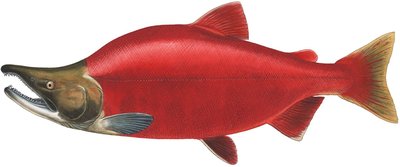
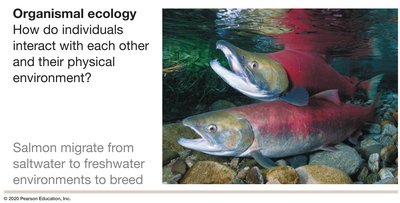
Organismal Ecology: Focuses on how morphological, physiological, and behavioral adaptations increase an organism's fitness in a particular environment.
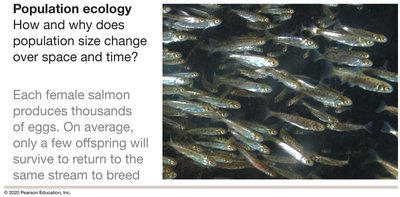
Population Ecology: Examines how and why the number and distribution of individuals in a population change over time.
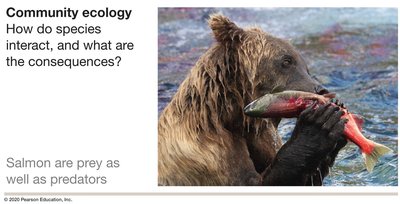
Community Ecology: Investigates the interactions between populations of different species and the consequences of these interactions.
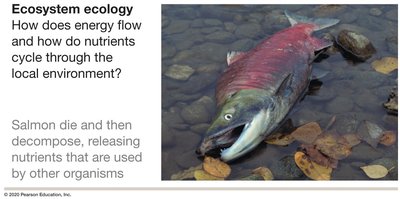
Ecosystem Ecology: Studies how nutrients and energy move among organisms and through the surrounding atmosphere, soil, or water. Distinguishes between biotic (living) and abiotic (nonliving) components.
Global Ecology (Biosphere Ecology): Explores the effects of human impacts and global changes on the biosphere, the thin zone surrounding Earth where all life exists (from 5 km below the land surface to over 10 km into the atmosphere).
Abiotic Drivers of Climate
Weather vs. Climate
Climate refers to the prevailing, long-term weather conditions in an area, while weather describes specific short-term atmospheric conditions such as temperature, precipitation, sunlight, and wind. Climate is what you expect; weather is what you get.
Solar Radiation and the Global Climate System
The global climate system is powered by solar radiation. The process involves several key steps:
High-energy, shortwave (UV) solar radiation arrives from the sun.
About 30% of incoming sunlight is reflected back into space by the atmosphere and Earth's surface.
The remaining 70% is absorbed by Earth's surface and atmosphere, warming the planet.
Earth emits this energy back as lower-energy, longwave (infrared, IR) radiation.
Greenhouse gases (molecules with at least three atoms, such as CO2 and CH4) trap some outgoing longwave radiation, reflecting it back to Earth and warming the system—a process known as the greenhouse effect.
Latitudinal Variation in Climate
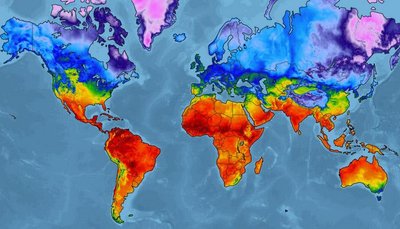
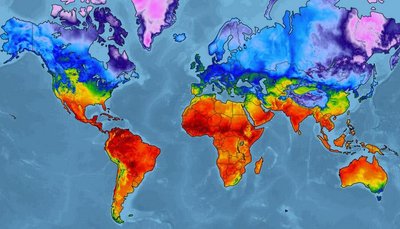
Climate varies predictably across latitude due to the shape of the Earth and the angle at which sunlight strikes different regions. Regions near the equator receive more sunlight per unit area than regions closer to the poles, resulting in higher average temperatures at lower latitudes.
As latitude increases, the average temperature decreases.
This pattern is a direct result of the spherical shape of Earth and the distribution of solar energy.
Global Air Circulation and Precipitation Patterns
Cycles in global air circulation, driven by solar heating, create predictable patterns of precipitation and the distribution of deserts and rainforests. The main circulation cells are:
Hadley Cell: Warm air rises at the equator, cools, and releases moisture as rain. The now dry air moves poleward, descends at around 30° latitude, and creates deserts.
Ferrel (Mid-latitudinal) Cell: Located between 30° and 60° latitude, these cells interact with Hadley and Polar cells to influence precipitation and wind patterns.
Polar Cell: Cold, dense air descends at the poles, creating dry conditions.
These cells produce bands of low precipitation at 30°, 60°, and 90° N & S.
Earth’s Tilt, Orbit, and Seasons
Seasons are regular, annual fluctuations in temperature and precipitation caused by the tilt of Earth’s axis (23.4 degrees) and its orbit around the sun. The Northern Hemisphere is tilted toward the sun in June, while the Southern Hemisphere is tilted toward the sun in December. If Earth were not tilted, there would be no seasons. Seasonality increases with latitude, leading to greater differences between summer and winter temperatures at higher latitudes.
Influence of Mountains and Oceans on Climate
Mountains: Mountain ranges can create rain shadows, where moist air rises and cools on the windward side, dropping precipitation, while the leeward side remains dry.
Oceans: Oceans moderate climate due to water’s high specific heat, resulting in more stable temperatures in coastal regions. Ocean currents (gyres) move warm water to higher latitudes and cold water to the tropics, influencing local climate patterns.
Biomes and Their Distribution
Definition and Determinants of Biomes
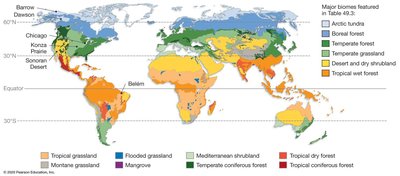
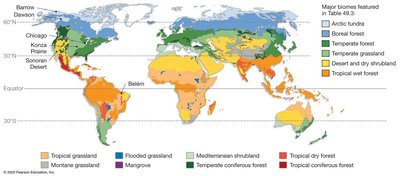
A biome is a major type of ecological community defined primarily by distinctive plant formations and climate conditions. The location and characteristics of biomes are determined by temperature, precipitation, and geography.
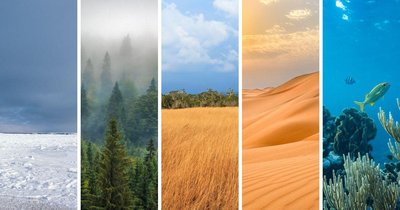
Major terrestrial biomes include tundra, boreal forest, temperate forest, temperate grassland, desert, tropical grassland, and tropical wet forest.
Each biome is associated with a specific range of temperature and precipitation, which shapes the types of organisms that can thrive there.
Biome | Climate Characteristics | Dominant Vegetation |
|---|---|---|
Tundra | Very cold, low precipitation | Mosses, lichens, low shrubs |
Boreal Forest (Taiga) | Cold, moderate precipitation | Coniferous trees |
Temperate Forest | Moderate temperature and precipitation | Deciduous trees |
Temperate Grassland | Moderate temperature, low precipitation | Grasses, few trees |
Desert | High temperature, very low precipitation | Cacti, succulents |
Tropical Grassland (Savanna) | Warm, seasonal rainfall | Grasses, scattered trees |
Tropical Wet Forest | Warm, high precipitation | Broadleaf evergreen trees |
Example: The Atacama Desert on the western side of the Andes mountains is a result of a rainshadow effect, where prevailing winds lose their moisture on the windward side, leaving the leeward side dry.
Additional info: Biomes are dynamic and can shift in response to climate change, human activity, and other ecological factors.
