 Back
Backlec 36s
Study Guide - Smart Notes
 Tailored notes based on your materials, expanded with key definitions, examples, and context.
Ecological Speciation
Definition and Requirements
Ecological speciation is the process by which barriers to gene flow evolve between populations as a result of ecologically based divergent selection between environments. This process is central to understanding how new species arise in response to environmental differences.
Divergent selection: Selection pressures differ between environments, favoring different traits in each population.
Reproductive isolation: Mechanisms evolve that prevent gene flow between diverging populations.
Linkage: There must be a connection between the divergent selection and the reproductive isolation.
The Geography of Speciation
Allopatry, Secondary Contact, and Genetic Bottlenecks
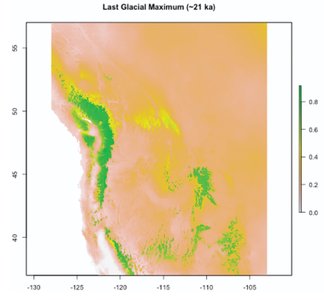
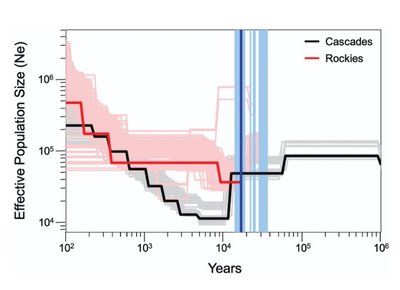
Geographic separation (allopatry) often initiates speciation. During periods such as the Last Glacial Maximum (LGM), populations may become isolated in different refugia, leading to genetic divergence. Postglacial expansion can bring these populations back into contact (secondary contact), where reproductive barriers are tested.
Allopatric populations: Populations separated by physical barriers (e.g., mountains, glaciers).
Genetic bottleneck: A sharp reduction in population size reduces genetic diversity, influencing future evolution.
Secondary contact: Previously isolated populations meet again, potentially leading to hybridization or reinforcement of isolation.
Reproductive Isolation Mechanisms
Prezygotic and Postzygotic Barriers
Reproductive isolation is essential for speciation. Barriers can act before or after fertilization:
Prezygotic barriers: Prevent mating or fertilization between species (e.g., differences in mating time, habitat, behavior, or mechanical incompatibility).
Postzygotic barriers: Occur after fertilization, resulting in unviable or sterile offspring.
Premating (Prezygotic) Isolation
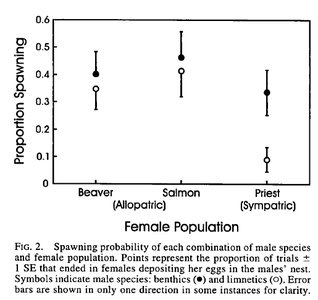
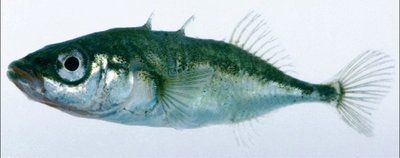
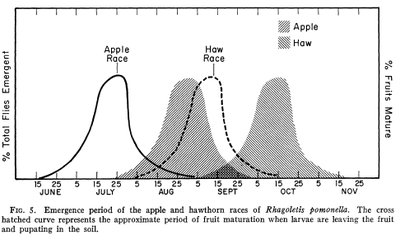
Premating barriers prevent individuals from different populations from mating. These include behavioral differences (such as female choice), ecological factors (like resource availability), and mechanical incompatibilities ("lock and key" mechanisms).
Behavioral isolation: Differences in mating rituals or preferences.
Ecological isolation: Use of different habitats or resources.
Mechanical isolation: Physical incompatibility of reproductive organs.
Postmating, Prezygotic Barriers
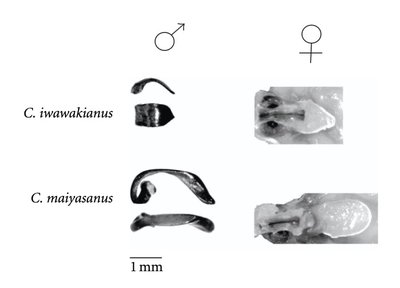
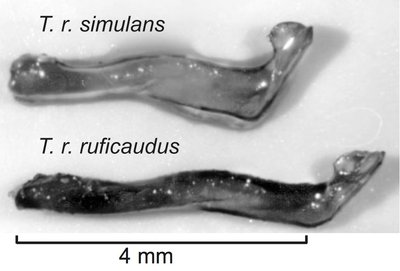
These barriers occur after mating but before fertilization. Examples include mechanical failure during copulation or gametic incompatibility, where sperm and egg do not successfully unite.
Mechanical isolation: Copulation occurs, but no transfer of gametes (e.g., differences in genital morphology).
Gametic isolation: Gametes are not compatible, preventing fertilization.
Postzygotic Barriers
Postzygotic barriers reduce the fitness of hybrid offspring, either through inviability (death before reproductive age) or sterility (inability to reproduce).
Hybrid inviability: Hybrids fail to develop or die early.
Hybrid sterility: Hybrids are healthy but cannot reproduce.

Hybrid Zones and Reinforcement
Outcomes of Secondary Contact
When diverged populations come into secondary contact, several outcomes are possible depending on the fitness of hybrids relative to parental forms:
Fusion: If hybrids are as fit as parents, populations may blend together.
Stable hybrid zone: If hybrids have a fitness advantage in a specific environment, a stable hybrid zone or new species may form.
Reinforcement: If hybrids are less fit, selection favors increased reproductive isolation, leading to speciation.
Types of Postzygotic Isolation
Intrinsic isolation: Caused by genetic incompatibilities, independent of environment (e.g., developmental defects).
Extrinsic isolation: Environmentally dependent, hybrids perform poorly because they occupy intermediate niches.
Examples of Intrinsic Hybrid Incompatibilities
Cytonuclear interactions: Conflicts between mitochondrial and nuclear genes can reduce hybrid fitness.
Predator defense genes: In plants, mismatches in defense genes can cause hybrid necrosis.
Essential cell function: Genes involved in chromosome condensation or neural development can cause hybrid inviability.
Summary Table: Types of Reproductive Isolation
Barrier Type | Stage | Examples |
|---|---|---|
Premating (Prezygotic) | Before fertilization | Behavioral, ecological, mechanical isolation |
Postmating, Prezygotic | After mating, before fertilization | Mechanical failure, gametic incompatibility |
Postzygotic | After fertilization | Hybrid inviability, hybrid sterility |
Key Equations and Concepts
Effective population size (Ne): The number of individuals in a population who contribute offspring to the next generation. Changes in Ne can be visualized over time to infer bottlenecks and expansions.
Hybrid index: A quantitative measure of the genetic contribution from each parental species in hybrids.
Conclusion
Ecological speciation is a dynamic process driven by divergent selection and reinforced by reproductive isolation. The interplay between geography, genetics, and ecology shapes the formation of new species, with hybrid zones providing natural laboratories for studying these mechanisms in action.
