 Back
Back9.2 Ecology and Climate Change: Impacts on Terrestrial and Marine Systems
Study Guide - Smart Notes
 Tailored notes based on your materials, expanded with key definitions, examples, and context.
Ecology & Climate Change
Overview of Climate Change in Ecology
Climate change is a central topic in ecology, affecting both terrestrial and marine ecosystems. The increase in atmospheric carbon dioxide (CO2) and global temperatures has led to significant environmental changes, including shifts in species distributions, emergent diseases, and extreme weather events. - Climate Change: Long-term alteration of temperature and typical weather patterns in a place. - Ecology: The study of interactions between organisms and their environment. - Key Impacts: Emergent diseases, altered species distributions, extreme hurricanes, increased flooding and droughts, forest fires, and heat waves. 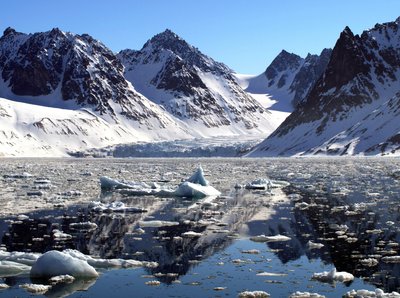
Atmospheric CO2 and Temperature
Historical CO2 Trends and Correlation with Temperature
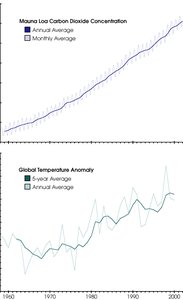
Atmospheric CO2 levels have risen dramatically in recent decades, correlating tightly with global temperature increases. Data reconstructed from ice cores show that current CO2 levels are unprecedented in the last 650,000 years. - CO2 Concentration: Measured in parts per million (ppm), currently at 380 ppm and rising. - Correlation: Higher CO2 levels are associated with higher global temperatures. - Example: The Mauna Loa Observatory records show a steady increase in CO2 since 1950, paralleling global temperature anomalies. 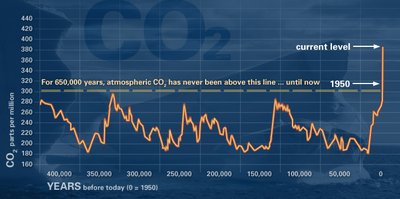
Consequences of Warming the Land
Emergent Diseases and Ecological Disruptions
Warming terrestrial environments leads to increased severity of foliar fungal diseases, locust swarms during wet years and warm winters, and outbreaks of diseases such as malaria, cholera, dengue, and Nile River fever. - Emergent Diseases: New or increasing diseases due to environmental changes. - Species Distribution Shifts: Organisms move to new areas as their habitats become unsuitable. - Extreme Weather: More frequent hurricanes, flooding, droughts, forest fires, and heat waves. 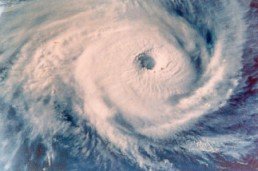
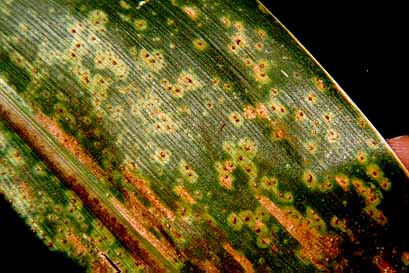
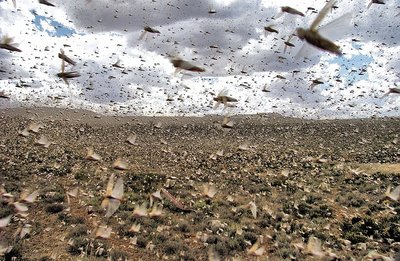
Changes in Terrestrial Net Primary Productivity (NPP)
Net Primary Productivity (NPP) measures the rate at which plants produce biomass. Climate change alters NPP globally, with some regions experiencing increases and others decreases. - NPP: The amount of carbon uptake after subtracting plant respiration from gross primary productivity. - Global Patterns: Changes in NPP affect food webs and ecosystem stability. 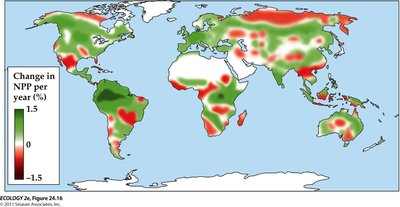
Spread of Tropical Diseases
Climate change is predicted to expand the range of tropical diseases, such as malaria, into new regions due to warmer temperatures and altered precipitation patterns. - Malaria Distribution: Areas suitable for malaria transmission are expected to increase by 2050. 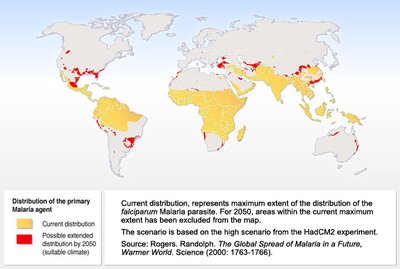
Warming the Oceans
Ocean Temperature Increase and Consequences
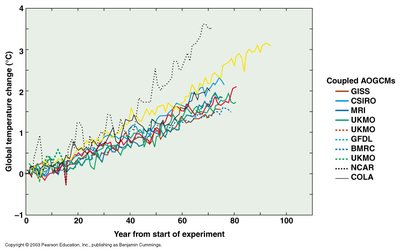
Oceans are warming as the atmosphere warms, with predictions of an average increase of 4°C (7°F) this century. This warming leads to shifts in marine species distributions, coral bleaching, melting polar ice caps, sea level rise, emergent marine diseases, and altered ocean currents. - Coral Bleaching: Loss of endosymbiotic zooxanthellae, dinoflagellates that feed coral, resulting in coral death. - Polar Ice Caps: Significant reduction in Arctic ice volume over the past 35 years. 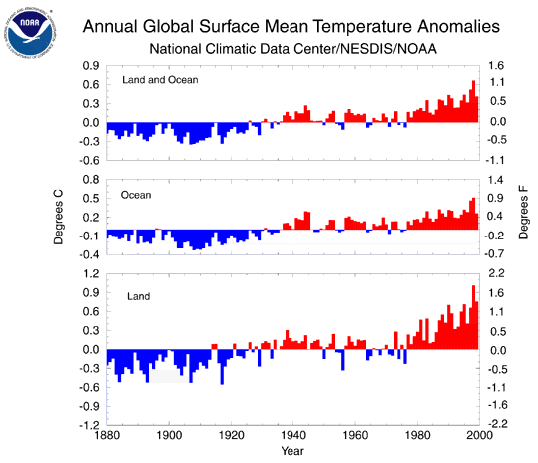
Shifts in Marine Species Distributions
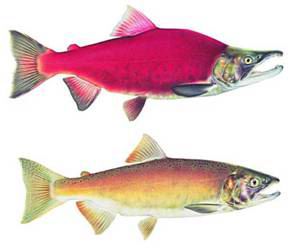
Marine species, such as sockeye salmon, are expected to shift their seasonal distributions in response to ocean warming and increased CO2 levels. - Example: Coupled ocean-climate models predict changes in sockeye salmon distribution between December and July. 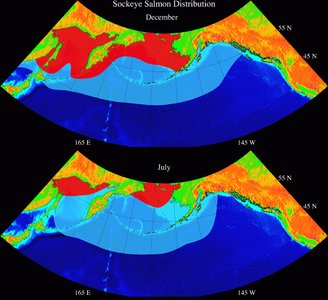
Coral Bleaching and Death
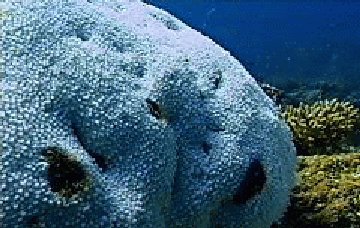
Warmer waters are linked to increasing coral bleaching and death, threatening marine biodiversity and ecosystem services. - Bleaching: Occurs when corals lose their symbiotic algae due to stress, often from elevated temperatures. 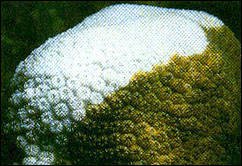
Melting Polar Ice Caps
Reduction in Arctic and Antarctic Ice
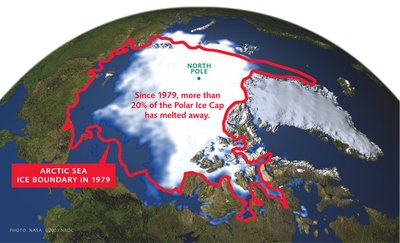
The polar ice caps are melting at an accelerated rate, with a 15-20% reduction in Arctic ice volume in the past ~35 years. This trend is predicted to continue, leading to habitat loss and shifts in marine and terrestrial species distributions. - Implications: Reduced habitat for polar bears, northern shift in fish distributions, enhanced production of Greenland cod and Norwegian herring, reduced production of northern shrimp. 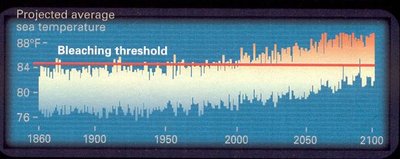
Impacts on Antarctic Ecosystems
Decline in Antarctic krill, a key food source for Antarctic nekton, and penguins due to less food and shifting ice, resulting in longer foraging trips to feed chicks. - Krill: Survive on sea-ice algae during winter; their decline affects the entire food web.
Sea Level Rise
Mechanisms and Consequences
Global warming raises sea level primarily through thermal expansion of seawater and melting of polar ice caps. Sea level rise leads to flooding of estuaries and low-lying coasts, creating climate refugees. - Thermal Expansion: Water expands as it warms, contributing to sea level rise. - Climate Refugees: Populations displaced due to flooding and habitat loss.
Ocean Acidification
CO2 and Carbonate Balance in Oceans
Increased atmospheric CO2 dissolves in ocean water, forming carbonic acid and decreasing pH. This process, known as ocean acidification, reduces coral calcification rates and threatens marine organisms that rely on calcium carbonate. - Key Equation: - Impact: Up to 30% decrease in coral calcification rates from 1990 to 2100.
Summary Table: Climate Change Impacts
Impact | Terrestrial | Marine |
|---|---|---|
Emergent Diseases | Increased outbreaks (malaria, cholera, dengue) | Emergent marine diseases |
Species Distribution | Shifts in plant and animal ranges | Shifts in fish and coral distributions |
Extreme Events | Hurricanes, droughts, fires | Hurricanes, altered currents |
Productivity | Changes in NPP | Coral bleaching, reduced calcification |
Habitat Loss | Flooding, climate refugees | Melting ice caps, sea level rise |
Additional info: These notes expand on brief points from the original slides, providing academic context and definitions for key ecological and climate change concepts.
