 Back
BackEcology and Community Interactions: Foundations of Population and Community Ecology
Study Guide - Smart Notes
 Tailored notes based on your materials, expanded with key definitions, examples, and context.
Introduction to Ecology
Definition and Scope of Ecology
Ecology is the scientific study of how organisms interact with both the living (biotic) and non-living (abiotic) components of their environment. These interactions are shaped by factors present in both the current and historical context of the ecosystem.
Biotic factors: Living components such as plants, animals, bacteria, and fungi.
Abiotic factors: Non-living components such as climate, soil, water, and physical geography.
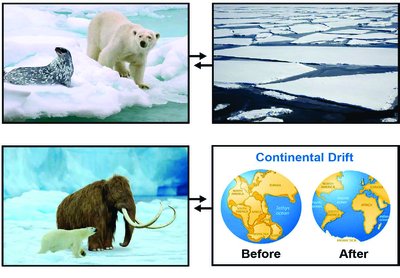
Additional info: The image above illustrates how both present (e.g., polar bears and seals on sea ice) and past (e.g., mammoths, continental drift) factors influence ecological interactions and species distributions.
Environment, Habitat, and Niche
Understanding the distinctions between environment, habitat, and niche is fundamental in ecology:
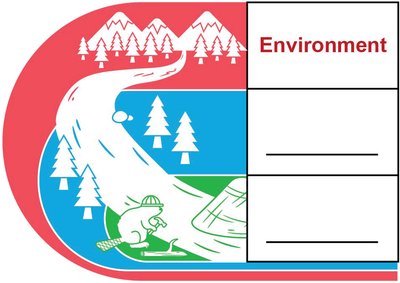
Environment: The total sum of all external biotic and abiotic factors surrounding an organism.
Habitat: The specific part of the environment where an organism lives and reproduces.
Niche: The ecological role a species performs in its habitat, including resource use and interactions with other species.
Levels of Ecological Study
Hierarchy of Ecological Organization
Ecology can be studied at multiple levels, each focusing on different aspects of biological organization:
Organismal Ecology: Examines the behavior, physiology, and evolutionary adaptations of individual organisms.
Population Ecology: Studies population dynamics of a single species, including birth rates, death rates, and population size.
Community Ecology: Investigates interactions between multiple species within a defined area.
Ecosystem Ecology: Focuses on energy flow and nutrient cycling among biotic and abiotic components.
Landscape/Seascape Ecology: Explores spatial arrangements and interactions across multiple ecosystems.
Global Ecology: Examines interactions among Earth's ecosystems at the biosphere level.
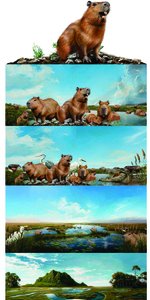
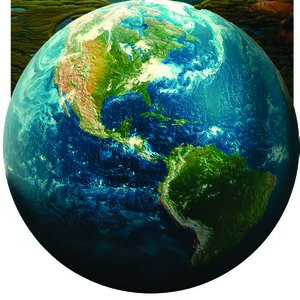
Additional info: The images above show how ecological studies can range from local populations (e.g., capybaras in wetlands) to the entire biosphere.
Animal Behavior and Behavioral Ecology
Concepts in Animal Behavior
Behavior refers to the actions of an organism in response to stimuli, including interactions with other organisms and the environment. Behavioral ecology studies how ecological pressures shape animal behavior.
Proximate causation: Explains how behaviors occur (mechanisms, genetics, neurology).
Ultimate causation: Explains why behaviors occur (evolutionary function, fitness impact).
Innate and Learned Behaviors
Innate behavior: Genetically programmed, often stereotyped (e.g., fixed action patterns).
Learned behavior: Acquired or modified through experience (e.g., spatial learning, imprinting).
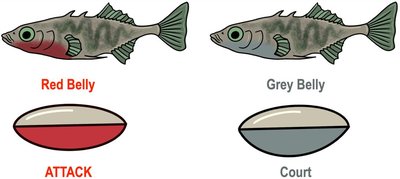
Additional info: The image above demonstrates how specific visual cues (e.g., red belly) can trigger innate behaviors in stickleback fish.
Foraging and Optimality Models
Foraging Behavior
Foraging is the set of behaviors involved in searching for, identifying, capturing, and consuming food. Natural selection favors strategies that maximize energy gain while minimizing risks and costs.
Optimal foraging model: Predicts that animals will maximize net energy gain per unit time or effort.
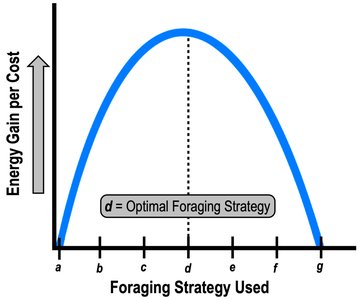
Additional info: The graph above illustrates the concept of an optimal foraging strategy, where energy gain per cost is maximized at a particular strategy.
Population Ecology
Population Size and Density
Population: All individuals of the same species living in a specific area at the same time. Population size (N) is the total number of individuals, while population density is the number of individuals per unit area or volume.
Factors Influencing Population Size
Births (B): Number of individuals born.
Deaths (D): Number of individuals that die.
Immigration (I): Individuals entering the population.
Emigration (E): Individuals leaving the population.
The change in population size can be described by the equation:
Population Growth Models
Exponential Growth: Occurs when resources are unlimited; population grows at a constant per capita rate.
Logistic Growth: Accounts for environmental limits; population growth slows as it approaches carrying capacity (K).
Exponential growth equation:
Logistic growth equation:
Community Ecology
Community Structure and Interactions
Community: Multiple populations of different species living and interacting in the same area. Community structure includes species richness, relative abundance, and the physical and biotic environment.
Types of Community Interactions
Competition (–/–): Both species are harmed by the interaction.
Exploitation (+/–): One species benefits at the expense of another (includes predation, herbivory, parasitism).
Mutualism (+/+): Both species benefit.
Commensalism (+/0): One species benefits, the other is unaffected.
Trophic Structure
Trophic structure describes the feeding relationships among organisms in a community, organized into food chains and food webs. Each level is called a trophic level (e.g., primary producers, primary consumers, secondary consumers).
Species Impact on Community Structure
Foundation species: Have a large impact due to high biomass (e.g., trees in a forest).
Keystone species: Have a disproportionate effect relative to their abundance (e.g., wolves in Yellowstone).
Ecosystem engineers: Modify the physical environment (e.g., beavers building dams).
Community Dynamics and Succession
Disturbance and Succession
Disturbance: An event that changes a community by removing organisms or altering resource availability. Moderate disturbance often leads to the highest species diversity (Intermediate Disturbance Hypothesis).
Ecological succession: The gradual process by which community structure changes over time. Primary succession occurs in lifeless areas (no soil), while secondary succession occurs where soil remains after a disturbance.
Geographic Impact on Communities
Latitude: Species diversity is typically higher near the equator.
Area: Larger areas tend to support more species.
Island Equilibrium Model: The number of species on an island reflects a balance between immigration and extinction rates, influenced by island size and distance from the mainland.
