 Back
Ecology and Evolution: Phylogeny, Diversity, and Major Innovations
Study Guide - Smart Notes
 Tailored notes based on your materials, expanded with key definitions, examples, and context.
Chapter 26: Phylogeny and the Tree of Life
Essential Concepts in Phylogeny
Phylogeny is the study of evolutionary relationships among organisms, represented visually by phylogenetic trees. Understanding these relationships is fundamental to modern biology, as it allows scientists to trace lineage, classify organisms, and interpret evolutionary history.
Phylogeny: The evolutionary history of a species or group.
Phylogenetic tree: A diagram that hypothesizes evolutionary relationships, using branching lines.
Clade: An ancestor and all its descendants.
Shared derived character: A trait that evolved in a common ancestor and helps identify a clade.
Homology: Similarity due to shared ancestry.
Analogy: Similarity that evolved independently, often due to similar environmental pressures.
Convergent evolution: The independent evolution of similar traits in different lineages.
Outgroup: A related group outside the group being studied, used to determine ancestral versus derived traits.
Taxonomy: The naming and classification of organisms.
Phylogenetic trees are interpreted by identifying branch points (nodes), which represent common ancestors. The tips (terminal nodes) are current species or groups, and rotating branches around a node does not change the relationships shown. DNA sequences, anatomical traits, fossils, and developmental evidence all contribute to reconstructing phylogeny.
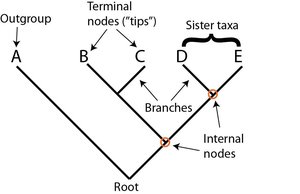
Important distinction: Evolution is not a ladder; all living lineages have been evolving for the same amount of time since their respective common ancestors.
Microbes: DNA comparisons reveal relationships not obvious from appearance.
Plants and fungi: Shared ancestry explains similarities; adaptations explain differences.
Animals: Homologous structures reveal ancestry even with different functions.
Ecology: Similar ecological roles can produce convergent evolution in unrelated organisms.
Example: Birds and crocodilians share a more recent common ancestor with each other than either does with a lizard, indicating closer evolutionary relatedness.
Chapter 27: Bacteria and Archaea
Prokaryotic Diversity and Ecological Importance
Bacteria and Archaea are prokaryotes, organisms lacking a membrane-enclosed nucleus. Despite their simple cellular structure, they play crucial roles in ecosystems and evolution.
Prokaryote: Organism without a membrane-enclosed nucleus.
Bacteria: One domain of prokaryotic life; extremely diverse.
Archaea: Distinct domain with unique molecular characteristics; often found in extreme environments.
Metabolism: Chemical reactions for acquiring and using energy and matter.
Nitrogen fixation: Conversion of atmospheric nitrogen into usable compounds.
Decomposer: Breaks down dead organic material, recycling nutrients.
Biofilm: Community of microorganisms in a surface-associated matrix.
Horizontal gene transfer: Movement of genetic material between organisms outside parent-offspring inheritance.
Major Groups and Characteristics
Group | Characteristics |
|---|---|
Bacteria | Diverse; includes decomposers, photosynthetic organisms, pathogens, symbionts |
Archaea | Distinct chemistry; found in extreme and ordinary environments |
Cyanobacteria | Photosynthetic; release oxygen |
Not all bacteria cause disease, and not all archaea live in extreme environments.
Ecological Roles
Producers: Capture energy and produce organic molecules.
Decomposers: Break down dead organisms and waste.
Mutualists: Nitrogen-fixing bacteria provide plants with nitrogen.
Parasites and pathogens: Harm hosts.
Ecosystem engineers: Change soil chemistry, oxygen availability, nutrient cycling.
Key takeaway: Prokaryotes are fundamental drivers of ecosystem processes and global biogeochemical cycles.
Chapter 28: The Origin and Diversification of Eukaryotes
Evolution and Diversity of Eukaryotes
Eukaryotes are organisms with cells containing a membrane-enclosed nucleus. Their evolution and diversification are explained by endosymbiosis and the emergence of major supergroups.
Eukaryote: Cell with a membrane-enclosed nucleus.
Endosymbiosis: One organism lives inside another.
Endosymbiotic theory: Mitochondria and chloroplasts originated from bacteria integrated into ancestral eukaryotic cells.
Supergroup: Broad evolutionary lineages organizing eukaryotic diversity.
Protists: Diverse eukaryotes not classified as animals, plants, or fungi.
Six Major Eukaryotic Supergroups
Excavata: Flagellated eukaryotes; some are parasites, others are free-living or photosynthetic.
Chromalveolata: Aquatic organisms; includes diatoms, brown algae, dinoflagellates, ciliates.
Rhizaria: Marine consumers; foraminiferans, radiolarians with mineral skeletons.
Archaeplastida: Red algae, green algae, land plants; major photosynthetic lineages.
Unikonta: Animals, fungi, amoebozoans; diverse lifestyles.
Other lineages: Cryptophytes, haptophytes; aquatic plankton, primary producers.
Endosymbiosis: Key Evolutionary Connection
Mitochondria evolved from bacterial ancestors.
Chloroplasts originated from cyanobacteria.
Primary endosymbiosis gave rise to plastids in Archaeplastida.
Secondary endosymbiosis explains plastids in other lineages.
Chapter 29: Plant Diversity I – How Plants Colonized Land
Evolutionary Adaptations for Terrestrial Life
Plants evolved adaptations to survive and reproduce on land, including alternation of generations, vascular tissue, and protective structures.
Alternation of generations: Life cycle alternating between haploid gametophyte and diploid sporophyte.
Gametophyte: Haploid stage producing gametes.
Sporophyte: Diploid stage producing spores by meiosis.
Spore: Reproductive cell developing into a new organism without fusion.
Vascular tissue: Transports water, minerals, sugars.
Xylem: Transports water and minerals; structural support.
Phloem: Transports sugars and organic substances.
Cuticle: Protective covering reducing water loss.
Stomata: Adjustable pores regulating gas exchange and water loss.
Major Plant Groups
Bryophytes: Nonvascular; small, moist habitats; gametophyte dominant.
Seedless vascular plants: Ferns and relatives; vascular tissue; sporophyte dominant; reproduce by spores.
Major Adaptations to Land
Cuticle reduces dehydration.
Stomata regulate gas exchange and water loss.
Protected embryos aid development.
Vascular tissue supports transport and larger size.
Roots and leaves improve resource acquisition.
Key takeaway: Land colonization required adaptations to avoid dehydration and reproduce outside aquatic environments.
Chapter 30: Plant Diversity II – The Evolution of Seed Plants
Seeds and Pollen: Expanding Plant Success
Seed plants evolved reproductive adaptations that reduced dependence on water and enabled new ecological partnerships.
Seed: Structure with embryo, nutrients, protective covering.
Pollen: Carries male gametophyte in seed plants.
Ovule: Contains female gametophyte and egg; develops into seed after fertilization.
Gymnosperm: Seed plant with unenclosed seeds; includes conifers.
Angiosperm: Flowering plant with seeds inside an ovary.
Flower: Reproductive structure of angiosperms.
Fruit: Mature ovary containing seeds.
Pollination: Transfer of pollen to reproductive structure.
Major Groups
Gymnosperms: Conifers, cycads, ginkgo, gnetophytes; seeds not enclosed in ovary; wind pollination.
Angiosperms: Flowers and fruits; animal or wind pollination; fruits aid seed dispersal.
Why Seeds and Pollen Matter
Seeds protect embryos, provide resources, and enable dormancy.
Pollen allows fertilization without free-standing water.
Biological Interactions: Coevolution
Flowers and pollinators: Reciprocal adaptations.
Plants and herbivores: Defense and counter-defense.
Fruits and dispersers: Seed dispersal by animals.
Wind and plants: Wind pollination in some environments.
Key takeaway: Seed plants evolved adaptations for reproduction independent of water and formed new ecological partnerships.
Chapter 31: Fungi
Fungal Nutrition and Ecological Roles
Fungi are eukaryotic heterotrophs that obtain nutrients through external digestion and absorption. They are essential decomposers and mutualists in ecosystems.
Fungus: Eukaryotic heterotroph with external digestion.
Hypha: Threadlike fungal structure.
Mycelium: Network of hyphae forming the fungal body.
Chitin: Structural polysaccharide in fungal cell walls.
Decomposer: Breaks down dead organic material.
Mycorrhiza: Association between fungus and plant roots.
Lichen: Association between fungus and photosynthetic partner.
Parasitism: One organism benefits, the other is harmed.
Major Fungal Groups
Group | Characteristics |
|---|---|
Chytrids | Aquatic/moist environments; flagellated reproductive cells |
Mucoromycetes | Molds; decomposition and symbiosis |
Glomeromycetes | Arbuscular mycorrhizal fungi |
Ascomycetes | Yeasts, molds, truffles, morels |
Basidiomycetes | Mushrooms, bracket fungi, rusts |
How Fungi Function
Secrete enzymes to digest food externally.
Absorb resulting small molecules.
Hyphae provide large surface area for absorption.
Reproduce through spores; sexual or asexual.
Major Ecological Relationships
Mutualism: Mycorrhizae benefit both fungi and plants.
Lichens: Fungi and photosynthetic partners provide structure and nutrients.
Decomposition: Release nutrients for reuse.
Key takeaway: Fungi are essential for nutrient cycling, plant nutrition, and ecosystem productivity.
Chapter 32: An Overview of Animal Diversity
Major Innovations in Animal Evolution
Animal diversity is explained by evolutionary innovations in body organization, tissues, and ecological roles.
Animal: Multicellular eukaryotic heterotroph ingesting food.
Heterotroph: Obtains organic carbon from other organisms.
Symmetry: Arrangement of body parts.
Tissue: Group of cells performing functions.
Germ layers: Embryonic tissue layers.
Body cavity: Fluid-filled space housing organs.
Cephalization: Concentration of sensory structures at the front.
Protostome: Bilaterian lineage including molluscs, annelids, arthropods.
Deuterostome: Bilaterian lineage including echinoderms, chordates.
Major Animal Innovations
Innovation | Why it matters |
|---|---|
Specialized tissues | Division of labor among cells |
Symmetry | Supports movement and feeding |
Mesoderm | Development of muscles and organs |
Body cavities | Space for organs, internal movement |
Segmentation | Specialization of body regions |
Cephalization | Coordination of movement and responses |
Major Evolutionary Groups
Sponges: Lack true tissues; filter feeders.
Cnidarians: Jellyfish, corals, sea anemones; stinging cells.
Bilaterians: Bilateral symmetry; most familiar animal groups.
Protostomes: Molluscs, annelids, arthropods.
Deuterostomes: Echinoderms, chordates.
Key takeaway: Animal diversity is best understood through evolutionary relationships and body organization.
Chapter 33: An Introduction to Invertebrates
Diversity and Ecological Roles of Invertebrates
Invertebrates are animals without a vertebral column, encompassing a wide range of evolutionary lineages and ecological functions.
Major Groups to Know
Cnidarians: Jellyfish, corals, sea anemones; stinging cells; reef habitats.
Annelids: Segmented worms; soil mixing, decomposition.
Molluscs: Snails, clams, squids, octopuses; grazers, filter feeders, predators.
Arthropods: Insects, spiders, crustaceans; jointed appendages, exoskeleton.
Echinoderms: Sea stars, sea urchins, sea cucumbers; marine deuterostomes.
Evolutionary Innovations and Ecological Consequences
Exoskeletons protect and support movement.
Jointed appendages allow specialized functions.
Segmentation supports specialization.
Filter feeding affects food webs and water quality.
Predation and herbivory shape defenses and population sizes.
Parasitism alters host behavior and community structure.
Key takeaway: Invertebrates are highly specialized and shape nearly every ecosystem.
Chapter 34: The Origin and Evolution of Vertebrates
Adaptations for Diverse Environments
Vertebrates evolved adaptations for aquatic, terrestrial, and aerial environments, including structural, reproductive, and metabolic innovations.
Chordate: Animal with notochord, dorsal nerve cord, pharyngeal slits, post-anal tail.
Notochord: Flexible supporting structure.
Vertebrate: Chordate with vertebral column.
Tetrapod: Vertebrate with four limbs in ancestral body plan.
Amniotic egg: Extraembryonic membranes supporting development on land.
Ectotherm: Body temperature influenced by external heat.
Endotherm: Generates metabolic heat for temperature regulation.
Homologous structures: Inherited from a common ancestor.
Major Vertebrate Groups
Group | Features |
|---|---|
Jawless vertebrates | Lampreys, hagfishes; lack jaws |
Cartilaginous fishes | Sharks, rays; cartilage skeletons |
Bony fishes | Bony endoskeletons |
Amphibians | Frogs, salamanders; moist environments |
Mammals | Hair, milk production; diverse adaptations |
Reptiles (including birds) | Amniotes; diverse adaptations; birds evolved within reptiles |
Major Evolutionary Transitions
Vertebral support and elaborate head.
Jaws for expanded feeding.
Paired fins and limbs for locomotion.
Tetrapod limbs for land movement.
Amniotic reproduction for terrestrial development.
Endothermy for sustained activity.
Key takeaway: Vertebrate evolution involves modifications of inherited body plans for diverse ecological niches.
Cross-Chapter Comparison: Innovations and Interactions
Evolutionary Innovations and Ecological Connections
Innovation | Main Benefit | Ecological Connection |
|---|---|---|
Endosymbiosis | Mitochondria and chloroplasts | Photosynthetic eukaryotes support food webs |
Cuticle and stomata | Water retention and gas exchange | Plant productivity influences consumers |
Vascular tissue | Transport and support | Supports larger plants and habitats |
Seeds and pollen | Embryo protection, reduced water dependence | Alters dispersal and plant–animal interactions |
Hyphae and absorptive nutrition | Efficient nutrient acquisition | Decomposition and mycorrhizae affect nutrient cycling |
Specialized animal tissues | Division of labor | Diverse feeding, movement, sensory responses |
Exoskeletons and jointed appendages | Protection, movement | Influences predation, herbivory, pollination |
Jaws, limbs, amniotic reproduction | Expanded feeding, habitat | Reshapes food webs, terrestrial colonization |
Major Interaction Types
Mutualism (+/+): Both benefit (e.g., mycorrhizae, pollinators).
Predation (+/−): Predator benefits, prey harmed (e.g., spiders eating insects).
Herbivory (+/−): Animal consumes plant tissue (e.g., insects eating leaves).
Parasitism (+/−): Parasite benefits, host harmed (e.g., disease-causing microbes).
Competition (−/−): Shared resource reduces success (e.g., plants competing for light).
Decomposition: Decomposers recycle nutrients (e.g., fungi breaking down leaf litter).
How Ecology and Evolution Influence One Another
Ecological interactions create selection pressures.
Evolution changes ecological relationships.
Environmental changes alter selection.
Organisms change their environments.
Coevolution produces reciprocal adaptations.
Completed Class-Wide Comparison Chart
Feature | Bacteria & Archaea | Eukaryotic Diversity | Plants | Fungi | Animals |
|---|---|---|---|---|---|
Cell organization | Prokaryotic; no nucleus; usually unicellular | Eukaryotic; nucleus; mostly unicellular | Eukaryotic; multicellular; cellulose cell walls | Eukaryotic; mostly multicellular; chitin cell walls | Eukaryotic; multicellular; no cell walls |
Energy/nutrient acquisition | Photosynthesis, chemosynthesis, absorption, diverse metabolism | Photosynthesis, ingestion, absorption | Mostly photosynthetic autotrophs | Heterotrophs; external digestion | Heterotrophs; ingestion |
Major innovations | Diverse metabolism; rapid reproduction; gene transfer | Mitochondria; chloroplasts; compartmentalization | Cuticle, stomata, vascular tissue, seeds, pollen, flowers, fruits | Hyphae, mycelia, absorptive nutrition, diverse reproduction | Specialized tissues, body plans, diverse movement/feeding |
Reproduction/life cycle | Binary fission; mutation, gene transfer | Sexual and asexual reproduction | Alternation of generations; spores; seeds | Spores; sexual and asexual | Sexual reproduction; embryonic development; some asexual |
Ecological roles | Producers, decomposers, nutrient cyclers, symbionts, pathogens | Producers, consumers, parasites, symbionts, plankton | Primary producers, habitat creators, food sources | Decomposers, mutualists, parasites | Consumers, predators, herbivores, pollinators, ecosystem engineers |
Biological interactions | Mutualism, competition, decomposition, pathogenesis | Food-web, parasitism, mutualism, competition | Herbivory, pollination, seed dispersal, competition, partnerships | Mycorrhizae, lichens, decomposition, parasitism | Predation, herbivory, pollination, parasitism, competition, mutualism |
Connection to another group | Plants rely on microbial nutrient cycling; animals host microbes | Photosynthetic eukaryotes support food webs; symbioses | Depend on soil microbes, mycorrhizal fungi; provide food/habitat | Help plants acquire nutrients, recycle nutrients | Consume plants, fungi, animals; disperse seeds; alter habitats |
Additional info: This chart summarizes the major features, innovations, ecological roles, and interactions of the five major biological groups covered in these chapters. It is intended to facilitate cross-chapter comparisons and integrative exam preparation.
