 Back
BackEcology and Population Biology: Structured Study Notes
Study Guide - Smart Notes
 Tailored notes based on your materials, expanded with key definitions, examples, and context.
Introduction to Ecology
Definition and Scope of Ecology
Ecology is the scientific study of how organisms interact with both living (biotic) and non-living (abiotic) components of their environment. These interactions are shaped by factors from both the present and the past, influencing the distribution and abundance of organisms.
Biotic Factors: Living components such as plants, animals, bacteria, and fungi.
Abiotic Factors: Non-living components including weather, water bodies, rocks, and soil.
Historical Context: Past events like continental drift can alter environments and affect species interactions.
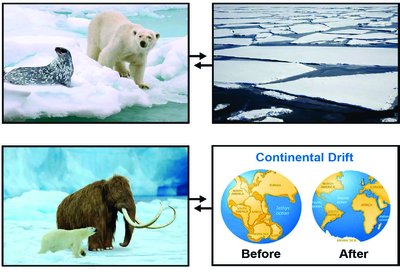
Additional info: Continental drift is a major abiotic factor that has shaped the distribution of species and ecosystems over geological time.
Environment, Habitat, and Niche
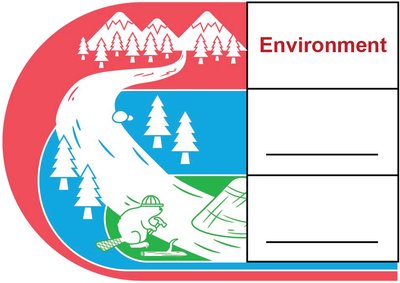
The environment encompasses all external biotic and abiotic factors surrounding an organism. The habitat is the specific location where an organism lives and reproduces, while the niche describes the ecological role a species performs, including resource use and interactions.
Environment: The total sum of external factors.
Habitat: The physical location where an organism resides.
Niche: The functional role and resource utilization of a species within its habitat.
Levels of Ecological Study
Biological Hierarchy in Ecology
Ecology can be studied at multiple levels, each focusing on different aspects of biological organization:
Organismal Ecology: Behavior, physiology, and evolutionary adaptations of individual organisms.
Population Ecology: Dynamics of populations, including birth rates, death rates, and population size.
Community Ecology: Interactions between different species within a defined area.
Ecosystem Ecology: Flow of energy and nutrients, and biotic-abiotic interactions.
Landscape/Seascape Ecology: Spatial arrangement and interactions across multiple ecosystems.
Global Ecology: Interactions among Earth's ecosystems and their global impacts (biosphere).
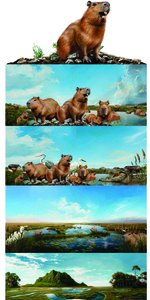

Additional info: Each level of study provides unique insights into ecological processes, from individual adaptations to global environmental changes.
Animal Behavior and Behavioral Ecology
Proximate and Ultimate Causes of Behavior
Animal behavior refers to the actions of organisms in response to stimuli, including interactions with other organisms and their environment. Behavioral ecology studies how ecological pressures shape animal behavior.
Proximate causation: Mechanistic explanations (e.g., genetic, neurological factors).
Ultimate causation: Evolutionary explanations (e.g., effects on fitness, evolutionary history).
Innate and Learned Behaviors
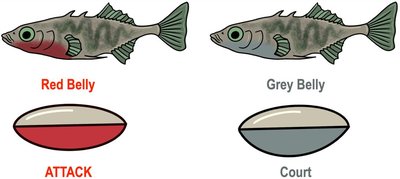
Behaviors can be innate (genetically programmed) or learned (acquired through experience). Fixed action patterns are innate behaviors triggered by specific external cues (sign stimuli).
Innate behavior: Genetically determined, often requiring minimal learning.
Fixed action pattern: Stereotyped, unchangeable sequence of actions.
Sign stimulus: External cue that triggers a fixed action pattern.
Learning and Communication in Animals
Types of Learning
Learning involves the acquisition or modification of behaviors based on experience. Spatial learning and imprinting are important forms of learning in animals.
Spatial learning: Establishing spatial memory of the environment.
Cognitive map: Mental representation of spatial relationships.
Imprinting: Learning during a sensitive period, often early in life.
Animal Communication
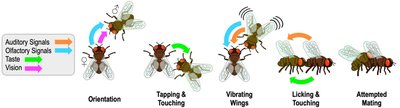
Communication involves the transmission and reception of signals between animals. Signals can be auditory, olfactory, visual, or tactile, and may be used for mating, warning, or deceit.
Pheromones: Chemical signals used for communication.
Stimulus response chain: Sequential communication behaviors.
Foraging Behavior and Optimal Foraging Theory
Genetic Basis of Foraging
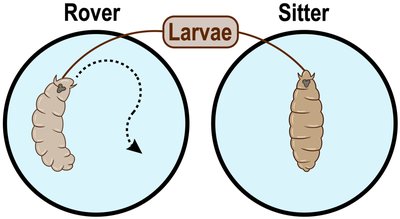
Foraging behavior includes searching for, identifying, capturing, and eating food. Genetic factors, such as the for gene in Drosophila melanogaster, influence foraging strategies.
forR (rover) allele: Larvae travel greater distances for food.
fors (sitter) allele: Larvae travel less for food.
Optimal Foraging Model
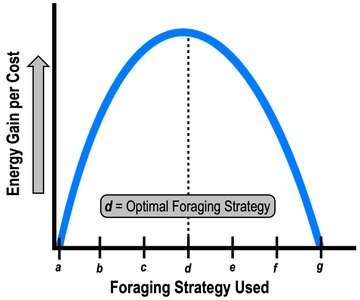
Optimal foraging theory predicts that natural selection favors behaviors that maximize energy gain while minimizing costs and risks, such as predation.
Risk-reward balance: Animals weigh energy expenditure against energy gain.
Feeding efficiency: Maximizing food intake while minimizing danger.
Mating Systems and Parental Care
Mating Behavior and Sexual Selection
Mating behavior includes attracting mates, competing for mates, and caring for offspring. Sexual selection involves mate choice and competition, often based on signs of fitness and health.
Monogamy: One male mates with one female.
Polygamy: One individual mates with multiple partners.
Mate-choice copying: Individuals prefer mates that others have chosen.
Parental Care
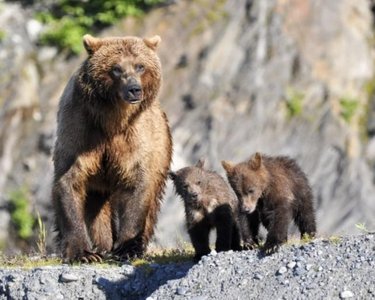
Parental care increases offspring survival. Male parental care is more common in species with external fertilization and high certainty of paternity.
Certainty of paternity: Likelihood that a male is the father of offspring.
Parental investment: Effort devoted to raising offspring.
Migration and Altruism
Migration Strategies
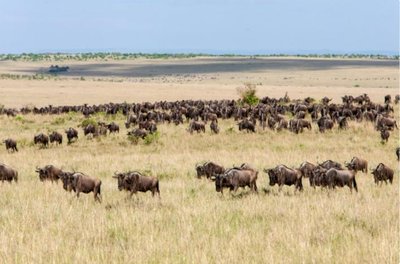
Migration is the long-distance movement of populations, often in response to seasonal changes. Animals use piloting, compass orientation, and true navigation to migrate.
Piloting: Using familiar landmarks.
Compass orientation: Moving in a specific direction.
True navigation: Finding locations as if using a map.
Altruism and Kin Selection
Altruism is behavior that benefits another individual at a cost to the actor. Kin selection favors behaviors that increase the reproductive success of relatives, as described by Hamilton's rule:
Hamilton's rule:
Inclusive fitness: Total reproductive success, including helping relatives.
Reciprocal altruism: Temporary reduction in fitness to benefit another, expecting future reciprocation.
Population Ecology
Population Size and Density
Population ecology examines how and why populations change over time. Population size is the total number of individuals, while population density is the number of individuals per unit area or volume.
Population size (N): Total number of individuals.
Population density: Standardized measure for comparison across regions.
Factors Influencing Population Size
Population size changes due to births, deaths, immigration, and emigration. The basic equation for population change is:
Births and immigration: Increase population size.
Deaths and emigration: Decrease population size.
Population Change Equation:
Metapopulations
A metapopulation consists of spatially separated local populations connected by emigration and immigration. Metapopulations are more stable than isolated populations, as individuals can recolonize extinct patches.
Life History and Demography
Life History Strategies
Organisms allocate limited resources to survival, growth, and reproduction. Life history traits include survivorship, fecundity, and growth, with trade-offs between producing many offspring and ensuring their survival.
Semelparity: Single, massive reproductive event.
Iteroparity: Multiple reproductive events over a lifetime.
Population Demography
Demography analyzes population characteristics and trends, often using life tables and survivorship curves.
Life table: Summarizes survivorship, mortality, and fecundity for a cohort.
Survivorship curve: Graphs number of living individuals versus age; Types I, II, and III represent different mortality patterns.
Population Growth Models
Exponential and Logistic Growth
Population growth models predict changes in population size over time. Exponential growth occurs in ideal, unlimited environments, while logistic growth accounts for environmental limits and carrying capacity.
Exponential growth equation:
Logistic growth equation:
Carrying capacity (K): Maximum population an area can sustain.
Community Ecology
Community Structure and Interactions
Community ecology studies interactions among species and the structure of communities, including diversity, abundance, and organization.
Competition: Negative impact on fitness for both organisms.
Exploitation: One organism benefits at the expense of another (predation, herbivory, parasitism).
Mutualism: Both organisms benefit.
Commensalism: One benefits, the other is unaffected.
Community Structure Attributes
Species richness: Number of different species.
Relative abundance: Proportion of each species.
Physical attributes: Biotic and abiotic factors, species distribution.
Trophic Structure
Trophic structure describes feeding relationships and energy flow in a community, including food chains and food webs. Energy transfer between trophic levels is limited (~10%).
Species Impact on Community Structure
Foundation species: High biomass, strong community-wide effects.
Keystone species: Low biomass, large ecological role.
Ecosystem engineer: Alters physical environment significantly.
Community Dynamics and Succession
Disturbance and Succession
Disturbances disrupt communities, leading to ecological succession—a gradual change in community structure over time. Moderate disturbances foster the highest diversity.
Primary succession: Colonization of new areas without soil.
Secondary succession: Recolonization after disturbance with soil intact.
Climax community: Stable, mature stage of succession.
Effects of Early-Arriving Species
Facilitation: Early species make conditions favorable for later species.
Tolerance: Existing species do not affect later arrivals.
Inhibition: Presence of certain species prevents establishment of others.
Geographic Impact on Communities
Biogeographical Factors
Species diversity is influenced by latitude and area. Diversity increases near the equator and with larger area.
Island Equilibrium Model: Number of species on an island reaches equilibrium based on immigration and extinction rates, affected by island size and distance from mainland.
