 Back
Ecology, Biomes, and Biodiversity: Structured Study Notes
Study Guide - Smart Notes
 Tailored notes based on your materials, expanded with key definitions, examples, and context.
Ecology: The Study of Interactions
Definition and Scope
Ecology is the scientific study of the interactions between organisms and their environment, encompassing both biotic (living) and abiotic (non-living) factors.
Ecological Organization: Levels include organism, population, community, ecosystem, biome, and biosphere.
Biotic Factors: Living components such as plants, animals, fungi, bacteria, and protists.
Abiotic Factors: Non-living components like temperature, rainfall, light, soil chemistry, water availability, and salinity.
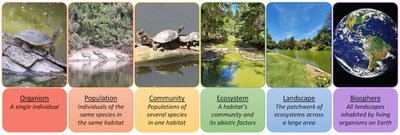
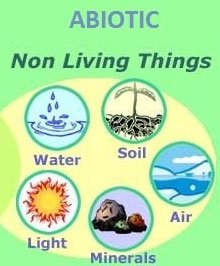
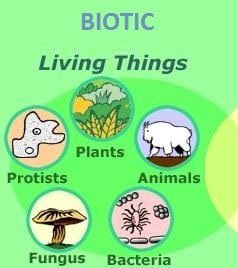
Levels of Ecological Organization
Organism: A single individual.
Population: Individuals of the same species in a given area.
Community: Multiple populations interacting in the same area.
Ecosystem: The community and its abiotic environment.
Biome: Major ecological regions shaped by climate and life.
Biosphere: All landscapes inhabited by living organisms on Earth.
Energy and Matter in Ecosystems
Energy Flow
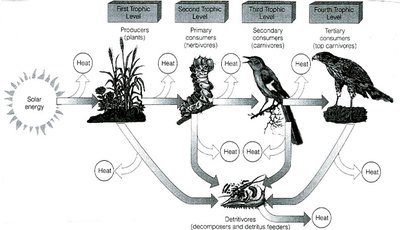
Energy flows through ecosystems in one direction—from the sun to producers, then to consumers and decomposers.
Producers: Capture energy through photosynthesis (plants, algae, cyanobacteria) or chemosynthesis (certain prokaryotes).
Consumers: Obtain energy by eating other organisms.
Decomposers: Break down dead organic matter, recycling nutrients.
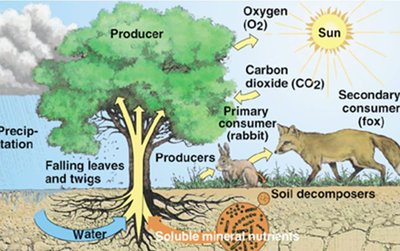
Photosynthesis and Respiration
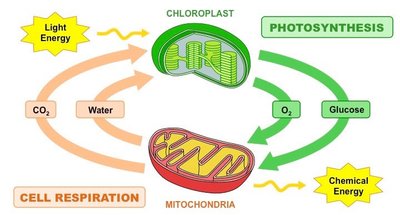
Photosynthesis: Converts carbon dioxide and water into glucose and oxygen using sunlight.
Cellular Respiration: Breaks down glucose to release energy, carbon dioxide, and water.
Trophic Levels and Energy Transfer
Trophic Levels: Producers, primary consumers (herbivores), secondary consumers (carnivores), tertiary consumers (top carnivores).
10% Rule: Only about 10% of energy at one trophic level is transferred to the next; the rest is lost as heat.
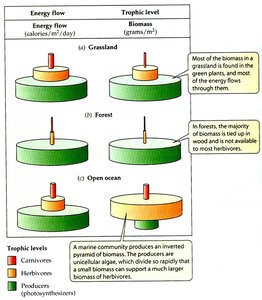
Energy Pyramid: Illustrates decreasing energy and biomass at higher trophic levels.
Biogeochemical Cycles
Major Cycles
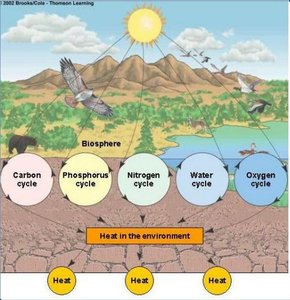
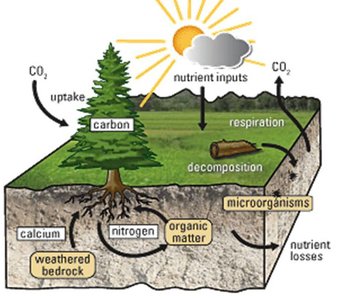
Nutrients are recycled through biogeochemical cycles, including the water, carbon, nitrogen, and phosphorus cycles.
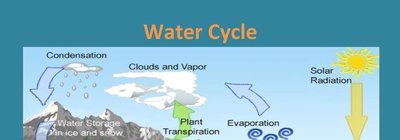
Water Cycle: Movement of water through evaporation, condensation, precipitation, and transpiration.
Carbon Cycle: Carbon is fixed by producers and returned to the atmosphere by respiration and decomposition.
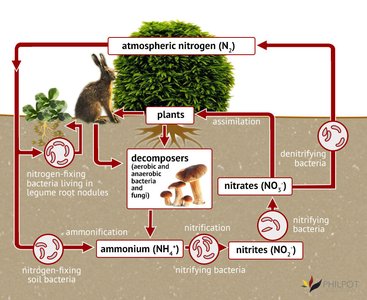
Nitrogen Cycle: Nitrogen is fixed by bacteria, assimilated by plants, and cycled through decomposition and denitrification.
Phosphorus Cycle: Movement of phosphorus through rocks, soil, water, and living organisms.
Food Chains and Food Webs
Food Chains
A food chain is a linear sequence of organisms where each is consumed by the next, representing energy flow through trophic levels.
Primary Producers: Plants and algae.
Primary Consumers: Herbivores.
Secondary Consumers: Carnivores.
Tertiary Consumers: Top predators.
Food Webs
Food webs are complex networks of interconnected food chains, showing multiple feeding relationships in an ecosystem.
Greater Stability: Food webs provide resilience against disturbances.
Multiple Pathways: Energy and nutrients can flow in more than one direction.
Decomposers and Ecosystem Recycling
Role of Decomposers
Decomposers, such as fungi and bacteria, break down dead organic matter, returning nutrients to the soil and completing biogeochemical cycles.
Essential for Nutrient Cycling: Without decomposers, nutrients would remain locked in dead organisms.
Examples: Fungi, bacteria, earthworms.
Biodiversity and Ecosystem Services
Levels of Biodiversity
Biodiversity refers to the variety of life at three levels: genetic, species, and ecosystem.
Genetic Diversity: Variation within a species.
Species Diversity: Number of different species in an area.
Ecosystem Diversity: Variety of ecosystems in a region.
Ecosystem Services
Ecosystem services are benefits provided by ecosystems to humans, including provisioning (food, water), regulating (climate, disease), supporting (nutrient cycling), and cultural (recreation, spiritual).
Importance: Ecosystem services are vital for human survival and well-being.
Human Impact on Biodiversity
Effects of Human Activities
Human activities such as habitat destruction, pollution, climate change, and overexploitation lead to loss of biodiversity and disruption of ecosystem function.
Conservation Biology: The study and practice of protecting biodiversity and restoring ecosystems.
Summary Table: Levels of Ecological Organization
Level | Description |
|---|---|
Organism | A single individual |
Population | Individuals of the same species in one area |
Community | Populations of several species in one area |
Ecosystem | Community and abiotic factors |
Biome | Major ecological region |
Biosphere | All landscapes inhabited by life |
Summary Table: Biogeochemical Cycles
Cycle | Main Process | Key Organisms |
|---|---|---|
Water | Evaporation, precipitation, transpiration | Plants |
Carbon | Photosynthesis, respiration, decomposition | Producers, consumers, decomposers |
Nitrogen | Fixation, assimilation, denitrification | Bacteria, plants |
Phosphorus | Weathering, uptake, decomposition | Plants, decomposers |
Summary Table: Trophic Levels
Trophic Level | Role | Example |
|---|---|---|
Producers | Make food from sunlight/chemicals | Plants, algae |
Primary Consumers | Eat producers | Herbivores |
Secondary Consumers | Eat primary consumers | Carnivores |
Tertiary Consumers | Eat secondary consumers | Top predators |
Decomposers | Recycle nutrients | Fungi, bacteria |
Example: Savanna Food Web
Complex Interactions
The savanna food web illustrates the interconnectedness of producers, consumers, and decomposers, highlighting the flow of energy and nutrients.
Example: Nitrogen Cycle
Key Steps
The nitrogen cycle involves nitrogen fixation, assimilation, ammonification, nitrification, and denitrification, primarily driven by bacteria and decomposers.
Example: Water Cycle
Movement of Water
The water cycle shows how water moves through the environment via evaporation, condensation, precipitation, and transpiration. 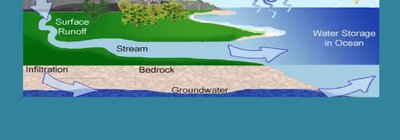
Example: Energy Pyramid
Energy Distribution
The energy pyramid demonstrates how energy decreases at each successive trophic level, with most energy lost as heat.
Example: Biomass Distribution
Biomass at Trophic Levels
Biomass is greatest at the producer level and decreases at higher trophic levels due to energy loss.
Example: Food Chain vs. Food Web
Comparison
Food Chain: Linear sequence, one direction.
Food Web: Complex network, multiple directions.
Example: Decomposers
Role in Ecosystem
Decomposers recycle nutrients, ensuring the continued functioning of biogeochemical cycles.
Additional info:
Ecological succession is the gradual change in community structure over time, often following disturbance.
Keystone species have a disproportionately large effect on ecosystem structure and function.
Human activities can disrupt nutrient cycles and energy flow, leading to ecosystem degradation.
