 Back
BackEcology: Interactions, Energy Flow, and Human Impact
Study Guide - Smart Notes
 Tailored notes based on your materials, expanded with key definitions, examples, and context.
Ecology: The Study of Interactions
Definition and Scope
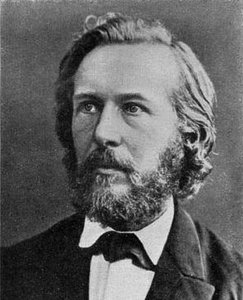
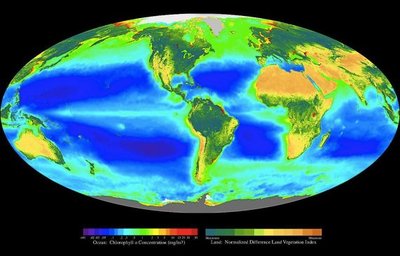
Ecology is the scientific study of interactions among organisms and between organisms and their environment. The term was coined by the German biologist Ernst Haeckel, who viewed nature as a house with its own economy. The largest of nature’s “houses” is the biosphere, which refers to the biological component of Earth’s systems—the portion of the planet that can sustain life and all of its interactions.
The prefix "ECO" is derived from the Greek term "oikos," meaning house.
Levels of Organization
Ecology examines life from the level of individual organisms to the entire biosphere:
Individual: A single organism.
Population: A group of individuals of the same species living in a defined area.
Community: Groups of populations of different species living together in a defined area.
Ecosystem: The community plus the physical (nonliving) environment.
Biome: Large areas with particular climates and characteristic species.
Biosphere: The sum of all ecosystems on Earth.
Interdependence in the Biosphere
Organismal Interdependence
Organisms and their environment are interdependent. Every organism relies on others to survive. For example, a snail depends on plants and algae for food, while those plants rely on bacteria to recycle nutrients.
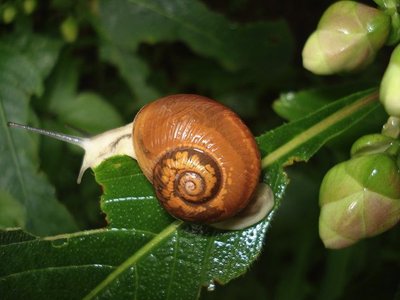
This interdependence forms a complex web, where everything is dependent on something else.
Levels of Ecological Organization
Species: A group of similar individuals that can breed and produce fertile offspring.
Population: A group of organisms of one species that interbreed and live together in a defined area (e.g., a herd of sheep, a flock of geese).
Community: Multiple populations of different species living together.
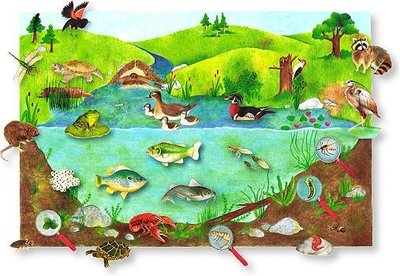
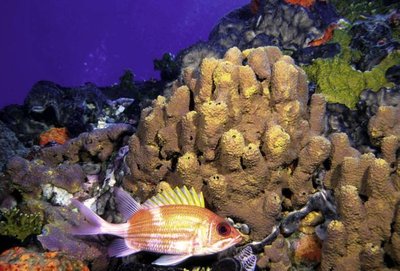
Ecosystem: All living and nonliving factors in a particular place (e.g., a pond, a forest, a marsh).
Biome: Large regions with specific climates and characteristic species (e.g., tundra, rainforest, desert).
Biodiversity
Biodiversity is the variety of organisms, their genetic differences, and the ecosystems in which they occur. It includes:
Ecological diversity: Different ecosystems in a region.
Species diversity: Different species within certain ecosystems.
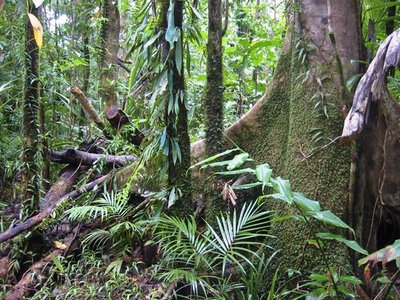
Tropical rainforests have the highest biodiversity of all biomes.
Abiotic and Biotic Factors
Abiotic Factors
Abiotic factors are nonliving components that affect ecosystems, such as soil, pollution, natural disasters, and climate.
Biotic Factors
Biotic factors are living components, such as plants and animals, that affect ecosystems.
Combined Effects
Both biotic and abiotic factors determine the survival and growth of organisms and the structure of ecosystems. For example, the survival of bullfrogs depends on food availability (biotic) and water temperature (abiotic).
Habitats and Succession
Habitats
A habitat is the place where a particular population lives, including both abiotic and biotic factors (e.g., anthills, nests, marshes).
Succession
Succession is the regular progression of species replacement over time in an ecosystem. It can be:
Primary succession: Occurs where no soil previously existed (e.g., after volcanic eruptions or receding glaciers). Pioneer species like lichens break down rock to form soil.
Secondary succession: Occurs in areas where soil exists but has been disturbed (e.g., after forest fires).
Succession is typically slow, but natural disasters or human disturbances can accelerate changes.
Energy Flow in Ecosystems
Primary Productivity
All life’s energy originates from the sun. Primary productivity is the rate at which producers (autotrophs) convert sunlight into energy. Factors affecting productivity include water, sunlight, carbon dioxide, and nutrients like nitrogen and potassium.
Producers and Consumers
Producers (autotrophs): Organisms that produce energy by capturing sunlight or using chemicals (e.g., plants, algae, some bacteria).
Consumers (heterotrophs): Organisms that consume other organisms for food. Types include:
Herbivores: Eat plants.
Carnivores: Eat animals.
Omnivores: Eat both plants and animals.
Detritivores: Consume dead matter or waste (e.g., vultures, earthworms).
Decomposers: Cause decay and recycle nutrients (e.g., bacteria, fungi).
Trophic Levels and Food Chains
Trophic levels are assigned based on how organisms obtain energy. The first trophic level is always a producer. Food chains show the path of energy through trophic levels, while food webs illustrate complex interactions among multiple food chains.
Trophic Level | Type of Organism | Example |
|---|---|---|
First | Producer | Sunflower seeds |
Second | Primary Consumer | Mouse |
Third | Secondary Consumer | Snake |
Fourth | Tertiary Consumer | Hawk |
Fifth | Quaternary Consumer | Fox |
Energy Transfer and the Ten-Percent Law
Energy flows in one direction: from the sun to autotrophs, then to heterotrophs. Only about 10% of energy is transferred from one trophic level to the next; the rest is lost as heat or used for life processes.
For example, if seeds contain 10,000 kcal, the mouse that eats them gets 1,000 kcal, and the snake that eats the mouse gets 100 kcal.
Energy pyramid: A diagram showing the amount of energy at each trophic level, illustrating the ten-percent law.
Biomass: The dry weight of living tissue in a trophic level. Most biomass is found in producers.
Biogeochemical Cycles
Overview
Matter is recycled in ecosystems through biogeochemical cycles, including the water, carbon, nitrogen, and phosphorus cycles.
The Water Cycle
Evaporation: Liquid water becomes vapor.
Transpiration: Water evaporates from plants.
Condensation: Water vapor forms clouds.
Precipitation: Water returns to Earth as rain, snow, etc.
Percolation: Water seeps into soil to become groundwater.
Runoff: Surface water returns to oceans or lakes.
The Carbon Cycle
Carbon is found in living tissues, rocks, the atmosphere, and oceans.
Photosynthesizing organisms use CO2 to build organic molecules.
Carbon returns to the atmosphere via respiration, erosion, and combustion of fossil fuels.
The Nitrogen Cycle
Nitrogen fixation: Bacteria convert atmospheric nitrogen to ammonia.
Ammonification: Bacteria produce ammonia from decaying matter.
Nitrification: Bacteria convert ammonia to nitrates/nitrites.
Assimilation: Plants absorb nitrogen compounds.
Denitrification: Bacteria convert nitrates back to nitrogen gas.
The Phosphorus Cycle
Phosphorus is found in rocks and minerals, not the atmosphere.
Weathering releases phosphorus into soil and water.
Decomposers recycle phosphorus from dead organisms.
Nutrient Limitation
The availability of nutrients affects primary productivity. A limiting nutrient is one that is scarce or cycles slowly, restricting ecosystem productivity. Fertilizers supply key nutrients: nitrogen, phosphorus, and potassium.
Population Ecology
Population Size, Density, and Dispersion
Population size: Number of individuals in a population.
Population density: Number of individuals per unit area.
Dispersion: How individuals are arranged in space (random, uniform, clumped).
Population Growth
Growth rate (r) = birthrate – death rate
Exponential growth: Population grows rapidly under ideal conditions (J-shaped curve).
Carrying capacity (K): Maximum population size an environment can sustain.
Logistic growth: Population growth slows as it approaches carrying capacity (S-shaped curve).
Factors affecting population size include births, deaths, immigration, and emigration.
Limiting Factors
Density-dependent factors: Depend on population size (e.g., food, water, shelter).
Density-independent factors: Affect populations regardless of size (e.g., weather, climate).
r- and K-Strategists
r-strategists: Grow rapidly when conditions are right; population size fluctuates greatly (J-shaped curve).
K-strategists: Grow slowly, population size remains near carrying capacity (S-shaped curve).
Community Interactions
Competition and Niche
Species compete for resources such as food, water, shelter, and mates. An organism’s niche is its role in the ecosystem, including its habitat, diet, and behavior. The fundamental niche is the full range of conditions an organism can tolerate, while the realized niche is the range it actually occupies due to competition.
Symbiosis
Symbiosis is a close, long-term relationship between species. Types include:
Predation: One organism kills another for food.
Parasitism: One benefits, one is harmed (e.g., ticks).
Mutualism: Both benefit (e.g., bees and flowers).
Commensalism: One benefits, the other is unaffected (e.g., cactus wren and cactus).
Coevolution
Coevolution is the back-and-forth evolutionary adjustment between species, often seen in symbiotic relationships. Introduction of new species (invasive species) can disrupt this balance.
Human Impact on Ecosystems
Major Human Activities Affecting Ecosystems
Deforestation
Pollution and fossil fuel use
Building dams
Introducing invasive species
Overuse of fertilizers
Overhunting or overfishing
Deforestation leads to resource loss, displacement of animals, and increased competition. It also contributes to climate change by reducing the rate at which CO2 is removed from the atmosphere. Fossil fuel combustion releases greenhouse gases, contributing to global warming. Dams alter water flow, affecting aquatic species and nutrient cycles. Invasive species can outcompete native species, disrupting community balance. Overexploitation, such as overfishing, reduces biodiversity and can threaten species with extinction.
Summary Table: Key Ecological Concepts
Concept | Definition | Example |
|---|---|---|
Biosphere | All regions of Earth that support life | Earth’s surface, atmosphere, and oceans |
Biome | Large area with specific climate and species | Tropical rainforest, tundra |
Ecosystem | Community plus nonliving environment | Pond, forest |
Community | All populations in an area | Forest animals and plants |
Population | Group of same species in an area | Herd of deer |
Species | Organisms that can breed and produce fertile offspring | Homo sapiens |
