 Back
BackEcology: Introduction, Climate, Biomes, and Species Distribution
Study Guide - Smart Notes
 Tailored notes based on your materials, expanded with key definitions, examples, and context.
Ecology: The Scientific Study of Interactions
Definition and Scope
Ecology is the scientific study of interactions between organisms and their environment, focusing on how these interactions determine the distribution and abundance of organisms. It is a rigorous experimental science requiring extensive biological knowledge and underpins many environmental issues.
Ecological Time: Refers to minute-by-minute interactions.
Evolutionary Time: Long-term effects of ecological interactions on species evolution.
Science vs. Advocacy: Ecologists must distinguish between scientific research and environmental advocacy.
Historical Example: Rachel Carson's Silent Spring (1962) initiated the modern environmental movement.
Hierarchy and Scope of Ecology
Ecologists study life at multiple levels, from individuals to the biosphere.
Organismal Ecology: How physiology and structure allow organisms to meet environmental challenges.
Population Ecology: How and why population sizes change over time.
Community Ecology: Diversity of species interactions, including predation and competition.
Ecosystem Ecology: Energy flow and cycling between organisms and the environment.
Landscape Ecology: Exchange of energy and materials across multiple ecosystems.
Global Ecology: Distribution of organisms and materials on a global scale.
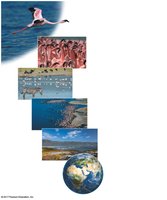
Climate and Its Effects on Organism Distribution
Abiotic Components of Climate
Climate is defined by long-term prevailing weather conditions and is shaped by four major abiotic components: temperature, water, sunlight, and wind.
Macroclimate: Global, regional, and local climate patterns.
Microclimate: Fine-scale climate patterns, such as those under a log or rock.
Global Climate Patterns
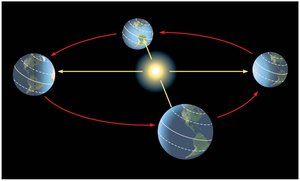
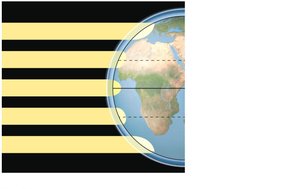
Global climate is determined by solar energy and Earth's movement in space. Sunlight intensity is highest at the tropics and decreases toward the poles, affecting temperature and light availability.
Seasonal Variations: Caused by Earth's tilt (23.5°) and orbit around the sun.
Latitudinal Variation: Sunlight and temperature decrease toward the poles.
Global Air Circulation and Precipitation Patterns
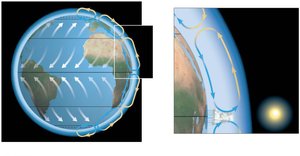
Warm, wet air rises at the equator, cools, and releases moisture, creating precipitation. Descending dry air absorbs moisture, forming arid zones. Prevailing winds and air circulation patterns play major roles in climate.
Oceans and Water Currents
Oceans and their currents moderate climate along coastal regions. Warm equatorial water flows toward the poles, cools, and returns to the equator.
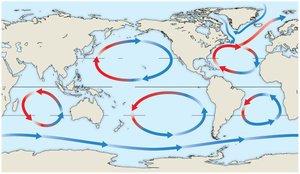
Regional, Local, and Seasonal Effects
Proximity to bodies of water and topographic features like mountains contribute to local climate variations. Water has a high thermal capacity, moderating temperature fluctuations.
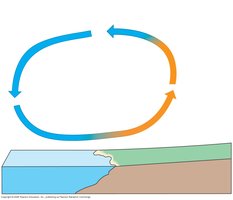
Mountains' Effect on Climate
Mountains affect sunlight, temperature, and rainfall. The windward side receives more precipitation, while the leeward side experiences a "rain shadow" and is drier.
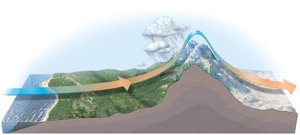
Long-Term Climate Change
Studying past climate changes helps predict future impacts. As glaciers retreated, tree distribution patterns shifted. Species with limited dispersal may have reduced ranges or face extinction.
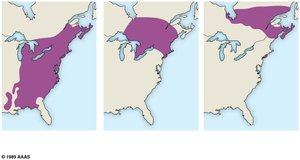
Biomes: Structure and Distribution
Terrestrial Biomes
Biomes are major ecological associations defined by climate, vegetation, and disturbance. Climate determines biome distribution, and biomes often grade into each other through ecotones.
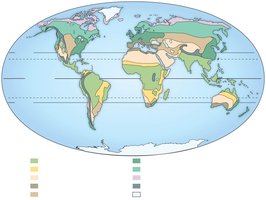
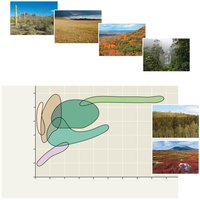
Climograph: Temperature and Precipitation
A climograph plots temperature versus precipitation, illustrating biome distribution based on climate patterns.
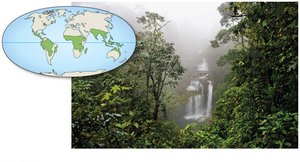
Major Terrestrial Biomes
Tropical Forest: Constant rainfall or highly seasonal precipitation, intense competition for light, high biodiversity.
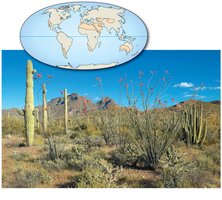
Desert: Low, variable precipitation; plants adapted for water conservation; nocturnal animals.
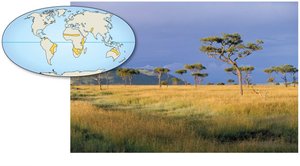
Savanna: Seasonal rainfall and temperature; grasses and forbs dominate; large mammals and insects.
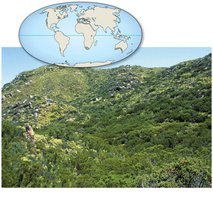
Chaparral: Highly seasonal precipitation; dominated by shrubs and small trees; adapted to fire and drought.
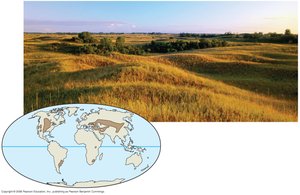
Temperate Grassland: Cold, dry winters; hot, wet summers; grasses adapted to drought and fire; large grazers and burrowers.
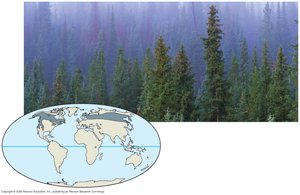
Northern Coniferous Forest (Taiga): Largest terrestrial biome; cold winters, hot summers; cone-bearing trees; migratory and resident animals.
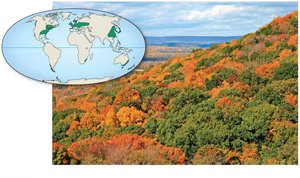
Temperate Broadleaf Forest: Significant year-round precipitation; vertical layers; deciduous trees; hibernating mammals and migratory birds.
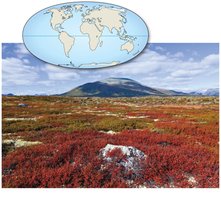
Tundra: Arctic and alpine regions; long, cold winters; permafrost restricts growth; herbaceous vegetation.
Vertical Layering in Biomes
Vertical layering, such as canopy and understory in forests, provides diverse habitats for animals.
Aquatic Biomes
Characteristics and Zonation
Aquatic biomes cover ~75% of Earth's surface and are characterized by physical environment, chemical environment, and zonation based on light penetration, temperature, and depth.
Photic Zone: Well-lit upper layer where photosynthesis occurs.
Aphotic Zone: Lower layer with little light.
Benthic Zone: Sediment at the bottom, inhabited by benthos.
Abyssal Zone: Deepest ocean region (2,000–6,000m).
Pelagic Zone: Open water, includes photic and aphotic zones.
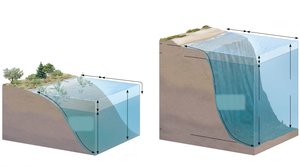
Thermocline and Seasonal Turnover
Thermocline is a temperature boundary separating warm upper water from cold deeper water. Lakes undergo seasonal turnover, mixing oxygenated surface water with nutrient-rich bottom water.
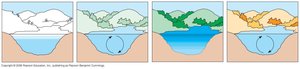
Major Aquatic Biomes
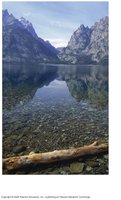
Freshwater Lakes:
Oligotrophic: Nutrient-poor, oxygen-rich.
Eutrophic: Nutrient-rich, oxygen-poor in deep regions.
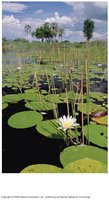
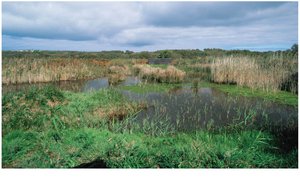
Wetlands: Water-saturated soil, highly productive, diverse invertebrates and birds.
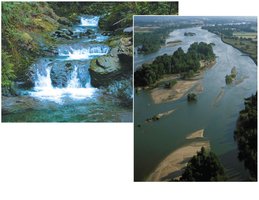
Streams and Rivers: Characterized by current; headwaters are cold and clear, downstream is warmer and more turbid.
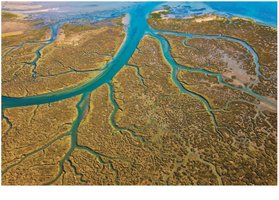
Estuaries: Transitional area between river and sea; variable salinity; highly productive.
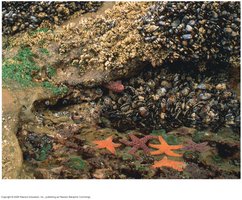
Intertidal Zones: Periodically submerged; organisms adapted to wave action and salinity changes.
Oceanic Pelagic Zone: Open water, covers 70% of Earth's surface; dominated by phytoplankton and zooplankton.

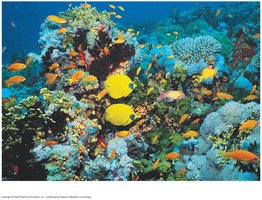
Coral Reefs: Formed from coral skeletons; mutualistic relationship with algae; high biodiversity.
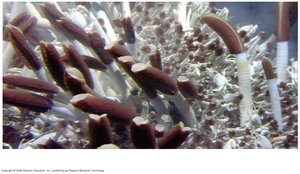
Marine Benthic Zone: Seafloor below surface waters; organisms adapted to cold and high pressure; hydrothermal vents support chemoautotrophic prokaryotes.
Species Distribution and Limiting Factors
Global and Regional Patterns
Species distribution is determined by both ecological and evolutionary interactions. Ecologists consider biotic and abiotic factors when explaining distribution.
Biotic Factors: Interactions with other species, predation, competition, disease.
Abiotic Factors: Temperature, water, sunlight, wind, rocks, and soil.
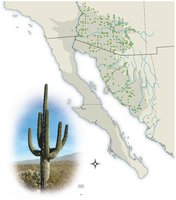
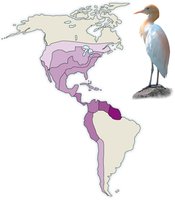
Dispersal and Transplants
Dispersal is the movement of individuals or gametes away from their origin. Species transplants can disrupt ecosystems.
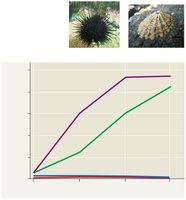
Biotic Factors: Predation and Competition
Interactions such as predation and competition can limit species distribution. Experiments show how removal of certain species affects the distribution of others.
Abiotic Factors Affecting Distribution
Temperature: Affects biological processes; extreme temperatures can be lethal.
Water and Oxygen: Availability affects species survival; adaptations for water conservation and oxygen acquisition are crucial.
Salinity: Affects water balance through osmosis; only specialized organisms survive in high-salinity environments.
Sunlight: Influences photosynthesis; aquatic photosynthesis occurs near the surface.
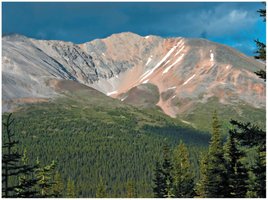
Rocks and Soil: Physical structure, pH, and mineral composition limit plant and animal distribution.
Key Terms and Concepts
Photic Zone: Sunlit upper layer of aquatic biomes.
Aphotic Zone: Dark lower layer of aquatic biomes.
Benthic Zone: Sediment at the bottom of aquatic biomes.
Abyssal Zone: Deepest ocean region.
Thermal Stratification: Layering of water based on temperature.
Thermocline: Temperature boundary in aquatic biomes.
Seasonal Turnover: Mixing of lake waters in spring and autumn.
Climograph: Plot of temperature vs. precipitation.
Disturbance: Events like storms, fire, or human activity that modify biomes.
Summary Table: Major Terrestrial Biomes
Biome | Climate | Vegetation | Animals |
|---|---|---|---|
Tropical Forest | Constant or seasonal rainfall | Dense, layered, high diversity | Insects, birds, mammals |
Desert | Low, variable precipitation | Succulents, cacti | Reptiles, rodents, birds |
Savanna | Seasonal rainfall | Grasses, forbs | Large mammals, insects |
Chaparral | Seasonal, dry summers | Shrubs, small trees | Amphibians, birds, mammals |
Temperate Grassland | Cold winters, hot summers | Grasses, forbs | Bison, prairie dogs |
Northern Coniferous Forest | Cold winters, hot summers | Conifers | Moose, bears, birds |
Temperate Broadleaf Forest | Year-round precipitation | Deciduous trees | Mammals, birds, insects |
Tundra | Cold, windy, permafrost | Mosses, grasses | Birds, grazers, predators |
Summary Table: Major Aquatic Biomes
Biome | Physical Environment | Key Features |
|---|---|---|
Freshwater Lakes | Standing water | Oligotrophic/eutrophic, zonation |
Wetlands | Water-saturated soil | High productivity, diverse fauna |
Streams/Rivers | Flowing water | Current, headwaters vs. downstream |
Estuaries | River meets sea | Variable salinity, high productivity |
Intertidal Zones | Submerged/exposed by tides | Adaptations to wave action |
Oceanic Pelagic Zone | Open water | Phytoplankton, zooplankton |
Coral Reefs | Shallow, warm water | Coral-algae symbiosis, high diversity |
Marine Benthic Zone | Seafloor | Cold, high pressure, hydrothermal vents |
Equations and Formulas
Photosynthesis:
Osmosis: (Water potential equation)
Key Learning Objectives
Distinguish among types of ecology: organismal, population, community, ecosystem, and landscape.
Explain how dispersal contributes to species’ distribution.
Distinguish between potential and actual range, biotic and abiotic factors, macroclimate and microclimate patterns.
Describe how global climate is determined by Earth's orbit, light dispersion, and prevailing winds.
Explain how bodies of water and mountain ranges affect regional climate.
List and describe characteristics of major terrestrial and aquatic biomes.
Compare vertical layering in forests and grasslands.
Define key terms: photic zone, aphotic zone, benthic zone, abyssal zone, thermal stratification, thermocline, seasonal turnover, climograph, disturbance.
