 Back
BackEcology: Principles, Organization, and Human Impact
Study Guide - Smart Notes
 Tailored notes based on your materials, expanded with key definitions, examples, and context.
Ecology
What is Ecology?
Ecology is the scientific study of interactions between organisms and their environment, including both living (biotic) and non-living (abiotic) components. Ecologists seek to understand the distribution, abundance, and relationships of living organisms at various levels of organization.
Levels of Ecological Organization
Hierarchy of Organization
Species: A group of organisms capable of interbreeding and producing fertile offspring.
Population: All members of a species inhabiting a specific location.
Community: All interacting populations in a given area.
Ecosystem: The living community and the physical environment functioning together as an interdependent, stable system.
Biosphere: The portion of Earth where life exists.
Ecosystem requirements: An energy source, energy flow and storage in organic compounds, and cycling of materials.
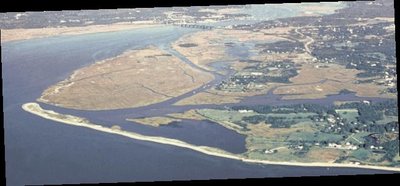
Abiotic and Biotic Components of an Ecosystem
Abiotic Factors
Abiotic factors are the physical and chemical elements that affect the survival of organisms. Examples include:
Light intensity
Temperature range
pH
Supply of gases (O2 and CO2)
Amount of moisture
Types of soil or rock
Availability of minerals
Biotic Factors
Biotic factors include all living things that directly or indirectly affect the environment, such as organisms, their interactions, parts, and wastes.
Nutritional Relationships
Autotrophs and Heterotrophs
Autotrophs: Organisms that synthesize their own food from inorganic raw materials (e.g., H2O and CO2) through processes like photosynthesis.
Heterotrophs: Organisms that cannot make their own food and must ingest preformed organic matter.
Types of Heterotrophs
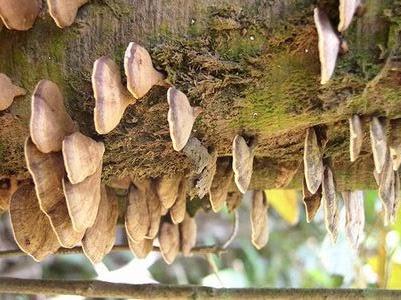
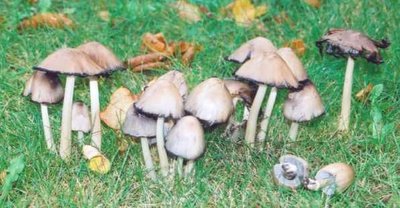
Saprophytes (Decomposers): Heterotrophic plants, fungi, or bacteria that live off dead organic matter.
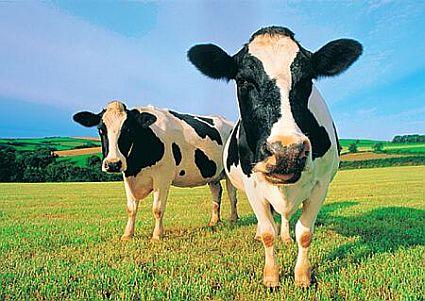
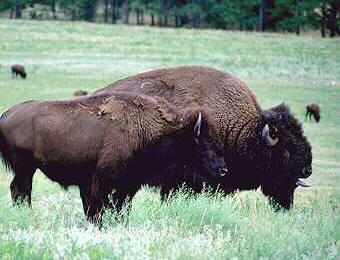
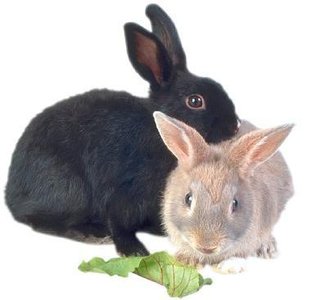
Herbivores: Animals that consume plants.
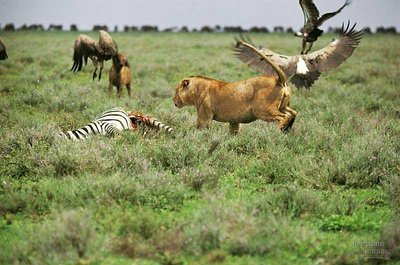
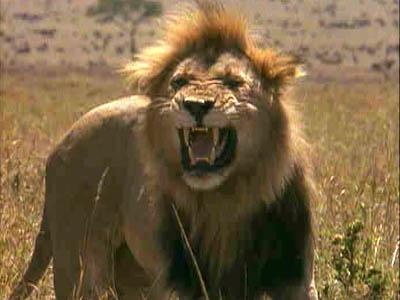
Carnivores: Animals that eat other animals. Subtypes include:
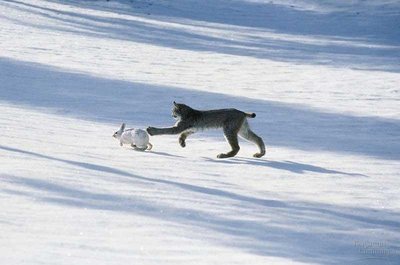
Predators: Kill their own prey.
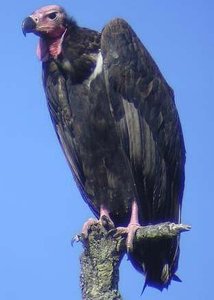
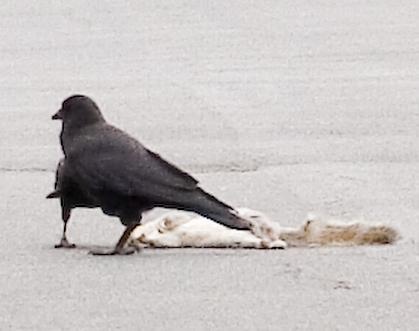
Scavengers: Feed on dead animals they did not kill.
Omnivores: Eat both plants and animals.
Symbiotic Relationships
Types of Symbiosis
Commensalism (+, 0): One organism benefits, the other is not affected (e.g., barnacles on a whale).
Mutualism (+, +): Both organisms benefit (e.g., lichens, which are associations between algae and fungi).
Parasitism (+, -): The parasite benefits at the expense of the host (e.g., male angler fish on female angler fish).
Energy Flow in an Ecosystem
Food Chains and Food Webs
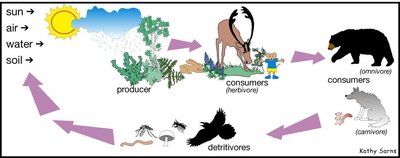
All organisms require energy for metabolic activities. Energy flows through ecosystems in a one-way direction, primarily from the sun through producers to various levels of consumers.
Food Chain: A linear sequence showing the flow of energy from one organism to another.
Food Web: A complex network of interconnected food chains, illustrating the interrelationships between different organisms.
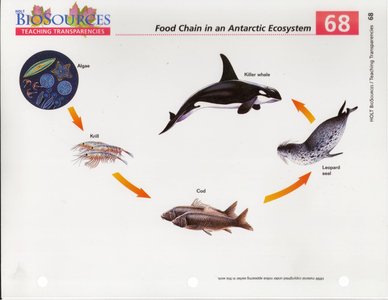
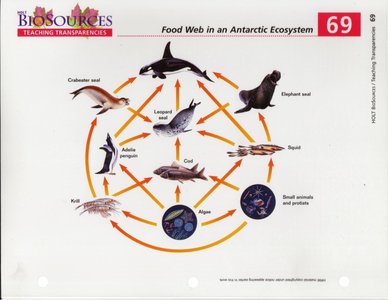
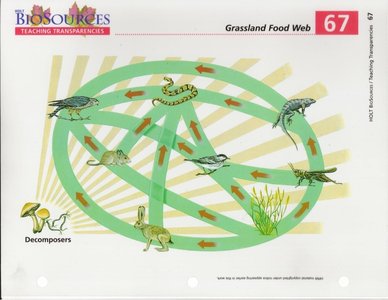
Trophic Levels
Producers: Autotrophs (e.g., plants) that capture energy from the sun.
Primary Consumers: Herbivores that eat producers.
Secondary Consumers: Carnivores that eat primary consumers.
Tertiary Consumers: Carnivores that eat secondary consumers.
Quaternary Consumers: Top-level consumers; food chains rarely extend beyond this level due to energy loss.
Decomposers: Organisms (bacteria, fungi) that break down dead matter, returning nutrients to the environment.
Energy Pyramid
The pyramid of energy illustrates that energy decreases at each successive trophic level. Only about 10% of energy is transferred to the next level; the rest is lost as heat.
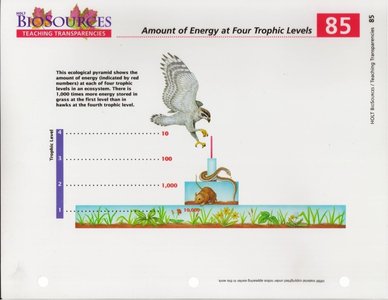
Biomass also decreases at higher trophic levels due to energy loss.
Material Cycles
Carbon, Hydrogen, and Oxygen Cycle (C-H-O Cycle)
These elements cycle through the processes of photosynthesis and respiration, ensuring the continuous availability of essential materials in ecosystems.
Water Cycle
The water cycle involves processes such as photosynthesis, transpiration, evaporation, condensation, respiration, and excretion, maintaining water balance in ecosystems.
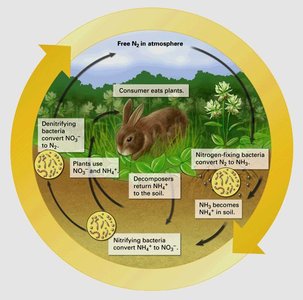
Nitrogen Cycle
Plants require nitrogen to synthesize proteins. Nitrogen-fixing bacteria convert atmospheric N2 into forms usable by plants. Animals obtain nitrogen by consuming plants or other animals. Decomposer bacteria return nitrogen to the soil.
Ecosystem Formation and Succession
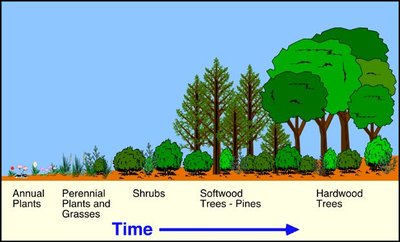
Ecological Succession
Ecological succession is the gradual process by which ecosystems change and develop over time, eventually reaching a stable climax community. Succession begins with pioneer organisms and progresses through various stages to a climax community (e.g., lichens → grasses → shrubs → trees).
Limiting Factors and Carrying Capacity
Limiting Factor: Any abiotic factor that restricts the size of a population (e.g., temperature, oxygen availability).
Carrying Capacity: The maximum number of individuals of a species that an ecosystem can support.
Competition and Niche
Competition: Occurs when different species use the same limited resources.
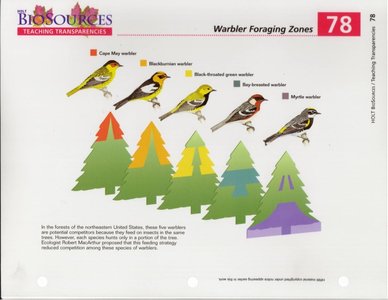
Niche: The role an organism plays in its community. Usually, only one species occupies a particular niche to avoid competitive exclusion.
Habitat
The habitat is the environment in which an organism lives.
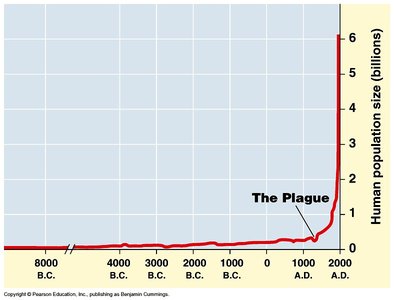
Population Growth
Human population growth has been exponential, influenced by factors such as technological advances and resource availability.
Warbler Niches
Different species can coexist in the same habitat by occupying different niches, as illustrated by warblers foraging in different parts of trees.
Biosphere and Humans
Human Impact on the Environment
Humans have significantly altered the biosphere, with both negative and positive effects.
Negative Aspects
Population growth exceeding food production capacity
Overhunting leading to species extinction
Importation of organisms disrupting ecosystems
Exploitation of wildlife and poor land use
Loss of biodiversity
Pollution (water, air, land)
Disposal of non-biodegradable wastes
Positive Aspects
Population control measures
Conservation of resources (e.g., reforestation, recycling)
Pollution control through laws and sanitation techniques
Species preservation via habitat protection
Biological control of pests
