 Back
BackEcology: The Study of Interactions and Biomes
Study Guide - Smart Notes
 Tailored notes based on your materials, expanded with key definitions, examples, and context.
Introduction to Ecology
Ecology is the scientific study of the interactions between organisms and the living and nonliving components of their environment. These interactions determine the distribution and abundance of organisms on Earth. Ecologists investigate these relationships at multiple levels of biological organization, from individual organisms to the entire biosphere.
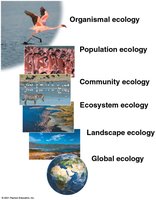
Levels of Ecological Study
Organismal Ecology: Focuses on how an organism’s structure, physiology, and behavior help it survive and reproduce in its environment. This includes physiological, evolutionary, and behavioral ecology. Example: How do flamingos select a mate?
Population Ecology: Examines groups of individuals of the same species living in an area, analyzing factors that affect population size and changes over time. Example: What environmental factors affect the reproductive rate of flamingos?
Community Ecology: Studies groups of populations of different species in an area, focusing on interactions such as predation, competition, and symbiosis. Example: What factors influence the diversity of species at an African lake?
Ecosystem Ecology: Investigates communities of organisms and their physical environment, emphasizing energy flow and chemical cycling. Example: What factors control photosynthetic productivity in an aquatic ecosystem?
Landscape Ecology: Explores the exchanges of energy, materials, and organisms across multiple ecosystems within a landscape or seascape. Example: To what extent do nutrients from terrestrial ecosystems affect organisms in a lake?
Global Ecology: Examines the biosphere, focusing on how global exchanges of energy and materials influence the distribution and function of organisms. Example: How do global patterns of air circulation affect the distribution of organisms?
Environmental Factors and Species Distribution
Abiotic and Biotic Factors
Species distribution is determined by a combination of abiotic (nonliving) and biotic (living) factors. For terrestrial organisms, climate—including temperature and precipitation—has the strongest effect. For aquatic organisms, light and nutrient availability are key factors.
Climate and Its Influence
Definition and Components of Climate
Climate is the long-term prevailing weather conditions in an area and is the most significant influence on the distribution of terrestrial organisms. The four major physical components of climate are:
Temperature
Precipitation
Sunlight
Wind
Global Climate Patterns
Global climate patterns are largely determined by solar energy and Earth’s movement in space. The sun’s warming effect establishes temperature variations, air and water circulation, and evaporation, leading to latitudinal variations in climate.
Latitudinal Variation in Sunlight Intensity
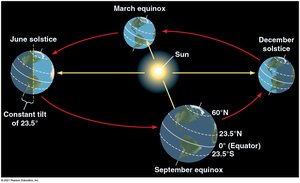
Sunlight is most direct at the tropics (23.5º north to 23.5º south latitude), resulting in higher intensity. At higher latitudes, sunlight strikes at an oblique angle, making it more diffuse and less intense.
Seasonality
Seasonal changes in climate are caused by the tilt of Earth’s axis and its orbit around the sun. This results in variations in day length, solar radiation, and temperature, which increase toward the poles.
Bodies of Water and Ocean Currents
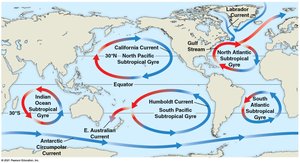
Oceans and large lakes moderate the climate of nearby land due to water’s high specific heat. Ocean currents transport heat, influencing terrestrial climates. Currents toward the equator carry cold water; those away from the equator carry warm water.
Mountains
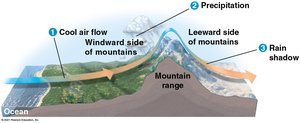
Mountains affect climate by influencing air flow. Warm, moist air rises and cools, releasing moisture on the windward side. The leeward side receives dry air, creating a "rain shadow" and often resulting in deserts.
Vegetation and Microclimate
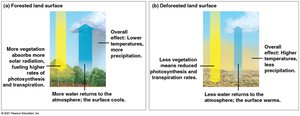
Vegetation, especially forests, can alter local and regional climate by absorbing solar energy and through transpiration, which cools the surface and increases precipitation. Deforestation leads to hotter, drier climates.
Global Climate Change
Human activities such as burning fossil fuels and deforestation have increased greenhouse gases, causing climate change. Earth has warmed by about 0.9°C since 1900, with further warming projected. This alters wind, precipitation, and the frequency of extreme weather events.
Effects on Species Ranges
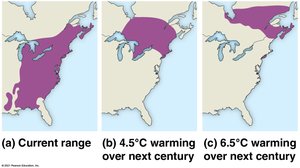
Climate change has already shifted the ranges of many species. Some species expand their range, while others contract or face extinction if they cannot disperse or adapt quickly enough.
Terrestrial Biomes
Definition and Classification
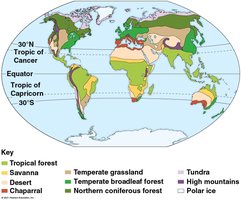
Biomes are major life zones characterized by vegetation type (terrestrial) or physical environment (aquatic). Climate is a major factor in determining biome locations, as it influences plant distribution.
General Features
Biomes are named for their predominant vegetation and climate features.
Ecotones are areas of transition between biomes.
Vertical layering of vegetation provides diverse habitats.
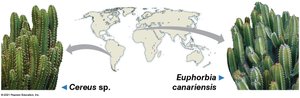
Species composition varies by location; similar adaptations can arise in distant biomes (convergent evolution).
Disturbance
Disturbance (e.g., fire, storms, human activity) alters communities and can maintain characteristic vegetation. Many biomes depend on periodic disturbance for their structure and function.
Major Terrestrial Biomes
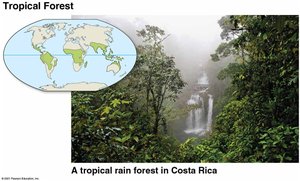
Tropical Forest: High rainfall, high temperature, high biodiversity. Threatened by deforestation.
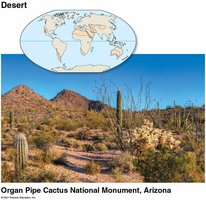
Desert: Low, variable precipitation; extreme temperatures; adaptations for water conservation.
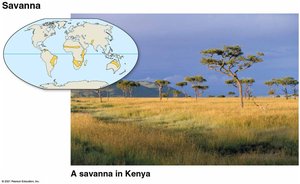
Savanna: Seasonal rainfall, fire-adapted grasses, large herbivores.
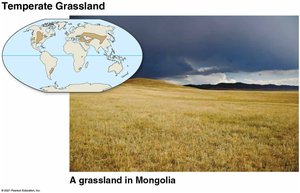
Temperate Grassland: Seasonal precipitation, drought- and fire-adapted grasses, converted to agriculture.
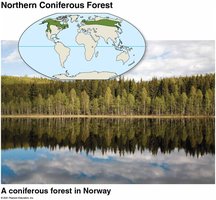
Northern Coniferous Forest (Taiga): Largest terrestrial biome, cold winters, coniferous trees.
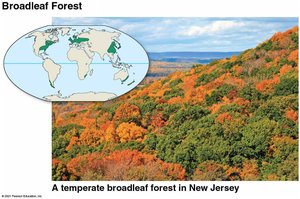
Temperate Broadleaf Forest: Midlatitudes, significant precipitation, deciduous trees.
Aquatic Biomes
General Features
Aquatic biomes cover most of Earth and are classified by physical and chemical characteristics, such as salt concentration. Marine biomes have about 3% salt, while freshwater biomes have less than 0.1%. Oceans regulate climate, provide rainfall, and support photosynthetic organisms that produce much of Earth’s oxygen.
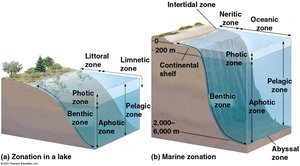
Zonation in Aquatic Biomes
Aquatic biomes are stratified by light, temperature, and depth:
Photic zone: Sufficient light for photosynthesis
Aphotic zone: Little light
Benthic zone: Bottom substrate
Pelagic zone: Open water
Abyssal zone: Deep aphotic region (2,000–6,000 m)
Major Aquatic Biomes
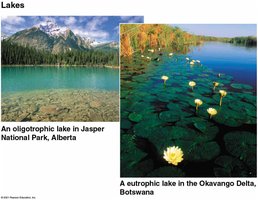
Lakes: Range from nutrient-poor (oligotrophic) to nutrient-rich (eutrophic). Human activity can cause eutrophication.
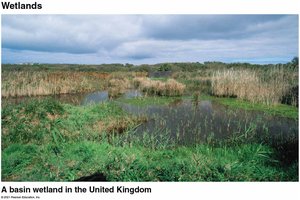
Wetlands: Highly productive, support diverse life, threatened by drainage and filling.
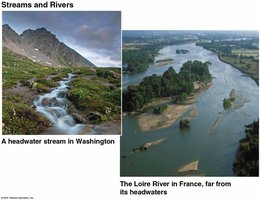
Streams and Rivers: Characterized by current; headwaters are cold and clear, downstream is warmer and turbid.
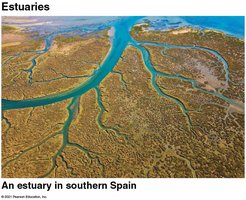
Estuaries: Transition zones between rivers and sea, highly productive.
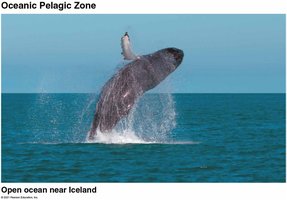
Oceanic Pelagic Zone: Open ocean, mixed by currents, supports plankton and large animals.
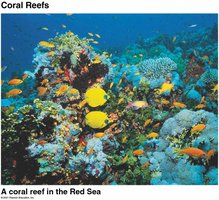
Coral Reefs: Formed by corals, high biodiversity, threatened by human activities.
Summary Table: Comparison of Major Terrestrial Biomes
Biome | Climate | Dominant Vegetation | Key Adaptations | Human Impact |
|---|---|---|---|---|
Tropical Forest | Warm, high rainfall | Broadleaf evergreens, deciduous trees | Vertical layering, intense competition for light | Deforestation |
Desert | Low, variable precipitation; hot/cold extremes | Cacti, succulents | Water storage, reduced leaves, CAM/C4 photosynthesis | Urbanization, agriculture |
Savanna | Seasonal rainfall, warm | Grasses, forbs, scattered trees | Fire/drought tolerance | Ranching, overhunting |
Temperate Grassland | Seasonal precipitation, cold winters, hot summers | Grasses, forbs | Drought/fire adaptation | Agriculture, overgrazing |
Northern Coniferous Forest | Cold winters, warm summers | Conifers (pine, spruce, fir) | Needle leaves, conical shape | Logging |
Temperate Broadleaf Forest | Moderate, year-round precipitation | Deciduous trees | Seasonal leaf drop | Urbanization, recovery in some areas |
