 Back
Ecosystem Ecology: Energy Flow, Productivity, and Nutrient Cycling
Study Guide - Smart Notes
 Tailored notes based on your materials, expanded with key definitions, examples, and context.
Ecosystem Ecology
Introduction to Ecosystems
Ecosystem ecology examines the interactions between living organisms and their physical environment, focusing on energy flow and nutrient cycling. An ecosystem consists of a community of organisms and the abiotic components of their environment. - Ecosystem: A community plus its nonliving (abiotic) environment. - Energy flow and nutrient cycling link all parts of the ecosystem together. 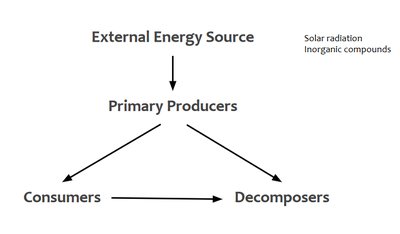
Trophic Interactions: Food Chains and Food Webs
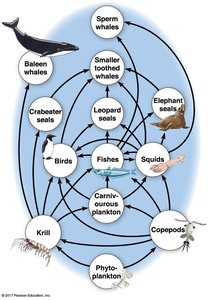
Trophic interactions describe the feeding relationships among organisms, forming food chains and food webs. - Food chain: Linear sequence of organisms through which energy and nutrients pass. - Food web: Complex network of interconnected food chains, showing multiple pathways for energy flow. - Trophic levels: Positions organisms occupy in a food chain (producers, consumers, decomposers). - Omnivory: Organisms feeding at multiple trophic levels. 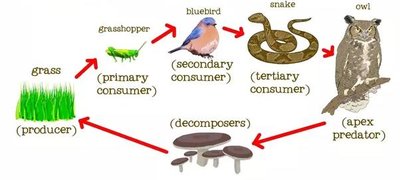
Energy Flow in Ecosystems
Energy enters ecosystems primarily through photosynthesis and follows the laws of thermodynamics. - First law of thermodynamics: Energy cannot be created or destroyed. - Second law of thermodynamics: Energy transfer results in loss as heat. - Energy is transferred from producers to consumers and decomposers, with some stored and some dissipated as heat. 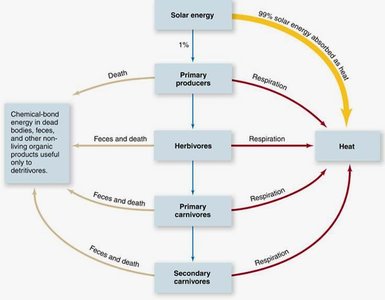
Primary Productivity
Primary productivity measures the rate at which energy is converted by autotrophs into organic substances. - Gross Primary Productivity (GPP): Total amount of CO2 fixed by photosynthesis. - Net Primary Productivity (NPP): Energy available to the food web after plant respiration. - Respiration (R): Energy lost to respiration. - Formula: 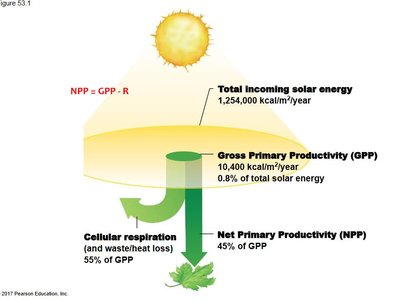
Factors Affecting NPP
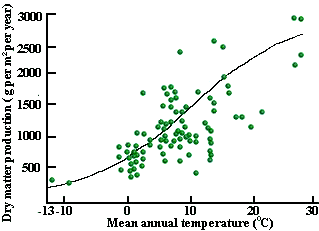
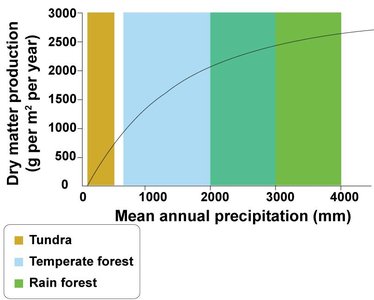
NPP is influenced by temperature, moisture, light, and nutrient availability. - Higher temperature and moisture generally increase NPP. - Water and nutrient limitations can restrict plant growth. 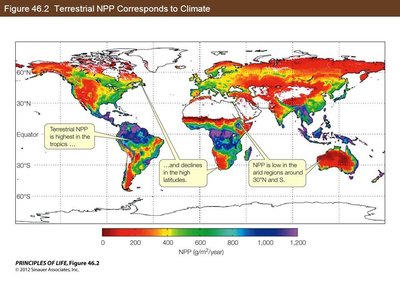
Global Patterns of NPP
NPP varies across biomes and is highest in tropical regions and aquatic systems like algal beds and reefs. - Tropical rainforests and wetlands have high NPP per unit area. - Deserts and tundra have low NPP. 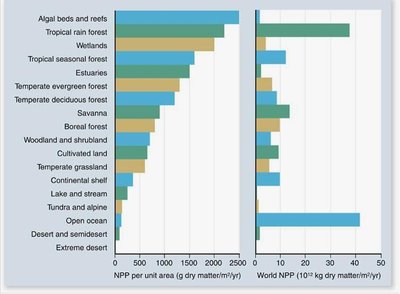
Photosynthesis and Light Utilization
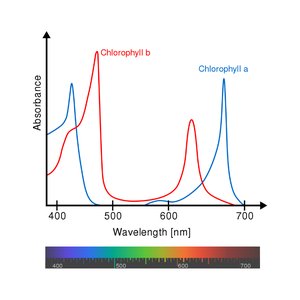
Plants use only a small fraction of solar energy for photosynthesis, limited by the range of photosynthetically active radiation (PAR). - PAR: Wavelengths between ~400-700 nm. - Not all sunlight is absorbed; some is reflected or passes through leaves. 
Measuring NPP
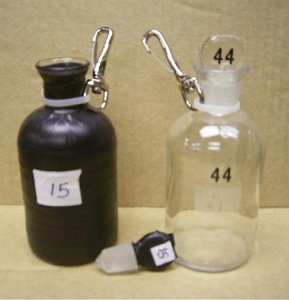
NPP can be measured by tracking CO2 depletion, biomass increase, or using remote sensing (satellites). - CO2 depletion: Monitors photosynthetic activity. - Biomass increase: Measures growth in plant mass. - Remote sensing: Estimates NPP at large scales. 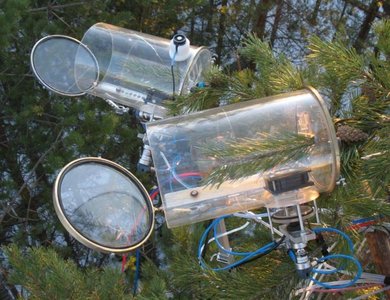
Carbon Sequestration and Net Ecosystem Productivity
Net Ecological Productivity (NEP)
NEP represents the net carbon exchange between ecosystems and the atmosphere. - NEP: NPP minus respiration by decomposers and animals. - NEP > 0: Ecosystem is a carbon sink. - NEP < 0: Ecosystem is a carbon source. - Formula:
Nutrient Cycling
Biogeochemical Cycles
Nutrient cycling involves the movement of elements like nitrogen, phosphorus, water, and carbon through biotic and abiotic components. - Producers, consumers, and decomposers all play roles in cycling nutrients. - Abiotic factors (temperature, oxygen, water) affect cycling rates.
Nitrogen Cycle
The nitrogen cycle is essential for plant growth and ecosystem productivity. - Fixation: Conversion of N2 gas to ammonium by bacteria, lightning, or industry. - Assimilation: Uptake of inorganic nitrogen by plants and microbes. - Mineralization: Conversion of organic nitrogen in detritus to ammonium by decomposers. - Immobilization: Inorganic nitrogen taken into microbial bodies. - Nitrification: Conversion of ammonium to nitrate by bacteria and archaea. - Denitrification: Conversion of nitrate to N2 gas by bacteria in low-oxygen soils. - Leaching: Nitrate washed out of soil by water.
Energy Transfer and Trophic Efficiency
Energy Transfer in Food Webs
Energy transfer between trophic levels is inefficient, with most energy lost as heat. - Assimilation efficiency: Fraction of ingested food that is assimilated. - Production efficiency: Fraction of assimilated energy converted to biomass. - Typical values: - Plants: 30-85% - Invertebrates: ~20% - Fish: ~10% - Mammals and birds: 1-2%
Biomass and Energy Pyramids
Biomass pyramids illustrate the distribution of biomass across trophic levels. - Biomass can be inverted in some ecosystems, but energy pyramids always decrease with each trophic level.
Regulation of Food Webs
Bottom-Up and Top-Down Control
Food webs are regulated by both nutrient inputs (bottom-up) and predation (top-down). - Bottom-up: Abundance at higher trophic levels reflects nutrient inputs. - Top-down: Predators regulate populations at lower trophic levels. - Parasites and disease can also influence food web structure.
Ecosystem Services
Types of Ecosystem Services
Ecosystems provide essential services to human society, including: - Provisioning: Food, water, timber, medicine. - Regulating: Air quality, pest control. - Supporting: Soil formation, nutrient cycling. - Cultural: Heritage, recreation, tourism. - Disturbance can lead to degradation or loss of these services.
Climate Change and Ecosystem Function
Climate Change Impacts
Climate change affects NPP, NEP, and nutrient cycling through changes in temperature, moisture, and CO2 levels. - Increased CO2 can enhance NPP but may also increase competition for nutrients. - Deforestation reduces the global carbon sink. - Range shifts, phenological shifts, and physiological stress are observed in many species.
Summary Table: Key Terms in Ecosystem Ecology
Term | Definition |
|---|---|
Gross Primary Productivity (GPP) | Total CO2 fixed by photosynthesis |
Net Primary Productivity (NPP) | Energy available to food web after plant respiration |
Net Ecological Productivity (NEP) | Net carbon exchange between ecosystem and atmosphere |
Assimilation Efficiency | Fraction of ingested food assimilated |
Production Efficiency | Fraction of assimilated energy converted to biomass |
Biogeochemical Cycle | Movement of nutrients through biotic and abiotic components |
Food Chain | Linear sequence of energy transfer |
Food Web | Complex network of trophic interactions |
Conclusion
Ecosystem ecology integrates the study of energy flow, productivity, and nutrient cycling, highlighting the complexity and interconnectedness of biological communities and their environment. Understanding these processes is essential for managing ecosystem services and addressing challenges such as climate change and biodiversity loss.
