 Back
BackEcosystem Energy Flow and Trophic Structure
Study Guide - Smart Notes
 Tailored notes based on your materials, expanded with key definitions, examples, and context.
Ecosystems: Structure and Energy Flow
Definition and Components of Ecosystems
An ecosystem is an association of organisms and their physical environment, interconnected by the ongoing flow of energy and cycling of materials. Ecosystems include both biotic (living) and abiotic (non-living) components, and their interactions are fundamental to the functioning of the biosphere.
Biotic components: Producers (autotrophs), consumers (heterotrophs), decomposers, and detritivores.
Abiotic components: Sunlight, water, temperature, soil, and nutrients.

Energy for Life: The Source of Energy
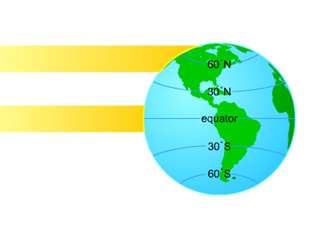
All life on Earth ultimately depends on energy from the sun. Solar energy is captured by certain organisms and converted into chemical energy, which then supports all other life forms through food webs.
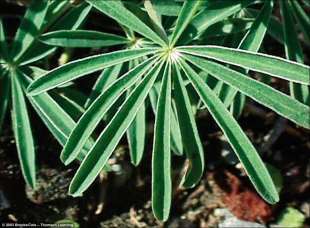
Autotrophs (Producers): Organisms that capture sunlight or chemical energy to produce organic molecules from inorganic substances. Most plants, algae, and some bacteria are autotrophs.
Heterotrophs (Consumers, Decomposers, Detritivores): Organisms that extract energy from other organisms or organic wastes. This group includes animals, fungi, and many bacteria.
Photosynthesis and Primary Production
Photosynthesis: The Foundation of Ecosystem Energy
Photosynthesis is the process by which autotrophs convert light energy into chemical energy, producing glucose and oxygen from carbon dioxide and water. This process is fundamental to life on Earth.
The overall equation for photosynthesis is:
Producers use some of the chemical energy for their own metabolic needs; the rest is stored or used to build body structures.
Primary Production and Net Primary Production (NPP)
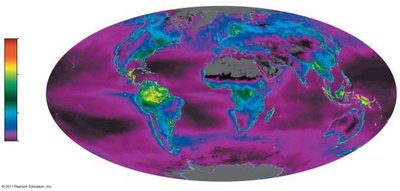
Primary production is the amount of light energy converted to chemical energy by autotrophs in a given time period. Net primary production (NPP) is the energy that remains after autotrophs have met their own energetic needs and is available to consumers in the ecosystem.
Standing crop: The total biomass of photosynthetic autotrophs at a given time.
Ecosystems vary greatly in NPP and their contribution to Earth's total NPP.
Trophic Structure and Energy Transfer
Food Chains and the 10% Rule
Energy flows through ecosystems in food chains and food webs. The 10% rule states that, on average, only about 10% of the energy at one trophic level is transferred to the next level; the rest is lost as heat or used for metabolic processes.
Efficiency of Energy Transfer
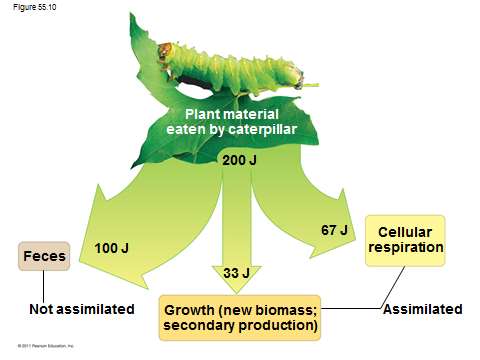
Production efficiency: The fraction of energy stored in an organism that is not used for its immediate metabolic needs.
Trophic efficiency: The percentage of production transferred from one trophic level to the next in a food chain.
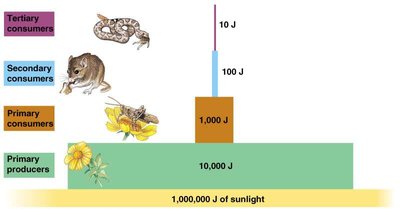
Trophic Levels and Ecological Pyramids
Trophic levels represent the position of organisms in a food chain:
Primary producers: Autotrophs (e.g., plants)
Primary consumers: Herbivores
Secondary consumers: Carnivores that eat herbivores
Tertiary consumers: Carnivores that eat other carnivores
Ecological pyramids can represent energy, biomass, or numbers at each trophic level.
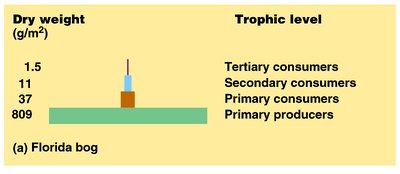
Food Webs: Complexity in Ecosystems
Types of Food Webs
Food webs illustrate the complex feeding relationships in ecosystems. There are two main types:
Grazing food chain: Energy flows from producers to herbivores to carnivores.
Detrital food chain: Energy flows from detritus (dead organic matter) to decomposers and detritivores.
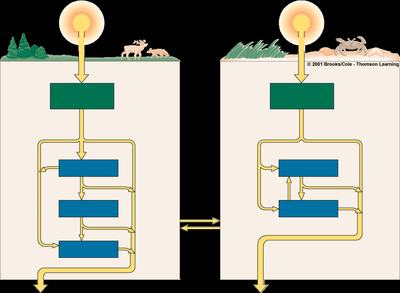
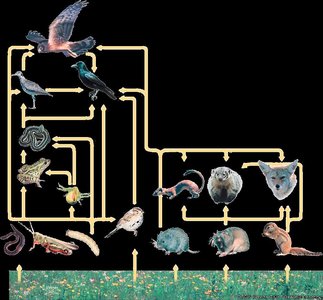
Sampling of Connections in a Food Web
Food webs in natural ecosystems, such as a tallgrass prairie, show the interconnectedness of producers, consumers, and decomposers.
Human Impact and Biological Magnification
Feeding the World's Population
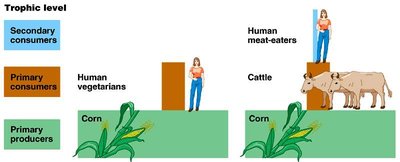
Understanding energy flow and trophic structure is essential for addressing global food security. The efficiency of energy transfer has direct implications for feeding the world's population, as more energy is available at lower trophic levels (e.g., plant-based diets).
Biological Magnification
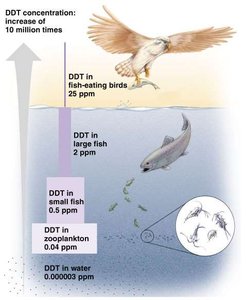
Biological magnification occurs when nondegradable or slowly degradable substances (such as DDT) become increasingly concentrated in the tissues of organisms at higher trophic levels. This phenomenon can have serious ecological and health consequences.
Summary Table: Trophic Levels and Energy Flow
Trophic Level | Role | Example Organisms | Energy Source |
|---|---|---|---|
Producers | Autotrophs | Plants, algae | Sunlight (photosynthesis) |
Primary Consumers | Herbivores | Insects, rabbits | Producers |
Secondary Consumers | Carnivores | Birds, snakes | Primary consumers |
Tertiary Consumers | Top carnivores | Hawks, foxes | Secondary consumers |
Decomposers/Detritivores | Break down dead matter | Bacteria, fungi, earthworms | Detritus |
Additional info: Efficient energy transfer and minimizing biological magnification are critical for sustainable ecosystem management and human health.
