Back
Back10.1 Ecosystem Services and Ecosystem-Based Management: Concepts and Applications
Study Guide - Smart Notes
 Tailored notes based on your materials, expanded with key definitions, examples, and context.
Ecosystem Services
Definition and Importance
Ecosystem services are the natural processes and functions provided by ecological systems that sustain human life. These services depend on the integrity and health of natural systems and are often irreplaceable or prohibitively expensive to replicate artificially.
Ecosystem services: Natural processes that sustain human life, such as water purification, pollination, and climate regulation.
Many ecosystem services cannot be duplicated by artificial means, or are much more expensive to replicate.
Classification of Ecosystem Services
Ecosystem services are commonly classified into four categories:
Provisioning services: Production of food and water.
Regulating services: Control of climate and disease.
Supporting services: Nutrient cycles and soil formation.
Cultural services: Spiritual, recreational, and aesthetic benefits.
Examples of Ecosystem Services
Water purification
Generation and maintenance of soil
Pollination of crops
Climate regulation
Buffering from storms
Seed dispersal
Erosion protection
Air purification
Decomposition of wastes
Nutrient cycling
Disease regulation
Control of agricultural pests
Water Purification: Case Study
Water purification is a critical ecosystem service. For example, New York City spent $1 billion to restore its watershed, avoiding the $8 billion cost of building a water treatment facility. Wetlands are highly effective at removing contaminants:
20-60% of metals
80-90% of sediments
70-90% of nitrogen
Reduction of human pathogens
Threats to Natural Water Purification
Several human activities threaten the ability of ecosystems to purify water:
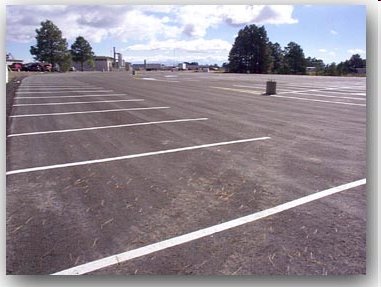
Paved roads increase contamination and flooding.
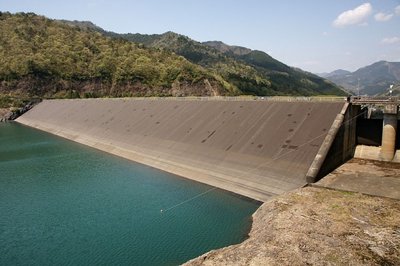
Altered waterways are diverted for human use, reducing natural filtration.
Loss of riparian areas and wetlands diminishes purification capacity.
Invasive species can reduce water filtration efficiency.
Nitrogen pollution can create hypoxic waters and disrupt communities.



Storm Protection
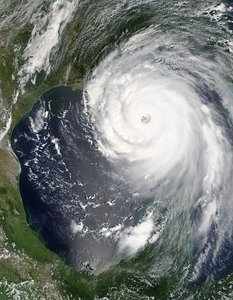
Some coastal areas are naturally buffered from storms by mangroves and wetlands. The loss of these habitats increases vulnerability to hurricanes and other extreme weather events.
Wetlands and mangroves absorb storm surges and reduce flooding.
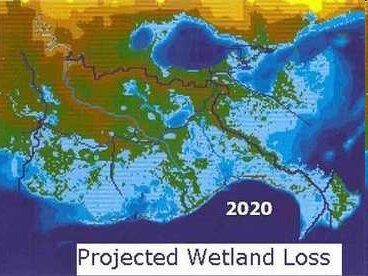
Louisiana wetland loss has made the area more vulnerable to hurricanes.
Ecosystem-Based Management (EBM)
Definition and Goals
Ecosystem-based management (EBM) is an approach that aims to maintain healthy ecosystems to sustain the long-term delivery of a range of services that humans want and need. EBM seeks to protect ecosystem services by considering the combined impacts of human activities across land, coasts, and oceans.
EBM reframes management goals to conserve a suite of ecosystem services, rather than focusing on single services.
EBM is a fundamental shift from traditional management, which often treats activities as unconnected.
Integrated Management
EBM requires a comprehensive approach that integrates multiple sectors and considers cumulative impacts.
Fisheries management
Coastal zone management
Water quality management
Marine sanctuaries
Marine mammal management

Paradigm Shift in Management
EBM represents a shift from:
Managing individual species and single sectors
Small scales and short-term perspectives
Managing commodities
To:
Managing ecosystems and multiple sectors
Multiple scales and long-term perspectives
Managing activities for system functioning
Scientific Consensus and Policy
EBM is supported by scientific consensus and is increasingly incorporated into national, regional, and state policy documents.
Collective scientific agreement on definitions, goals, and guiding principles.
EBM is a catalyst for dialogue among managers and policymakers.
Examples include the CBD Aichi Targets and National Ocean Policy.

Madagascar Case Study
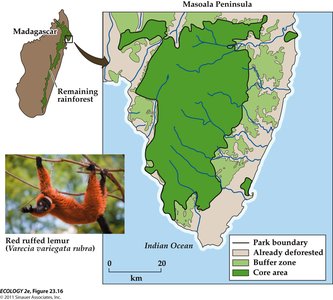
The Madagascar case study illustrates the application of EBM, with a core nature area and buffer zones for sustainable human use.
Core area: Strictly protected for conservation.
Buffer zone: Managed for sustainable human activities.
Involvement of stakeholders is essential for effective management.
Key Principles of EBM
Managing in an ecosystem context, including humans and recognizing connections among ecosystem components.
Involving stakeholders with interests in management.
Focusing on cumulative impacts of all key activities and sectors.
EBM does not require understanding every species or interaction, but focuses on managing human activities within ecosystems.
Terminology: Ecosystem-Based Management vs. Ecosystem Management
"Ecosystem management" implies controlling and managing an entire ecosystem.
"Ecosystem-based management" focuses on managing human activities within an ecosystem context.
Adaptive Management
EBM is closely linked to adaptive management, which involves ongoing monitoring and adjustment of management strategies based on new information and changing conditions.
Adaptive management is essential for responding to complex and dynamic ecosystem processes.
Summary Table: Ecosystem Services Classification
Service Type | Examples |
|---|---|
Provisioning | Food, water, raw materials |
Regulating | Climate regulation, disease control, water purification |
Supporting | Nutrient cycling, soil formation, pollination |
Cultural | Recreational, spiritual, aesthetic benefits |
Conclusion
Ecosystem services are vital for human well-being, and ecosystem-based management offers a holistic approach to sustaining these services. By integrating multiple sectors, considering cumulative impacts, and involving stakeholders, EBM represents a paradigm shift in environmental management.