 Back
Back4.1: Ecology
Study Guide - Smart Notes
 Tailored notes based on your materials, expanded with key definitions, examples, and context.
Ecology and Its Importance
Definition and Scope of Ecology
Ecology is the scientific study of how living organisms interact with their environment, encompassing both biotic (living) and abiotic (non-living) components. The central goal of ecology is to understand the distribution and abundance of organisms on Earth, providing a foundation for conservation efforts.
Biotic components: Populations of individuals organized into communities of multiple species.
Abiotic components: Physical factors such as temperature, precipitation, wind, and sunlight.
Conservation biology: Applies ecological findings to study, preserve, and restore threatened populations, communities, and ecosystems.
Key Question: When should humans intervene in ecological processes?
Levels of Ecological Study
Organismal Ecology: Examines adaptations (morphological, physiological, behavioral) that allow individuals to survive in specific environments.
Population Ecology: Focuses on changes in population size and structure over time.
Community Ecology: Studies interactions among species and responses to disturbances (e.g., fire, flood).
Ecosystem Ecology: Investigates the movement of energy and nutrients among organisms and their environment.
Aquatic Ecosystems
Physical Factors Shaping Aquatic Environments
Water depth and the rate of water movement are the primary physical factors determining the biodiversity and productivity of aquatic ecosystems.
Water depth: Dictates light availability, which influences photosynthetic productivity.
Water flow: Affects nutrient distribution and habitat structure.
Light Availability in Aquatic Realms
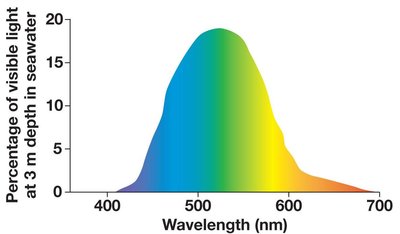
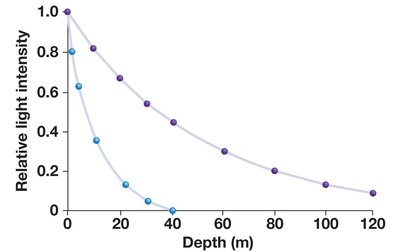
Light intensity and wavelength availability decrease with increasing water depth, affecting which organisms can thrive at different depths.
Lakes and Ponds
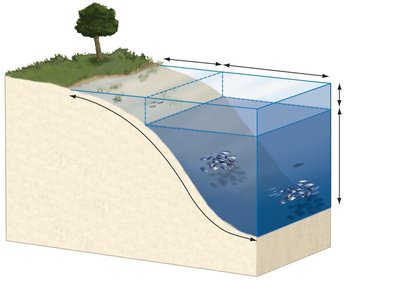
Lakes and ponds are freshwater environments distinguished by size (ponds are smaller). They are structured into zones based on water depth and light penetration:
Littoral zone: Shallow, near-shore area with rooted plants.
Limnetic zone: Offshore area with sufficient light for photosynthesis.
Benthic zone: Bottom substrate.
Photic zone: Regions receiving sunlight (supports photosynthesis).
Aphotic zone: Regions without sunlight.
Wetlands
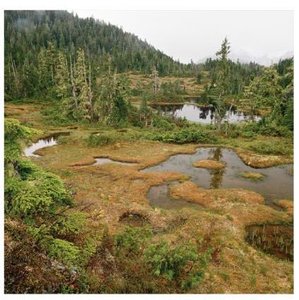
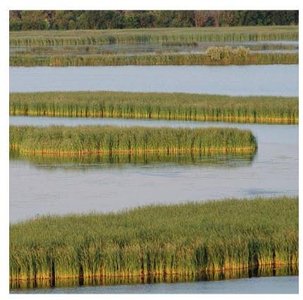
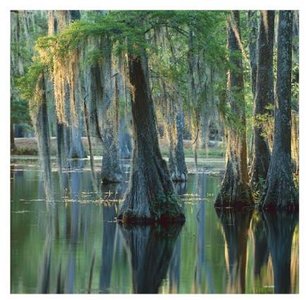
Wetlands are shallow-water habitats with saturated soils for at least part of the year. They are classified by water flow and vegetation:
Bogs: Low or no water flow, acidic, non-productive.
Marshes: Slow, steady water flow, dominated by grasses (nonwoody plants).
Swamps: Slow, steady water flow, dominated by trees and shrubs.
Streams
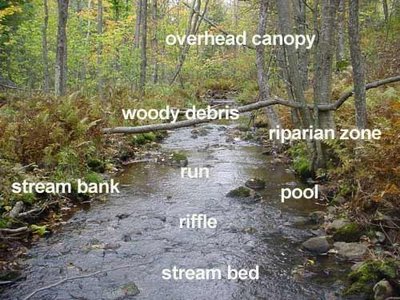
Streams are bodies of water that flow in one direction, varying in size from creeks (small) to rivers (large). Their structure and biodiversity change from source to mouth:
Headwaters: Cold, narrow, fast-flowing, high in oxygen, low in nutrients, fewer animal species.
Mouth: Warmer, wider, slow-flowing, nutrient-rich, more diverse organisms (algae, plants, animals).
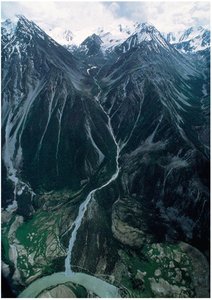
Most streams are shallow enough for sunlight to reach the bottom, but suspended particles can reduce light penetration. Stream ecosystems have distinct anatomical features such as riffles, pools, and riparian zones.
Estuaries
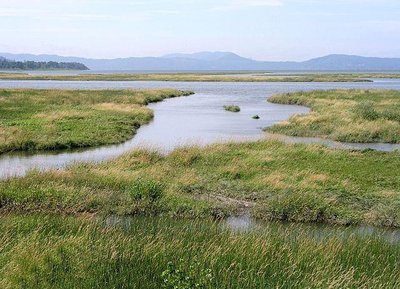
Estuaries are transition zones where freshwater from rivers mixes with saltwater from the ocean. They are highly productive and variable environments:
Structure: Determined by bottom topography and water flow.
Halocline: Layers of different salinity can form in calm estuaries.
Adaptations: Species must tolerate varying salinity levels.
Marine Ecosystems: Oceans
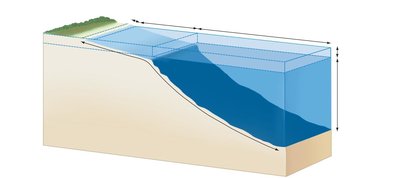
The ocean is a continuous body of salt water with distinct zones based on depth and distance from shore:
Intertidal zone: Area exposed at low tide, submerged at high tide.
Neritic zone: From intertidal to 200 m depth, includes continental shelf and coral reefs.
Oceanic zone: Deepwater beyond the continental shelf.
Benthic zone: Ocean floor.
Productivity is highest in the intertidal and neritic zones due to light and nutrient availability.
Terrestrial Ecosystems and Biomes
Biomes and Climate
Terrestrial ecosystems are classified into biomes—major groupings of plant and animal communities defined by dominant vegetation. The type of biome is determined by:
Average annual temperature
Average annual precipitation
Annual variation in temperature and precipitation
Climate refers to long-term weather patterns, while weather is short-term atmospheric conditions.
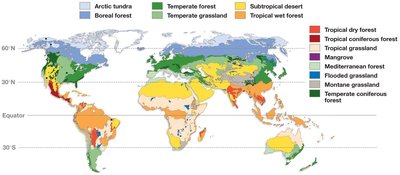
Productivity in Terrestrial Realms
Net primary productivity (NPP) is the total amount of carbon fixed per year minus the amount oxidized during cellular respiration. NPP is often estimated by measuring aboveground biomass and is a key indicator of ecosystem health.
Major Terrestrial Biomes
Tropical Wet Forests (Rain Forests)
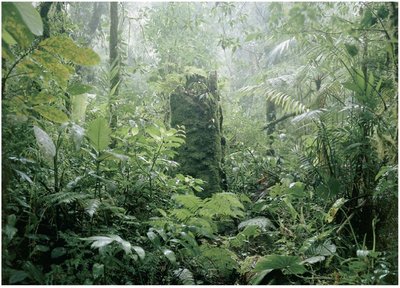
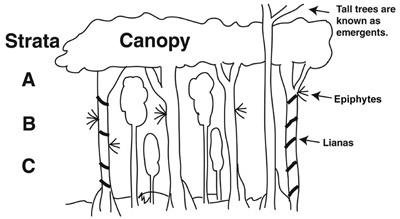
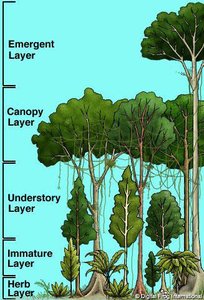
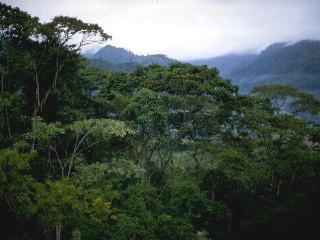
Located near the equator, these forests have high temperatures, high rainfall, and low seasonal variation. They exhibit high species diversity and stratified vegetation layers, providing diverse habitats.
Emergent layer: Tallest trees reaching above the canopy.
Canopy: Dense layer of tree branches and leaves.
Understory: Shrubs and herbs adapted to low light.
Forest floor: Thin, nutrient-rich layer of decaying matter.
Subtropical Deserts
Found at 30ºN and 30ºS, these biomes have high temperatures, low precipitation, and low productivity. Plants are widely spaced and adapted for water conservation and rapid growth during rare rainfall events.
Temperate Grasslands
Characterized by moderate temperatures, significant seasonal variation, and relatively low precipitation. Productivity is lower than forests but soils are often highly fertile. Includes steppes and prairies.
Temperate Forests
Occur in regions with moderate, relatively constant precipitation. Dominated by broad-leaved, deciduous trees. Productivity and diversity are moderate, with a period of dormancy during cold months.
Boreal Forests (Taiga)
Located just south of the Arctic Circle, these forests experience very cold winters, short summers, and low precipitation. Dominated by cold-tolerant conifers (gymnosperms), they have low diversity but high aboveground biomass due to slow-growing, long-lived trees.
Arctic Tundra
Found in arctic regions, tundra has very low temperatures, high seasonal variation, and low precipitation. Dominated by small shrubs, lichens, and herbaceous plants. Soils are perennially frozen (permafrost), resulting in low productivity and diversity.
Global Climate Patterns
Determinants of Climate Variation
Climate patterns are shaped by Earth's position relative to the sun, influencing temperature, precipitation, and seasonality.
Solar radiation: The equator receives more solar energy per unit area than the poles due to Earth's spherical shape.
Hadley cells: Large-scale atmospheric circulation patterns that create wet equatorial regions and dry subtropical zones.
Seasonality: Caused by Earth's 23.5º axial tilt, resulting in annual fluctuations in temperature and precipitation.
Summary Table: Major Aquatic and Terrestrial Ecosystems
Ecosystem/Biome | Key Abiotic Factors | Dominant Biota | Productivity |
|---|---|---|---|
Lakes & Ponds | Light, water depth, temperature | Plankton, fish, detritivores | Variable, highest in photic zone |
Wetlands | Water flow, vegetation | Emergent plants, amphibians, birds | High in marshes, low in bogs |
Streams | Flow rate, temperature, nutrients | Fish, invertebrates, algae | Higher at mouth, lower at source |
Estuaries | Salinity, water flow | Salt-tolerant plants, fish, birds | Very high |
Oceans | Depth, light, currents | Phytoplankton, fish, marine mammals | Highest in neritic/intertidal zones |
Tropical Wet Forest | High temp, high precipitation | Broadleaf trees, vines, epiphytes | Very high |
Subtropical Desert | High temp, low precipitation | Cacti, succulents, reptiles | Very low |
Temperate Grassland | Moderate temp, low precipitation | Grasses, herbivores | Moderate |
Temperate Forest | Moderate temp, moderate precipitation | Deciduous trees, mammals | Moderate |
Boreal Forest | Low temp, low precipitation | Conifers, moose, bears | Low |
Arctic Tundra | Very low temp, low precipitation | Shrubs, lichens, migratory birds | Very low |
