 Back
Ecosystems and Energy: Dynamics, Physical Laws, and Trophic Levels
Study Guide - Smart Notes
 Tailored notes based on your materials, expanded with key definitions, examples, and context.
Ecosystem Dynamics: Energy and Matter
Energy Flow and Chemical Cycling
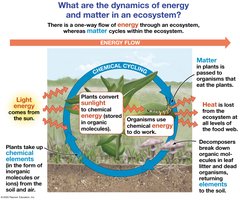
Ecosystem ecology focuses on the movement of energy and cycling of matter between organisms and their environment. Energy flows in a single direction, while matter cycles within the ecosystem.
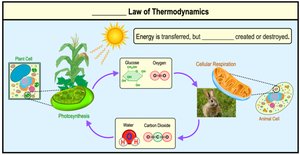
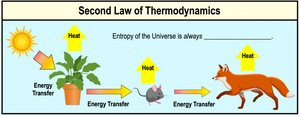
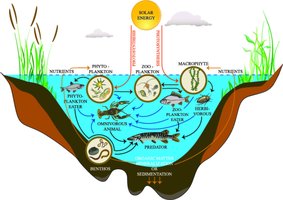
Energy Flow: Light energy from the sun is converted by plants into chemical energy stored in organic molecules. Organisms obtain this energy by consuming plants or other organisms, using it to perform work. Heat is lost at every level, increasing the entropy of the universe.
Matter Cycling: Plants absorb inorganic elements from soil and air, which are transferred to consumers. Decomposers break down organic matter, returning elements to the soil for reuse.
Ecosystem Structure and Scale
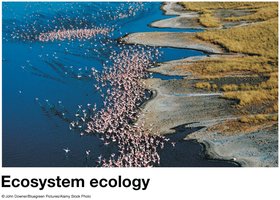
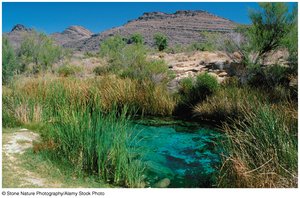
Ecosystems consist of living organisms and their non-living environment, ranging from large areas like forests to micro-habitats such as desert springs. Microcosms are small, representative systems that embody features of larger entities.
Energy: Flows in one direction through ecosystems of any size.
Matter: Cycles within ecosystems, regardless of scale.
Physical Laws Governing Ecosystems
Conservation of Energy
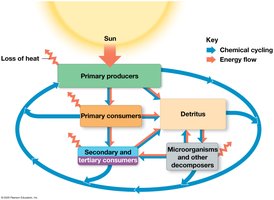
The first law of thermodynamics states that energy cannot be created or destroyed, only transferred or transformed. Autotrophs convert solar energy into chemical energy, but the total energy remains constant. The second law of thermodynamics states that every energy exchange increases the entropy (disorder) of the universe, and some energy is always lost as heat.
Autotrophs: Organisms that produce their own food from inorganic sources (e.g., plants via photosynthesis).
Energy Loss: Heat is lost at each trophic level.
Conservation of Mass
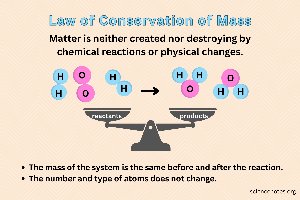
The law of conservation of mass states that matter cannot be created or destroyed in a closed system. Chemical elements are continually recycled within ecosystems.
Example: In a fire, the mass of wood and oxygen equals the mass of ash, smoke, CO2, and water vapor.
Element Cycling: Elements are taken up by plants, transferred to consumers, and returned to the soil in wastes.
Open, Closed, and Isolated Systems
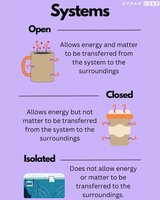
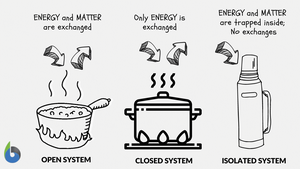
Ecosystems are open systems, absorbing energy and mass and releasing heat and waste products. The balance between inputs and outputs determines whether an ecosystem stores or loses particular elements.
Open System: Exchanges both energy and matter with surroundings.
Closed System: Exchanges energy but not matter.
Isolated System: No exchange of energy or matter.
Energy, Mass, and Trophic Levels
Trophic Levels and Energy Transfer
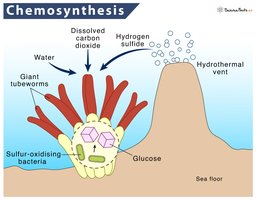
Ecologists group species into trophic levels based on feeding relationships. Autotrophs (primary producers) form the first trophic level, followed by consumers. Most primary producers are photosynthetic, but chemosynthetic organisms exist in deep-sea hydrothermal vents. Energy and nutrients pass from primary producers to primary consumers (herbivores), then to secondary consumers (carnivores), and so on.
Primary Producers: Photosynthetic organisms (plants, algae).
Consumers: Herbivores, carnivores, omnivores.
Chemosynthetic Producers: Use chemical energy from inorganic molecules (e.g., sulfur bacteria at hydrothermal vents).
Decomposers and Detritivores
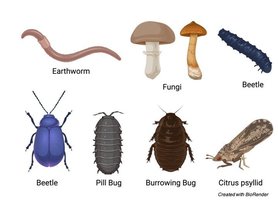
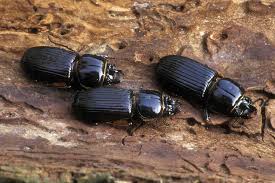
Decomposers break down dead plants, animals, and organic waste, returning nutrients to the ecosystem. Detritivores physically consume dead organic matter. Prokaryotes and fungi are the most important detritivores, converting organic matter from all trophic levels into inorganic compounds usable by primary producers.
Examples: Earthworms, beetles, slugs, fungi.
Role: Responsible for cycling chemical elements between living and nonliving parts of the ecosystem.


Primary Production in Ecosystems
Gross and Net Primary Production
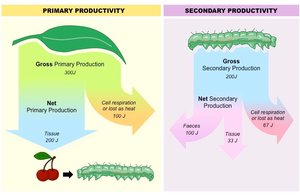
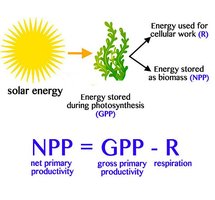
Primary production is the amount of light energy converted to chemical energy by photoautotrophs during a set period. Gross primary production (GPP) is the total primary production, while net primary production (NPP) is the energy remaining after producers use some for respiration (R).
Formula:
Biomass: Renewable plant and animal material produced by autotrophs through photosynthesis.
Estimating Ecosystem Productivity
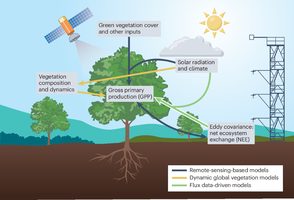
Satellites estimate ecosystem productivity by measuring vegetation greenness, structure, and photosynthetic activity. NDVI tracks vegetation greenness, SIF measures light emitted during photosynthesis, and LAI quantifies canopy structure.
NDVI: Normalized Difference Vegetation Index.
SIF: Solar Induced Fluorescence.
LAI: Leaf Area Index.
Global Variation in NPP
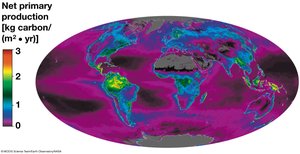
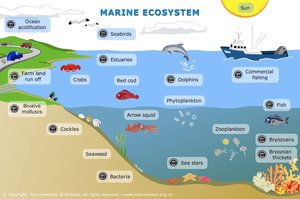
Ecosystems vary greatly in NPP and their contribution to Earth's total NPP. Tropical rain forests, estuaries, and coral reefs are highly productive per unit area. Open oceans are less productive per unit area but contribute significantly due to their vast size.
Photosynthetic Plankton: Major contributors to oceanic NPP.
Primary Production in Aquatic Ecosystems
Light and Nutrient Limitation
In aquatic ecosystems, both light and nutrients limit primary production. Depth of light penetration affects production in the photic zone. About half of solar radiation is absorbed in the first 15 m of water, and only 5–10% reaches a depth of 75 m.
Limiting Nutrient: The chemical element in lowest supply relative to demand, restricting biological growth.
Nitrogen and Phosphorus: Common limiting nutrients in marine ecosystems.
Primary Production in Terrestrial Ecosystems
Temperature, Moisture, and Nutrient Limitation
Temperature and moisture are the main factors controlling primary production in terrestrial ecosystems. NPP increases with annual precipitation, temperature, and solar radiation. Tropical rain forests are the most productive, while deserts and arctic tundra are low-productivity ecosystems.
Nitrogen: Most limiting nutrient globally.
Phosphorus: Limiting in older soils.
Plant Adaptations for Nutrient Acquisition
Plants have adaptations to access limiting nutrients, including mutualisms with nitrogen-fixing bacteria and mycorrhizal fungi, root hairs, and enzyme release.
Mutualisms: Symbiotic relationships with bacteria and fungi.
Root Hairs: Increase surface area for absorption.
Enzymes: Enhance nutrient availability in soil.
Energy Transfer Between Trophic Levels
Production Efficiency
Energy transfer through trophic levels is inefficient, with only about 10% transferred from one level to the next. Three processes affect efficiency: consumption efficiency (CE), assimilation efficiency (AE), and production efficiency (PE).
Consumption Efficiency: Proportion of available energy consumed by the next trophic level.
Assimilation Efficiency: Proportion of consumed food absorbed and digested.
Production Efficiency: Proportion of assimilated energy converted to new biomass.
Endotherms: Low production efficiency (~1-3%).
Ectotherms: Higher production efficiency (~10-40%).
Trophic Efficiency and Ecological Pyramids
Trophic efficiency is the percentage of production transferred from one trophic level to the next, averaging about 10%. Energy pyramids visually represent this loss, with each tier proportional to net production. Biomass pyramids show the total dry mass at each level, typically wide at the base and narrow at the top. 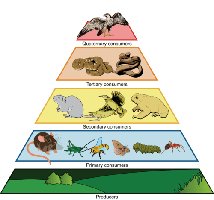
Decomposition and Nutrient Cycling
Role of Decomposers
Decomposers are essential for recycling nutrients. Their activity is controlled by temperature, moisture, and nutrient availability. Decomposition is rapid in warm ecosystems, resulting in low soil nutrient levels. In cold or wet ecosystems, organic matter accumulates due to slow decomposition.
Decomposition in Aquatic Ecosystems
Deep water in aquatic ecosystems is nutrient-rich due to sinking and decomposition of organisms. Upwelling or mixing brings nutrients to the photic zone, supporting primary production. Rivers carry nutrients from terrestrial to coastal zones, increasing productivity where they drain into seawater.
Biogeochemical Cycles
Global and Local Nutrient Cycles
Biogeochemical cycles involve both biotic and abiotic components. Gaseous elements (carbon, oxygen, sulfur, nitrogen) cycle globally, while heavier elements (phosphorus, potassium, calcium) cycle locally. Diagrams represent reservoirs and processes moving elements between them.
The Water Cycle
Water is essential to life, influencing rates of primary production and decomposition. Key processes include evaporation, condensation, transpiration, precipitation, and flow. Reservoirs include oceans, glaciers, lakes, rivers, groundwater, and the atmosphere.
Restoration Ecology
Restoring Degraded Ecosystems
Restoration ecologists work to return ecosystems to their predisturbance state by manipulating limiting factors. Physical structure may need restoration before biological recovery. Two strategies are bioremediation (using organisms to detoxify ecosystems) and biological augmentation (adding essential materials).
Bioremediation: Plants accumulate toxic metals and are harvested to remove them.
Biological Augmentation: Adding mycorrhizal symbionts or releasing animals to restore ecosystem function.
Example: Sunflowers used for heavy metal uptake; green lacewing released for pest control. Additional info: Restoration techniques may include habitat construction, hand seeding, and transplanting seaweeds or seagrasses.
