 Back
BackEcosystems and Energy: Energy Flow, Chemical Cycling, and Productivity
Study Guide - Smart Notes
 Tailored notes based on your materials, expanded with key definitions, examples, and context.
Ch. 42 – Ecosystems & Energy
Physical Laws Governing Energy Flow and Chemical Cycling
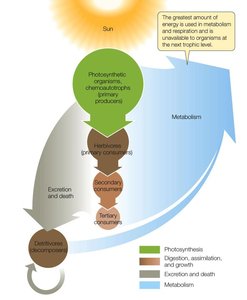
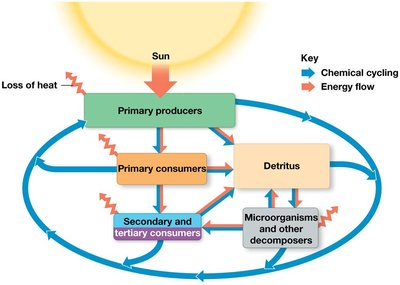
Ecosystems are governed by the laws of physics and chemistry, which dictate how energy and matter move through biological systems. Energy flows in one direction—from sunlight to chemical energy in organic molecules—while matter cycles within the ecosystem.
First Law of Thermodynamics: Energy cannot be created or destroyed, only transferred or transformed.
Second Law of Thermodynamics: Every energy transfer increases entropy; energy conversions are not completely efficient, and some energy is always lost as heat.
Law of Conservation of Mass: Matter cannot be created or destroyed; chemical elements are continually recycled within ecosystems.
Open Systems: Ecosystems absorb energy and mass and release heat and waste products. The balance between inputs and outputs determines the storage or loss of particular elements.
Trophic Structure of Ecosystems
Energy and nutrients move through ecosystems via trophic levels, which represent different positions in the food web.
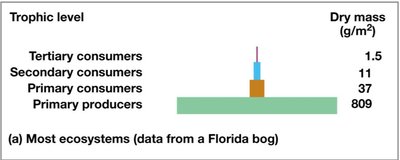
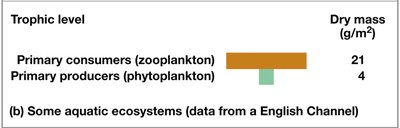
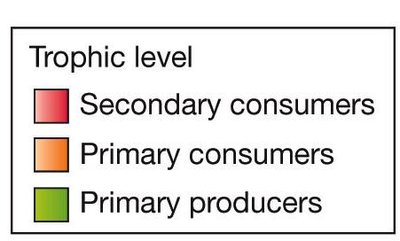
Primary Producers (Autotrophs): Organisms such as plants, algae, and some prokaryotes (e.g., cyanobacteria) that convert solar energy into chemical energy.
Primary Consumers: Herbivores that eat primary producers.
Secondary Consumers: Carnivores that eat herbivores.
Tertiary Consumers: Carnivores that eat other carnivores.
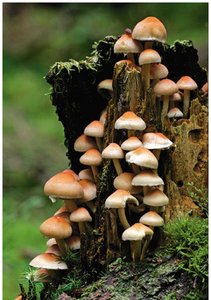
Detritivores/Decomposers: Organisms (e.g., fungi, bacteria) that obtain energy from nonliving organic material and detritus, playing a key role in recycling nutrients.
Primary Production in Ecosystems
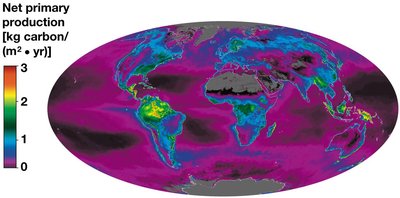
Primary production is the foundation of energy flow in ecosystems. It is measured as the amount of light energy converted to chemical energy by autotrophs per unit time.
Gross Primary Production (GPP): Total amount of chemical energy produced by autotrophs.
Net Primary Productivity (NPP): GPP minus the energy used by producers for respiration (NPP = GPP - R). NPP represents the energy available to consumers and is expressed as biomass.
Net Ecosystem Production (NEP): A measure of total biomass accumulation in an ecosystem, estimated by comparing the net flux of CO2 or O2.
Factors Limiting Primary Production
Aquatic Ecosystems: Light and nutrients (especially nitrogen, phosphorus, and sometimes iron) limit primary production. Depth of light penetration affects the photic zone, and nutrient runoff can cause eutrophication and dead zones.
Terrestrial Ecosystems: Temperature, moisture, and soil nutrients (especially nitrogen) are key limiting factors. Adaptations such as mutualisms with nitrogen-fixing bacteria and mycorrhizal fungi help plants access limiting nutrients.
Energy Transfer Between Trophic Levels
Energy transfer between trophic levels is inefficient, with only about 10% of the energy at one level being passed to the next (the "Rule of Tens"). The rest is lost as heat, feces, or used for metabolism and maintenance.
Secondary Production: The amount of chemical energy in food converted to new biomass by consumers.
Production Efficiency: Varies among organisms (e.g., endotherms like birds and mammals have lower efficiencies than fish or insects).
Biogeochemical Cycles
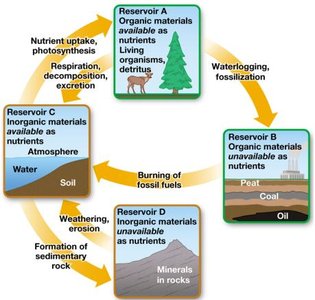
Biogeochemical cycles describe the movement of elements and compounds through biotic (living) and abiotic (nonliving) components of ecosystems. Some elements (C, O, S, N) cycle globally, while others (P, K, Ca) cycle locally.
Water Cycle: Driven by solar energy, water evaporates from oceans, precipitates on land, and returns via runoff and groundwater.
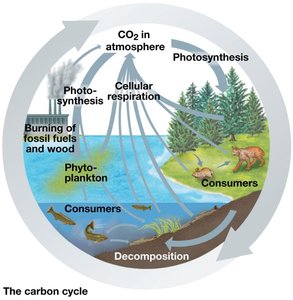
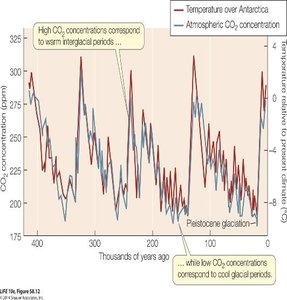
Carbon Cycle: CO2 is taken up by autotrophs in photosynthesis and returned by respiration, decomposition, and burning of fossil fuels. Oceans absorb significant CO2, leading to acidification.
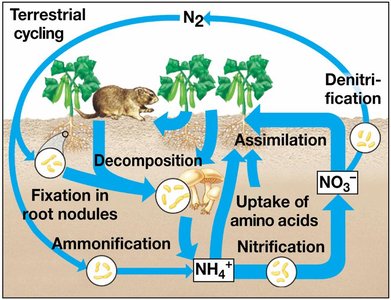
Nitrogen Cycle: Involves nitrogen fixation, nitrification, assimilation, ammonification, and denitrification. Nitrogen is essential for amino acids, proteins, and nucleic acids.
Phosphorus Cycle: Phosphorus cycles locally, mainly through weathering of rocks, assimilation by organisms, and return via decomposition.
Human Impacts and Restoration Ecology
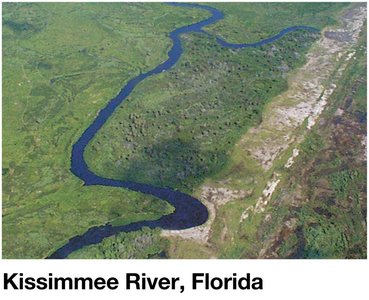
Human activities such as deforestation, agriculture, and pollution disrupt nutrient cycles and ecosystem function. Restoration ecology aims to return degraded ecosystems to their pre-disturbance state by addressing limiting factors and reintroducing key species.
Bioremediation: Uses organisms to detoxify polluted ecosystems (e.g., plants that accumulate heavy metals, bacteria that metabolize pollutants).
Biological Augmentation: Adds essential materials or organisms to degraded ecosystems (e.g., nitrogen-fixing plants, mycorrhizal fungi, habitat corridors).

Summary Table: Trophic Levels and Energy Flow
Trophic Level | Role | Examples |
|---|---|---|
Primary Producers | Convert solar energy to chemical energy | Plants, algae, cyanobacteria |
Primary Consumers | Eat producers (herbivores) | Caterpillars, deer, zooplankton |
Secondary Consumers | Eat primary consumers (carnivores) | Birds, frogs, small fish |
Tertiary Consumers | Eat secondary consumers | Hawks, large fish |
Detritivores/Decomposers | Break down dead organic matter | Fungi, bacteria, earthworms |
Key Equations
Net Primary Productivity:
Production Efficiency:
