 Back
Elements, Atoms, and Compounds: The Chemical Basis of Life
Study Guide - Smart Notes
 Tailored notes based on your materials, expanded with key definitions, examples, and context.
Elements, Atoms, and Compounds
Organisms Are Composed of Elements
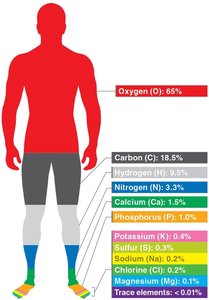
All living and nonliving matter is composed of chemical elements. About 25 elements are essential for human life, with four elements—oxygen, carbon, hydrogen, and nitrogen—making up approximately 96% of the mass of most living organisms. Trace elements, though present in minute amounts, are vital for health and biological function.
Element: A substance that cannot be broken down into other substances by chemical means.
Trace elements: Elements required by an organism in only minute quantities (e.g., iron, iodine, fluoride).
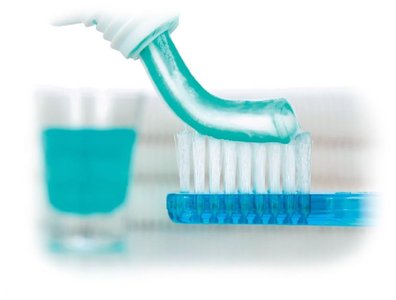
Example: Fluoride is added to water to prevent tooth decay; iodine is added to salt to prevent goiter.

What Defines an Element? Atomic Structure
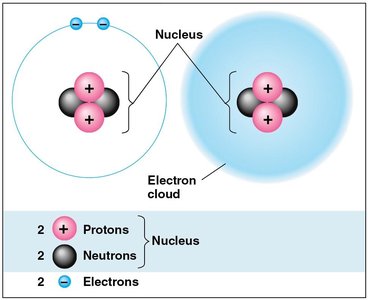
Each element consists of one kind of atom, the smallest unit of matter that retains the properties of an element. Atoms are composed of subatomic particles: protons, neutrons, and electrons.
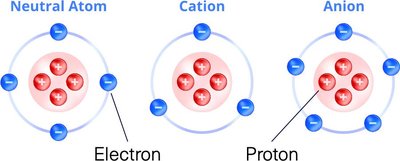
Protons: Positively charged particles found in the nucleus; determine the atomic number and identity of the element.
Neutrons: Neutral particles found in the nucleus; contribute to atomic mass and isotope formation.
Electrons: Negatively charged particles orbiting the nucleus; determine chemical behavior.
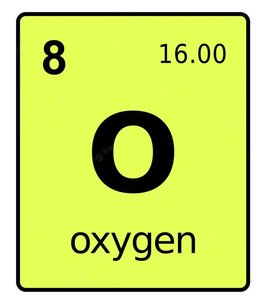
Atomic number: Number of protons in an atom.
Mass number: Sum of protons and neutrons in the nucleus.
Atomic mass: Approximately equal to the mass number.
Isotopes and Their Uses
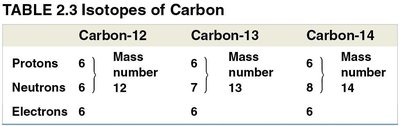
Isotopes are atoms of the same element with different numbers of neutrons, resulting in different mass numbers. Some isotopes are stable, while others are radioactive and decay over time.
Isotope: Atoms of the same element with the same number of protons but different numbers of neutrons.
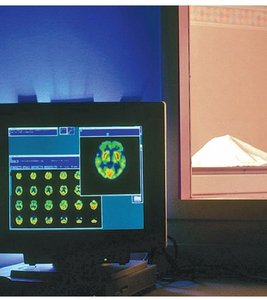
Radioactive isotopes: Unstable isotopes that emit radiation as they decay; used as tracers in biological research and medicine (e.g., PET scans), and for dating fossils (e.g., Carbon-14 dating).
Carbon-12 | Carbon-13 | Carbon-14 | |
|---|---|---|---|
Protons | 6 | 6 | 6 |
Neutrons | 6 | 7 | 8 |
Electrons | 6 | 6 | 6 |
Mass number | 12 | 13 | 14 |
Electron Shells and Chemical Behavior
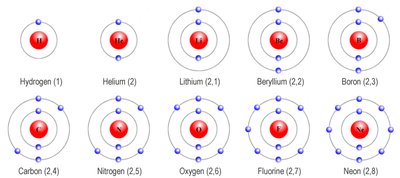
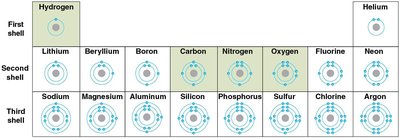
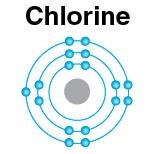
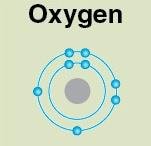
Electrons occupy energy levels called shells around the nucleus. The arrangement of electrons in these shells determines how atoms interact and bond with each other.
Electron shells: Energy levels where electrons are found; filled from lowest to highest energy.
Valence shell: The outermost electron shell; determines chemical reactivity.
Maximum electrons per shell: (where n is the shell number).
Chemical Bonds
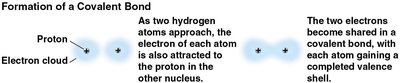
Atoms form chemical bonds to achieve stable electron configurations. The main types of chemical bonds are ionic, covalent, and hydrogen bonds.
Ionic bond: Formed by the transfer of electrons from one atom to another, resulting in oppositely charged ions that attract each other (e.g., NaCl).
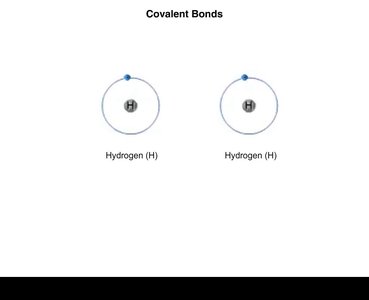
Covalent bond: Formed when two atoms share one or more pairs of electrons. Can be nonpolar (equal sharing) or polar (unequal sharing).
Hydrogen bond: A weak bond between a hydrogen atom in a polar covalent bond and an electronegative atom in another molecule (e.g., between water molecules).
Chemical Reactions and Balancing Equations
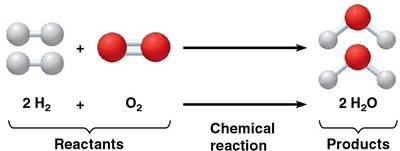
Chemical reactions involve the breaking and forming of chemical bonds, converting reactants into products. The Law of Conservation of Mass states that matter is neither created nor destroyed in a chemical reaction; equations must be balanced to reflect this.
Reactants: Starting substances in a chemical reaction.
Products: Substances formed as a result of a chemical reaction.
Balancing equations: Ensuring the number of atoms of each element is the same on both sides of the equation.
Hydrogen Bonding and Water Properties
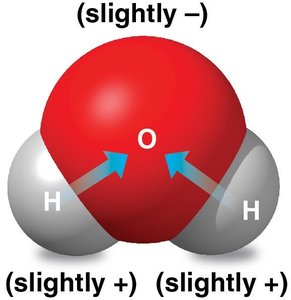
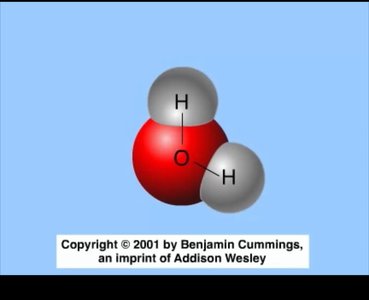
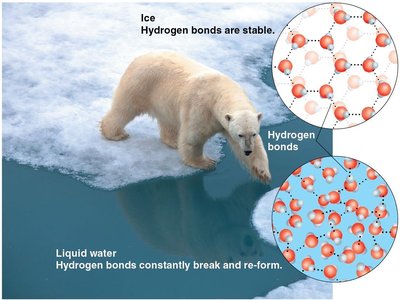
Hydrogen bonds are crucial for the unique properties of water, including its ability to exist in three states (solid, liquid, gas), its lower density as a solid, and its role as a universal solvent. Water's polarity allows it to dissolve many substances, making it essential for life.
Polarity: Unequal sharing of electrons in a molecule, leading to partial charges.
Hydrogen bond: Weak attraction between a hydrogen atom and an electronegative atom (N, O, or F).
Solvent: A substance that dissolves other substances (solute) to form a solution; water is the most common biological solvent.
Acids, Bases, and the pH Scale
Biological systems are sensitive to acidic and basic conditions. The pH scale measures the concentration of hydrogen ions (H+) in a solution, indicating its acidity or basicity.
Acid: Substance that increases H+ concentration in a solution (pH < 7).
Base: Substance that decreases H+ concentration, often by increasing OH- (pH > 7).
pH scale: Ranges from 0 (most acidic) to 14 (most basic); 7 is neutral.
Introduction to Organic Compounds
Carbon and Organic Molecules
Carbon's ability to form four covalent bonds allows for the construction of a wide variety of complex and diverse organic molecules, including hydrocarbons and isomers.
Hydrocarbons: Molecules composed only of carbon and hydrogen.
Isomers: Compounds with the same molecular formula but different structures and properties.
Functional Groups in Biological Molecules
Functional groups are specific groups of atoms attached to carbon skeletons that give molecules distinctive chemical properties. The six key functional groups are hydroxyl, carbonyl, carboxyl, amino, phosphate, and methyl groups.
Hydroxyl group (–OH): Found in alcohols.
Carbonyl group (C=O): Found in sugars.
Carboxyl group (–COOH): Found in acids.
Amino group (–NH2): Found in amino acids.
Phosphate group (–PO4): Found in nucleic acids.
Methyl group (–CH3): Affects gene expression.
Macromolecules: Polymers and Monomers
Biological macromolecules are large molecules (polymers) made by joining smaller units (monomers) through dehydration reactions. Hydrolysis reactions break polymers into monomers. Enzymes catalyze these reactions.
Dehydration reaction: Joins monomers by removing water.
Hydrolysis: Breaks polymers into monomers by adding water.
Four Major Classes of Biological Macromolecules
Carbohydrates: Sugars and polymers of sugars; main energy source.
Lipids: Hydrophobic molecules, including fats, phospholipids, and steroids; energy storage and membrane structure.
Proteins: Polymers of amino acids; perform a wide range of functions (enzymes, structure, transport, etc.).
Nucleic acids: DNA and RNA; store and transmit genetic information.
Carbohydrates
Carbohydrates range from simple sugars (monosaccharides) to complex polysaccharides. Monosaccharides (e.g., glucose) can join to form disaccharides (e.g., maltose) and polysaccharides (e.g., starch, glycogen, cellulose, chitin).
Lipids
Lipids are hydrophobic molecules mainly composed of carbon and hydrogen. Fats (triglycerides) are energy storage molecules. Phospholipids form cell membranes, and steroids (e.g., cholesterol) serve as hormones and membrane components.
Proteins
Proteins are polymers of 20 different amino acids. Their structure determines their function, and they can act as enzymes, structural components, transporters, and more. Protein structure has four levels: primary, secondary, tertiary, and quaternary.
Nucleic Acids
Nucleic acids (DNA and RNA) are polymers of nucleotides. DNA is double-stranded and stores genetic information; RNA is single-stranded and involved in protein synthesis.
Denaturation
Denaturation is the process by which proteins or nucleic acids lose their structure and function due to high temperature or chemical exposure.
