 Back
Back3.1Energy Acquisition and Adaptations in Organisms: Ecological Perspectives
Study Guide - Smart Notes
 Tailored notes based on your materials, expanded with key definitions, examples, and context.
Energy Acquisition in Organisms
Introduction to Energy in Ecology
Energy is the fundamental requirement for all living organisms, underpinning survival, growth, and reproduction. The strategies organisms use to acquire energy are shaped by their environment and evolutionary history.
Energy acquisition is essential for maintaining life processes.
Organisms have evolved diverse mechanisms to obtain and utilize energy efficiently.
Types of Energy Acquisition
Autotrophy: Photosynthesis and Chemosynthesis
Autotrophs are organisms that produce their own organic compounds from inorganic sources. There are two main types:
Photosynthesis: Conversion of light energy into chemical energy by plants, algae, and some bacteria and archaea.
Chemosynthesis: Production of organic compounds using energy derived from inorganic chemical reactions, primarily by certain bacteria and archaea.
Heterotrophy
Heterotrophs obtain energy by consuming other organisms or organic matter. This group includes animals, fungi, and many bacteria and protists.
Strategies include herbivory, carnivory, detritivory, and omnivory.
Adaptations for heterotrophy are diverse, such as specialized mouthparts, digestive systems, and behaviors.
Photosynthesis
Mechanism and Importance
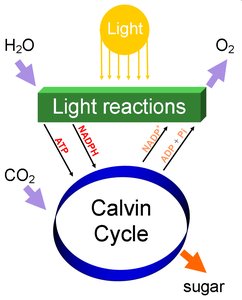
Photosynthesis is the most common form of autotrophy, where light energy is used to synthesize organic molecules from carbon dioxide and water. This process is the primary energy source for most ecosystems.
Occurs in plants, algae, and some bacteria and archaea.
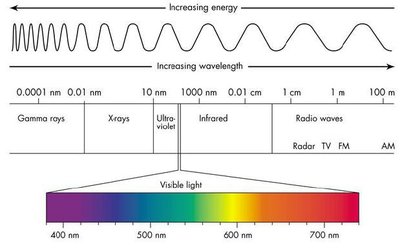
Photosynthetically Active Radiation (PAR) is the range of light wavelengths (400–700 nm) used in photosynthesis.
Photosynthesis can be summarized by the equation:
Light in the Environment
The quality and quantity of light available for photosynthesis vary with latitude, season, weather, time of day, landscape position, water depth, and water clarity. These factors influence the rate of photosynthesis and the adaptations of photosynthetic organisms.
Visible light (PAR) constitutes about 45% of sunlight, infrared 53%, and ultraviolet 2%.
Light penetration decreases with water depth and turbidity.
Adaptations in Photosynthesis
Plants and other photosynthetic organisms have evolved various adaptations to optimize energy capture under different environmental conditions.
Different primary pigments (e.g., chlorophylls, carotenoids) absorb different wavelengths of light.
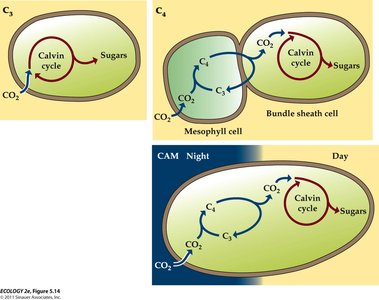
Alternate photosynthetic pathways: C3, C4, and CAM.
Enzymes with different optimal temperatures for function.
C3, C4, and CAM Pathways
C3 pathway: Most common; efficient at low light but wasteful of water. Typical of temperate plants.
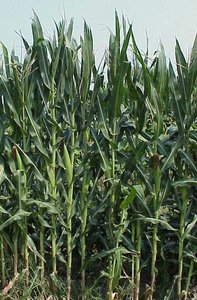
C4 pathway: Adapted to high light and temperature; efficient water use. Common in grasses like maize.
CAM pathway: Adapted to arid conditions; stomata open at night to minimize water loss. Found in succulents and some epiphytes.
Chemosynthesis
Mechanism and Ecological Role
Chemosynthesis is the process by which certain archaea and bacteria obtain energy by oxidizing inorganic compounds (e.g., hydrogen sulfide, ammonia) to produce organic molecules. This process supports unique ecosystems, such as deep-sea hydrothermal vent communities.
Key in environments lacking sunlight.
Supports primary production in extreme habitats.
Heterotrophy
Types and Adaptations
Heterotrophs display a wide variety of feeding strategies and adaptations to maximize energy intake from diverse food sources.
Detritivores: Consume dead organic matter.
Herbivores: Eat plants or algae.
Carnivores: Eat other animals.
Adaptations include specialized mouthparts, digestive enzymes, and behaviors for capturing and processing food.
Stoichiometry in Trophic Levels
The ratio of elements such as carbon (C) to nitrogen (N) in organisms can indicate their trophic position and nutritional strategies.
Group | C:N Ratio |
|---|---|
Terrestrial Autotrophs | 36:1 |
Aquatic Autotrophs | 10:1 |
Invertebrate Herbivores | 6:1 |
Plants generally have higher C:N ratios than animals, reflecting their lower protein content.
Food Availability and Intake Rates
Functional Responses
Functional responses describe how an individual's rate of food consumption changes with food density. There are three main types:
Type I: Linear increase in consumption with food density (rare in nature).
Type II: Consumption rate rises at a decelerating rate and then plateaus (most common).
Type III: Sigmoidal response; low consumption at low food densities, then rapid increase, then plateau.
Optimal Foraging Theory
Optimal foraging theory predicts that organisms will maximize their energy intake per unit time by balancing the benefits of food with the costs of searching for and handling it.
Profitability of a food item is given by: where E is energy value and h is handling time.
Organisms should prefer food items with higher profitability.
When encountering new prey, the decision rule is: where s is search time.
Food Storage
Adaptation to Variable Environments
Some organisms store food to survive periods of scarcity, especially in environments with seasonal or clumped food resources.
Examples include seeds stored by rodents and fat reserves in animals.
Homeostasis and Environmental Interactions
Maintaining Internal Balance
Organisms must maintain a stable internal environment (homeostasis) despite external fluctuations. This involves regulating nutrients, energy, and abiotic conditions to support growth, survival, and reproduction.
Constraints and adaptations shape how organisms interact with their environment.
