Back
Energy and Metabolism: Foundations of Cellular Biochemistry
Study Guide - Smart Notes
 Tailored notes based on your materials, expanded with key definitions, examples, and context.
Energy and Metabolism
Introduction to Energy in Biological Systems
Energy is essential for all biological processes, enabling cells to perform work, grow, and maintain homeostasis. In biological systems, energy exists in various forms and is constantly transformed to sustain life.
Potential and Kinetic Energy
Definitions and Biological Relevance
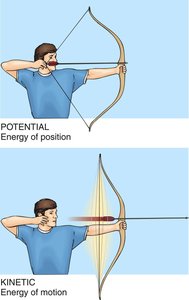
Potential Energy: The capacity to do work due to position or state. In cells, chemical energy stored in bonds is a form of potential energy.
Kinetic Energy: The energy of motion, used when work is performed, such as muscle contraction.
Example: A drawn bow stores potential energy; releasing the string converts it to kinetic energy as the arrow moves.
Energy Conversion in Organisms
Chemical Energy and Biological Work
Chemical Energy: A type of potential energy stored in the bonds of molecules, such as glucose.
Cells convert chemical energy from food into kinetic energy for movement and other cellular processes.
Energy is released when chemical bonds are broken, powering cellular activities.
Metabolism
Overview of Metabolic Pathways
Metabolism: The sum of all chemical reactions in an organism.
Divided into two main types:
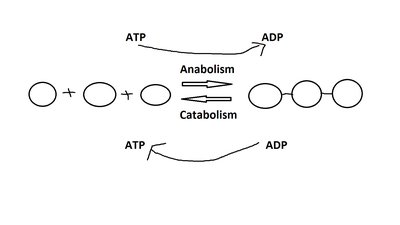
Anabolism: Synthesis of complex molecules from simpler ones (requires energy input).
Catabolism: Breakdown of complex molecules into simpler ones (releases energy).
ATP: The Energy Currency of the Cell
Structure and Function of ATP
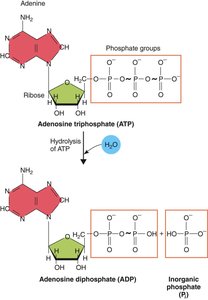
Adenosine Triphosphate (ATP): The primary energy carrier in cells, consisting of adenine, ribose, and three phosphate groups.
ATP acts as a rechargeable battery; energy is stored in its high-energy phosphate bonds and released when ATP is hydrolyzed to ADP (adenosine diphosphate).
Cells regenerate ATP from ADP by adding a phosphate group, using energy from catabolic reactions.
Redox Reactions in Metabolism
Electron Transfer and Cellular Energy
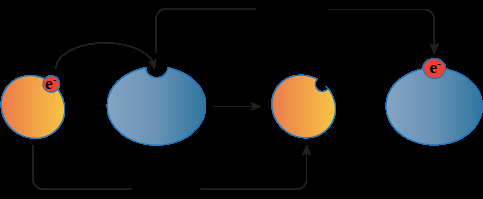
Redox Reactions: Chemical reactions involving the transfer of electrons between molecules.
Oxidation: Loss of electrons from a molecule.
Reduction: Gain of electrons by a molecule.
Redox reactions are central to energy transfer in cells, especially in cellular respiration and photosynthesis.
Electron Carriers
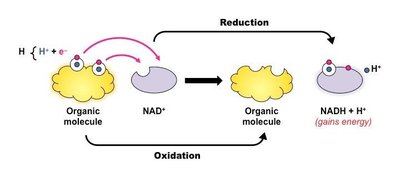
In cells, redox reactions often involve the transfer of hydrogen atoms (proton + electron).
NAD+ (Nicotinamide Adenine Dinucleotide): Accepts electrons and hydrogen to become NADH.
FAD (Flavin Adenine Dinucleotide): Accepts electrons to become FADH2.
NADP+ (Nicotinamide Adenine Dinucleotide Phosphate): Used in photosynthesis, reduced to NADPH.
Enzymes and Biological Catalysis
Role and Mechanism of Enzymes
Enzymes: Biological catalysts, usually proteins, that speed up chemical reactions by lowering activation energy without being consumed.
Enzymes are highly specific for their substrates due to the complementary shapes of the enzyme's active site and the substrate.
Factors Affecting Enzyme Activity
Enzyme activity is influenced by temperature and pH.
Each enzyme has an optimal temperature and pH at which it functions most efficiently.
Extreme temperatures or pH values can denature enzymes, causing loss of function.
Enzyme Inhibition and Regulation
Types of Enzyme Inhibition
Competitive Inhibition: An inhibitor competes with the substrate for binding to the enzyme's active site.
Noncompetitive Inhibition: An inhibitor binds to a site other than the active site (allosteric site), altering the enzyme's shape and function.
Feedback Inhibition
Feedback Inhibition: A regulatory mechanism in which the end product of a metabolic pathway inhibits an enzyme involved earlier in the pathway.
This prevents the overproduction of the end product and conserves cellular resources.
Example: Accumulation of isoleucine inhibits threonine deaminase, the first enzyme in its biosynthetic pathway.