 Back
Energy and Metabolism: Study Guidance for General Biology
Study Guide - Smart Notes
 Tailored notes based on your materials, expanded with key definitions, examples, and context.
Q1. What is energy and what are some forms of energy?
Background
Topic: Energy in Biological Systems
This question tests your understanding of the concept of energy and its various forms, which are fundamental to biological processes and cellular functions.
Key Terms:
Energy: The capacity to cause change or to do work.
Kinetic Energy: Energy of motion.
Potential Energy: Energy that matter possesses due to its location or structure.
Chemical Energy: A type of potential energy stored in chemical bonds, available for release in a chemical reaction.

Step-by-Step Guidance
Start by defining energy in your own words, focusing on its role in causing change or performing work.
Identify and describe kinetic energy, giving an example such as a moving object.
Explain potential energy, and relate it to objects at rest or in a specific position (e.g., a ball at the top of a hill).
Discuss chemical energy, emphasizing its importance for living organisms and how it is stored in molecules like glucose or ATP.
List other forms of energy relevant to biology, such as heat energy and light energy, and briefly describe their roles.
Try solving on your own before revealing the answer!
Final Answer:
Energy is the capacity to cause change or to do work. Some forms of energy include kinetic energy (energy of motion), potential energy (energy due to position or structure), chemical energy (stored in chemical bonds), heat energy, and light energy. Chemical energy is especially important for living organisms because it can be transformed to power cellular work.
Q2. Fill in the blanks (1-3) with the terms listed below: Forms of Energy
Background
Topic: Energy Conversion in Biological Systems
This question tests your ability to identify and distinguish between different forms of energy involved in biological and physical processes.
Key Terms:
Kinetic Energy: Energy of motion.
Potential Energy: Energy due to position or structure.
Chemical Energy: Energy stored in chemical bonds.
Heat Energy: Energy transferred due to temperature difference.
Step-by-Step Guidance
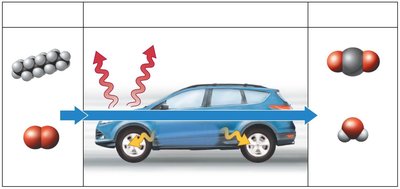
Examine the diagram and identify the process occurring (e.g., a car using fuel to move).
Determine which form of energy is associated with each step: fuel (chemical energy), movement (kinetic energy), and heat released (heat energy).
Match the terms to the numbered blanks based on their roles in the process.
Review the list of terms and ensure each is correctly placed according to the energy transformation depicted.
Try solving on your own before revealing the answer!
Final Answer:
1: Chemical Energy, 2: Kinetic Energy, 3: Heat Energy. The car uses chemical energy from fuel, converts it to kinetic energy for movement, and releases heat energy as a byproduct.
Q3. When cells use energy stored in ATP molecules to perform active transport, they convert _____ energy to _____ energy.
Background
Topic: Cellular Energy Conversion
This question tests your understanding of how cells use ATP to perform work, specifically active transport, and the types of energy involved in this process.
Key Terms:
ATP (Adenosine Triphosphate): The main energy currency of the cell.
Chemical Energy: Energy stored in ATP's bonds.
Kinetic Energy: Energy of movement, such as the movement of molecules across a membrane.
Active Transport: The movement of molecules against their concentration gradient, requiring energy.
Step-by-Step Guidance
Recall that ATP stores chemical energy in its phosphate bonds.
Understand that active transport involves moving molecules across membranes, which requires energy input.
Identify the type of energy used (chemical energy from ATP) and the type of energy produced (kinetic energy as molecules move).
Review the answer choices and match the correct energy conversion.
Try solving on your own before revealing the answer!
Final Answer:
Chemical energy is converted to kinetic energy when cells use ATP to perform active transport. (Correct answer: C. chemical; kinetic)
Q4. Select all that apply: _______ stores chemical potential energy.
Background
Topic: Chemical Potential Energy in Biological and Physical Systems
This question tests your ability to identify substances or objects that store chemical potential energy, which is crucial for biological processes.
Key Terms:
Chemical Potential Energy: Energy stored in the bonds of chemical compounds.
Examples: Fuels (octane, diesel), sugars, etc.
Step-by-Step Guidance
Review the list of items: car wheels, octane, sugar, a ball on top of a hill, wind, diesel.
Identify which items are chemical compounds capable of storing energy in their bonds.
Exclude items that store other forms of energy (e.g., mechanical or potential energy).
Check your selections against the definition of chemical potential energy.
Try solving on your own before revealing the answer!
Final Answer:
Octane, sugar, and diesel store chemical potential energy. Car wheels, a ball on top of a hill, and wind do not store chemical potential energy.
Q5. Laws of Thermodynamics: What is the first law of thermodynamics?
Background
Topic: Thermodynamics in Biology
This question tests your understanding of the first law of thermodynamics and its application to biological systems.
Key Terms:
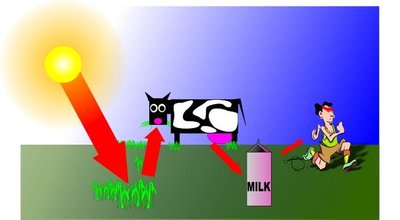
First Law of Thermodynamics: Energy cannot be created or destroyed, only transferred or transformed.
Energy Conservation: The total energy in a system remains constant.
Step-by-Step Guidance
Recall the definition of the first law of thermodynamics.
Apply this law to biological systems, such as cells converting chemical energy to kinetic or heat energy.
Consider examples where energy is transformed but not lost.
Summarize the law in your own words.
Try solving on your own before revealing the answer!
Final Answer:
The first law of thermodynamics states that energy may be transferred or transformed, but it cannot be created or destroyed. Energy is conserved in all processes.
Q6. Laws of Thermodynamics: What is the second law of thermodynamics?
Background
Topic: Thermodynamics and Entropy
This question tests your understanding of the second law of thermodynamics and its implications for biological systems.
Key Terms:
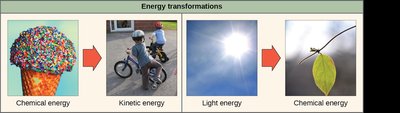
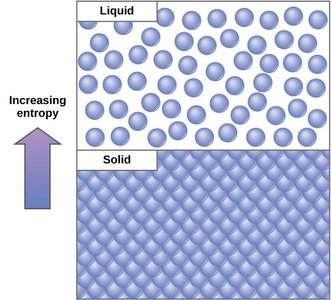
Second Law of Thermodynamics: Energy transfers or transformations increase disorder (entropy), with some energy lost as heat.
Entropy: A measure of disorder or randomness in a system.
Step-by-Step Guidance
Recall the definition of the second law of thermodynamics.
Understand that every energy transfer increases entropy.
Apply this law to biological systems, such as cellular respiration or metabolic processes.
Consider the role of heat as a byproduct of energy transformations.
Try solving on your own before revealing the answer!
Final Answer:
The second law of thermodynamics states that energy transfers or transformations increase disorder (entropy), and some energy is lost as heat in every process.
Q7. A steer must eat at least 100 pounds of grain to gain less than 10 pounds of muscle tissue. This illustrates __________.
Background
Topic: Energy Efficiency and Thermodynamics in Biology
This question tests your understanding of energy efficiency and the second law of thermodynamics in biological systems.
Key Terms:
Energy Efficiency: The proportion of energy converted to useful work versus lost as heat.
Second Law of Thermodynamics: Energy transformations are not 100% efficient; some energy is always lost as heat.
Step-by-Step Guidance
Analyze the scenario: a steer eats a large amount of grain but gains only a small amount of muscle.
Consider where the rest of the energy goes (e.g., lost as heat, used for other processes).
Relate this to the second law of thermodynamics and energy efficiency.
Review the answer choices and select the one that best fits the scenario.
Try solving on your own before revealing the answer!
Final Answer:
This illustrates the second law of thermodynamics: energy transformations are not 100% efficient, and some energy is lost as heat.
Q8. The roles of energy in metabolic pathways: What is the difference between anabolic and catabolic pathways?
Background
Topic: Metabolic Pathways in Cells
This question tests your understanding of the two main types of metabolic pathways: anabolic (building up) and catabolic (breaking down).

Key Terms:
Anabolic Pathways: Build complex molecules from simpler ones; require energy (endergonic).
Catabolic Pathways: Break down complex molecules into simpler ones; release energy (exergonic).
Metabolism: All chemical reactions in a cell, including both anabolic and catabolic processes.
Step-by-Step Guidance
Define anabolic pathways and give an example (e.g., synthesis of proteins from amino acids).
Define catabolic pathways and give an example (e.g., breakdown of glucose during cellular respiration).
Explain the energy requirements or release for each pathway.
Compare and contrast the two types of pathways.
Try solving on your own before revealing the answer!
Final Answer:
Anabolic pathways build complex molecules and require energy (endergonic), while catabolic pathways break down molecules and release energy (exergonic).
