 Back
Energy and Metabolism: Study Notes for General Biology
Study Guide - Smart Notes
 Tailored notes based on your materials, expanded with key definitions, examples, and context.
Energy and Life
Metabolism and Metabolic Pathways
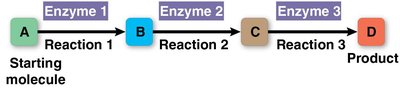
Metabolism encompasses all chemical reactions occurring within an organism, enabling the transformation of matter and energy. These reactions are organized into metabolic pathways, where a specific molecule is modified in a series of steps, each catalyzed by a unique enzyme.
Metabolic Pathway: A sequence of chemical reactions, each step facilitated by a specific enzyme.
Enzyme: A macromolecule (usually a protein) that accelerates a specific reaction without being consumed.
Catabolic Pathways: Break down complex molecules into simpler ones, releasing energy (e.g., cellular respiration).
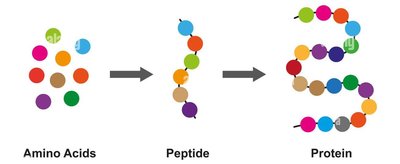
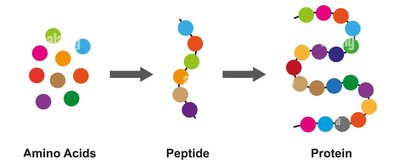
Anabolic Pathways: Build complex molecules from simpler ones, consuming energy (e.g., protein synthesis).
Bioenergetics: The study of how energy flows through living organisms.
Catabolic = "downhill" reactions; Anabolic = "uphill" reactions.
Forms of Energy
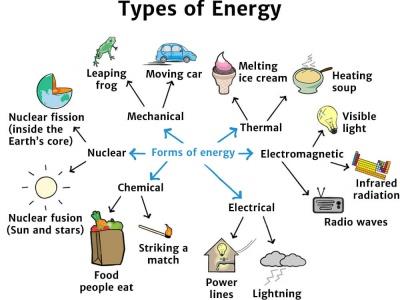
Energy is the capacity to cause change and exists in various forms. Living organisms use energy to perform work, such as moving matter against opposing forces.
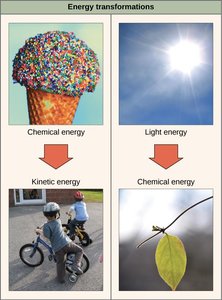
Kinetic Energy: Energy of motion (e.g., water turning a turbine).
Thermal Energy: Kinetic energy from random movement of atoms/molecules; transfer is called heat.
Light Energy: Used in processes like photosynthesis.
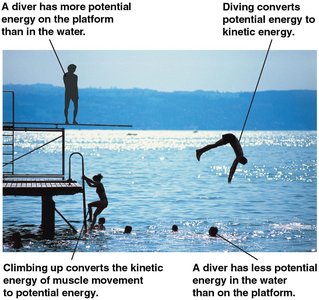
Potential Energy: Energy due to location or structure (e.g., water behind a dam, arrangement of electrons in bonds).
Chemical Energy: Potential energy stored in chemical bonds, released during reactions.

Energy Transformation and Thermodynamics
Energy can be converted from one form to another. The study of these transformations is called thermodynamics. Biological systems are open systems, exchanging energy and matter with their surroundings.
First Law of Thermodynamics: Energy cannot be created or destroyed, only transferred or transformed (principle of conservation of energy).
Second Law of Thermodynamics: Every energy transfer increases the entropy (disorder) of the universe; some energy is lost as heat.
Entropy: A measure of molecular disorder.
Spontaneous Processes: Increase entropy and occur without energy input.
Nonspontaneous Processes: Decrease entropy and require energy input.

Biological Order and Disorder
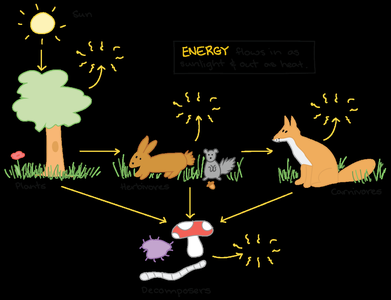
Cells create ordered structures from less organized materials, but this increase in order is balanced by catabolic breakdown, releasing heat and small molecules. Energy flows into ecosystems as light and exits as heat.
Example: Simple molecules are ordered into amino acids, then assembled into polypeptides.
Energy flow: Light → chemical energy → heat.
Free Energy and Chemical Reactions
Free energy measures a system's stability. Chemical reactions can be classified by their free-energy changes:
Exergonic Reaction: Releases free energy; proceeds spontaneously.
Endergonic Reaction: Absorbs free energy; nonspontaneous.
Breaking bonds requires energy; forming new bonds releases energy.
Reactions in a closed system reach equilibrium and can do no work; living cells avoid equilibrium by being open systems.
ATP and Cellular Work
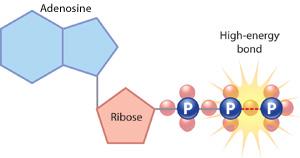
Cells perform three main types of work: chemical, transport, and mechanical. ATP (adenosine triphosphate) is the "energy currency" of the cell, coupling exergonic and endergonic reactions.
ATP Structure: Ribose (sugar), adenine (base), three phosphate groups.
ATP Hydrolysis: Breaking the terminal phosphate bond releases energy.
ATP powers cellular work by transferring a phosphate group to other molecules (phosphorylation).
ATP is regenerated from ADP by addition of a phosphate, using energy from catabolic reactions.
Enzymes and Activation Energy
Enzymes are biological catalysts that speed up metabolic reactions by lowering the activation energy barrier. They do not change the free energy (ΔG) of a reaction.
Activation Energy (EA): The initial energy required to start a reaction.
Enzymes lower EA, allowing reactions to occur at moderate temperatures.
Enzyme-substrate complex: The enzyme binds to its substrate, catalyzing its conversion to product.
Active Site: The region of the enzyme that binds the substrate.
Induced Fit: Enzyme changes shape to enhance catalysis when substrate binds.
Factors Affecting Enzyme Activity
Enzyme activity is influenced by environmental conditions and specific chemicals.
Temperature: Each enzyme has an optimal temperature; too high causes denaturation.
pH: Each enzyme has an optimal pH; varies by location (e.g., stomach vs intestine).
Cofactors: Nonprotein helpers (inorganic or organic) required for enzyme function.
Enzyme Inhibitors: Chemicals that reduce enzyme activity; can be competitive (bind active site) or noncompetitive (bind elsewhere).
Regulation of Enzyme Activity
Cells regulate metabolism by controlling enzyme activity and gene expression.
Allosteric Regulation: Regulatory molecules bind to a site other than the active site, affecting enzyme function.
Cooperativity: Substrate binding to one active site stabilizes the active form for other sites.
Feedback Inhibition: End product of a pathway inhibits an earlier step, preventing overproduction.
Compartmentalization: Enzymes are localized within specific organelles, organizing metabolic pathways.
Key Equations
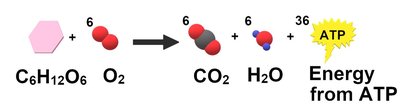
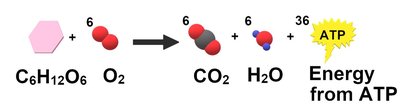
Cellular Respiration:
ATP Hydrolysis:
Summary Table: Catabolic vs Anabolic Pathways
Pathway | Direction | Energy | Example |
|---|---|---|---|
Catabolic | Complex → Simple | Releases | Cellular Respiration |
Anabolic | Simple → Complex | Consumes | Protein Synthesis |
Example: Cellular respiration is a catabolic pathway, breaking down glucose to release energy. Protein synthesis is an anabolic pathway, building proteins from amino acids.
