 Back
Energy and the Cell: Cellular Work, ATP, and Enzyme Function
Study Guide - Smart Notes
 Tailored notes based on your materials, expanded with key definitions, examples, and context.
Energy and the Cell
Forms of Energy
Energy is the capacity to perform work and is essential for all cellular processes. There are two main forms of energy:
Kinetic Energy: The energy of motion. Examples include heat (thermal energy) and light (as used in photosynthesis).
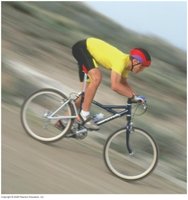
Potential Energy: Stored energy based on the location or structure of matter. Examples include water behind a dam, a cyclist at the top of a hill, and chemical energy stored in molecular bonds.
Chemical Energy is a type of potential energy stored in the bonds of molecules and is the most important form for living organisms, as it powers cellular work.
Examples of kinetic energy: Light, heat, movement.
Examples of potential energy: Water behind a dam, chemical bonds.

Thermodynamics and Biological Systems
Thermodynamics is the study of energy transformations within matter. Organisms are open systems, exchanging both energy and matter with their surroundings. Life depends on the conversion of energy from one form to another.
First Law of Thermodynamics: Energy in the universe is constant; it can be transferred and transformed but cannot be created or destroyed. Example: Plants transform light energy into chemical energy.
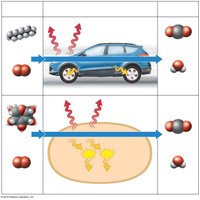
Second Law of Thermodynamics: Energy conversions increase the disorder (entropy) of the universe. Some energy is lost as heat, the most random form of energy.
The quantity of energy is constant, but the quality decreases with each transformation.
Chemical Reactions and Cellular Work
Exergonic and Endergonic Reactions
Chemical reactions in cells either release or require energy:
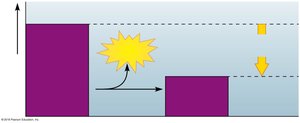
Exergonic Reactions: Release energy. The bonds of reactants contain more energy than the products. These are catabolic reactions (break down molecules). Examples: Burning, digestion, cellular respiration.
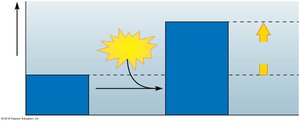
Endergonic Reactions: Require input of energy. Products store more energy than reactants. These are anabolic reactions (build molecules). Examples: Building polymers, photosynthesis.
Metabolism and Metabolic Pathways
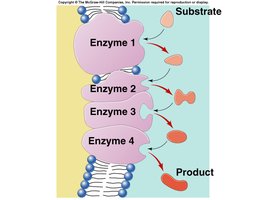
Metabolism is the sum of all chemical reactions in an organism. Metabolic pathways are series of reactions that build or break down complex molecules, each step catalyzed by a specific enzyme.
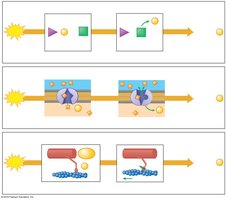
Energy Coupling: Cells use energy released from exergonic reactions to drive endergonic reactions.
ATP: The Energy Currency of the Cell
Structure and Function of ATP
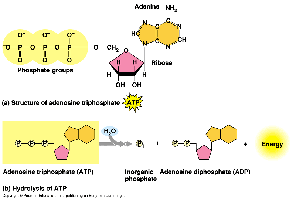
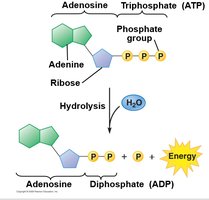
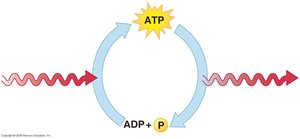
ATP (Adenosine Triphosphate) is the immediate source of energy for cellular work. It consists of adenine (a nitrogenous base), ribose (a five-carbon sugar), and three phosphate groups.
Adding phosphate groups to ADP to form ATP is an endergonic process.
Transferring phosphate groups from ATP to other molecules (phosphorylation) is exergonic and releases energy.
ATP Hydrolysis and Energy Transfer
ATP stores energy in its unstable phosphate bonds, which are readily broken by hydrolysis. The release of a phosphate group (Pi) from ATP to form ADP is exergonic and fuels cellular reactions.
Phosphorylation: The transfer of a phosphate group from ATP to another molecule, destabilizing it and making it more reactive.
ATP is a renewable resource, continuously regenerated by cells.

Enzymes: Biological Catalysts
Activation Energy and Enzyme Function
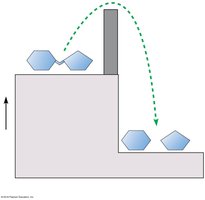
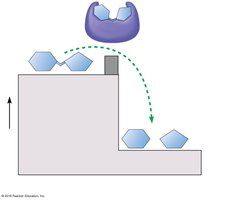
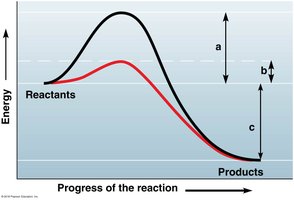
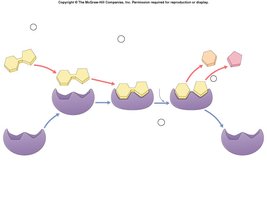
Large biomolecules are stable and require an initial input of energy (activation energy) to break bonds. Enzymes are biological catalysts that lower the activation energy needed for reactions, speeding up the rate without being consumed.
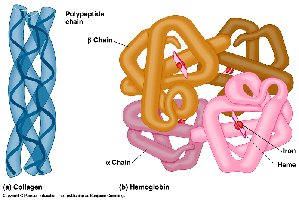
Enzymes are highly specific, with unique 3D shapes.
Most enzymes are proteins (some are RNA).
Enzyme Structure and Mechanism
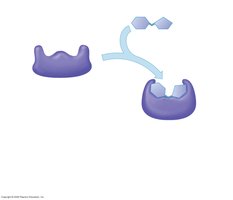
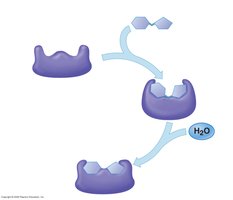
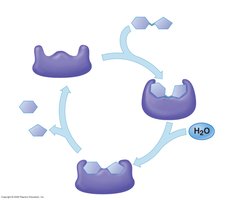
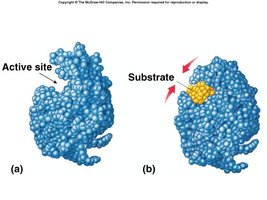
Enzymes have an active site where the substrate (reactant) binds. The induced fit model describes how substrate binding causes the enzyme to change shape for a tighter fit, facilitating the reaction.
Substrate: Reactant that binds to the enzyme.
Product: End result of the reaction.
Active Site: Region on the enzyme where substrate binds.
Factors Affecting Enzyme Activity
Enzymes function best under optimal conditions. Changes in temperature or pH can disrupt bonds and denature the enzyme, causing loss of function.
Temperature: Human enzymes function best at 35–40°C. High temperatures cause denaturation; low temperatures slow molecular movement.
pH: Most human enzymes function at pH 6–8. Extreme pH disrupts enzyme structure.
Enzyme Activators and Inhibitors
Enzyme activity can be regulated by activators and inhibitors:
Activators: Non-protein compounds that help enzymes. Cofactors are inorganic ions (e.g., Mg, Zn, Fe), and coenzymes are organic molecules (e.g., vitamins).
Inhibitors: Molecules that reduce enzyme activity.
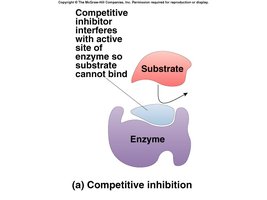
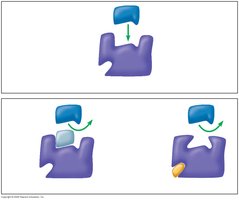
Competitive Inhibitors: Compete with substrate for the active site. Can be overcome by increasing substrate concentration.
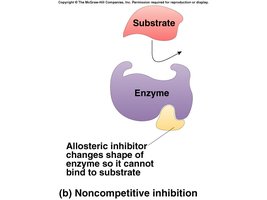
Non-Competitive (Allosteric) Inhibitors: Bind to a site other than the active site, causing a conformational change that prevents substrate binding.
Enzyme Inhibition and Regulation
Enzyme inhibitors can be reversible or irreversible. Irreversible inhibitors bind permanently, often with covalent bonds (e.g., nerve gas, insecticides). Reversible inhibitors bind temporarily.
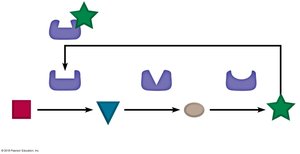
Feedback Inhibition: The end product of a metabolic pathway acts as a non-competitive inhibitor to an earlier enzyme, preventing unnecessary accumulation of product and regulating metabolism.
Vocabulary and Key Concepts
Organic: Molecule made with carbon.
Energy: Ability to do work.
Kinetic Energy: Energy of motion.
Potential Energy: Stored energy.
Chemical Energy: Energy stored in chemical bonds.
Thermodynamics: Study of energy transformations.
Exergonic: Reaction that releases energy.
Catabolic: Reaction that breaks bonds.
Endergonic: Reaction that requires energy input.
Anabolic: Reaction that builds bonds.
Metabolism: All chemical reactions in an organism.
Metabolic Pathway: Series of reactions building or breaking molecules.
Energy Coupling: Using exergonic processes to drive endergonic ones.
ATP: Adenosine triphosphate, energy currency of cells.
Phosphorylation: Transfer of phosphate group from ATP.
Enzyme: Biological catalyst.
Activation Energy: Energy needed to start a reaction.
Catalyst: Substance that speeds up a reaction.
Substrate: Reactant of an enzyme-catalyzed reaction.
Product: Result of a reaction.
Active Site: Region on enzyme where substrate binds.
Induced Fit: Conformational change in enzyme upon substrate binding.
Denature: Loss of enzyme shape and function.
Activator: Molecule that helps enzyme function.
Cofactor: Inorganic activator (e.g., Zn, Fe).
Coenzyme: Organic activator (e.g., vitamins).
Inhibitor: Molecule that reduces enzyme function.
Competitive Inhibitor: Blocks active site.
Non-Competitive Inhibitor: Binds allosteric site, changes shape.
Irreversible Inhibition: Permanent inhibitor binding.
Reversible Inhibition: Temporary inhibitor binding.
Feedback Inhibition: End product inhibits earlier enzyme.
Summary Table: Exergonic vs. Endergonic Reactions
Type of Reaction | Energy Flow | Examples | Metabolic Type |
|---|---|---|---|
Exergonic | Releases energy | Cellular respiration, digestion | Catabolic |
Endergonic | Requires energy input | Photosynthesis, polymer synthesis | Anabolic |
Summary Table: Enzyme Inhibition
Type | Binding Site | Effect | Example |
|---|---|---|---|
Competitive | Active site | Blocks substrate | Penicillin |
Non-Competitive | Allosteric site | Changes enzyme shape | Feedback inhibition |
Key Equations
ATP Hydrolysis:
Energy Coupling:
Additional info: Academic context was added to clarify the mechanisms of enzyme action, ATP function, and the importance of energy coupling in cellular metabolism.
