 Back
Energy, Enzymes, and Introduction to Metabolic Reactions
Study Guide - Smart Notes
 Tailored notes based on your materials, expanded with key definitions, examples, and context.
Energy in Biological Systems
Types of Energy
Energy is essential for all biological processes. It exists in various forms and can be transformed from one type to another within living organisms.
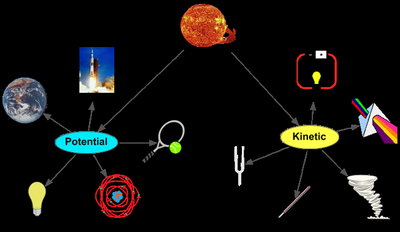
Potential Energy: Stored energy due to position or structure, such as chemical bonds in molecules.
Kinetic Energy: Energy of motion, such as the movement of molecules or cells.
Example: ATP stores potential energy in its phosphate bonds, which is released as kinetic energy during cellular work.
Metabolic Reactions
Overview of Metabolism
Metabolism encompasses all chemical reactions in a cell, including those that build up (anabolic) and break down (catabolic) molecules.
Anabolic Reactions: Build complex molecules from simpler ones; require energy input.
Catabolic Reactions: Break down complex molecules into simpler ones; release energy.
Example: Cellular respiration is a catabolic process, while photosynthesis is anabolic.
Reaction Requirements
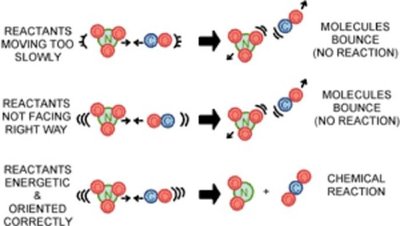
For a chemical reaction to occur, reactants must collide with sufficient energy and proper orientation.
Activation Energy (EA): Minimum energy required to start a reaction.
Factors Affecting Reaction: Speed and orientation of molecules are crucial.
Enzymes: Biological Catalysts
Structure and Function of Enzymes
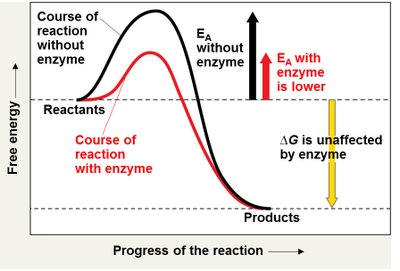
Enzymes are proteins that accelerate chemical reactions by lowering the activation energy without being consumed in the process.
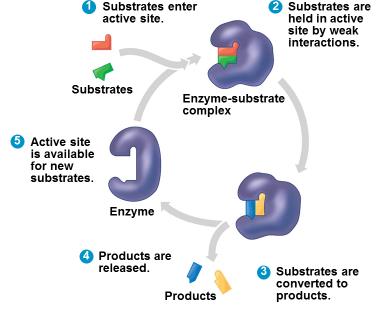
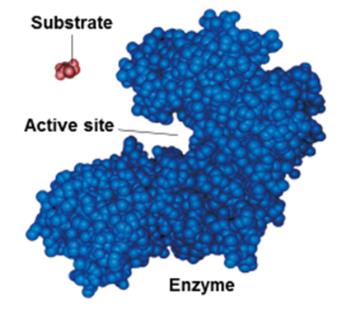
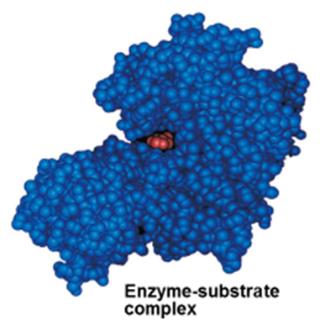
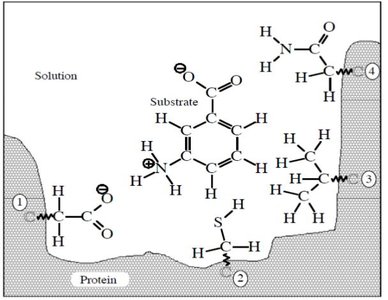
Active Site: Region on the enzyme where substrates bind and reactions occur.
Substrate: The molecule upon which an enzyme acts.
Enzyme-Substrate Complex: Temporary association between enzyme and substrate during the reaction.
Mechanism of Enzyme Action
Enzymes facilitate reactions by bringing substrates together in the correct orientation and providing an optimal environment for the reaction.
Induced Fit: The enzyme changes shape slightly to fit the substrate more closely.
Transition State Stabilization: Enzymes stabilize the transition state, lowering activation energy.
Enzyme-Catalyzed Reaction Pathways
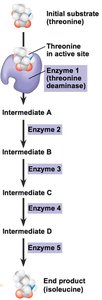
Metabolic pathways consist of a series of enzyme-catalyzed reactions, each step transforming the substrate into a new intermediate until the final product is formed.
Sequential Steps: Each enzyme in the pathway catalyzes a specific reaction.
Example: The conversion of threonine to isoleucine involves multiple enzymes and intermediates.
Enzyme Kinetics and Reaction Rates
Effect of Factors on Reaction Rate
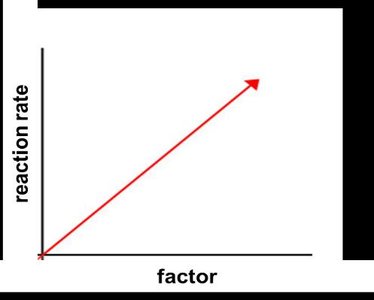
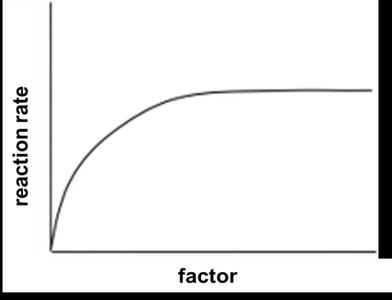
The rate of enzyme-catalyzed reactions is influenced by several factors, including substrate concentration, enzyme concentration, cofactors, inhibitors, temperature, and pH.
Substrate Concentration: Increasing substrate increases reaction rate until saturation is reached.
Enzyme Concentration: More enzyme increases reaction rate, provided substrate is available.
Cofactors/Coenzymes: Non-protein helpers required for enzyme activity.
Inhibitors: Molecules that decrease enzyme activity (competitive or noncompetitive).
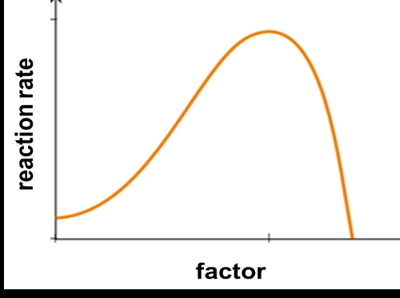
Temperature: Reaction rate increases with temperature up to an optimum, then decreases due to denaturation.
pH: Each enzyme has an optimal pH range; extreme pH can denature the enzyme.
Enzyme Inhibition
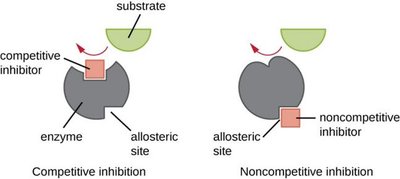
Enzyme activity can be regulated by inhibitors, which decrease the rate of reaction.
Competitive Inhibitors: Bind to the active site, blocking substrate access.
Noncompetitive Inhibitors: Bind to a different site (allosteric site), changing enzyme shape and reducing activity.
Denaturation
Extreme conditions such as high temperature or abnormal pH can cause enzymes to lose their structure and function, a process known as denaturation.
Denaturation: Loss of three-dimensional structure, resulting in loss of enzyme activity.
Example: Cooking an egg denatures proteins; fever can denature enzymes in the body.

pH and Enzyme Activity
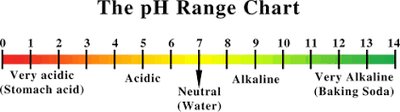
Enzymes function best within a specific pH range. Deviations from this range can reduce activity or cause denaturation.
Optimal pH: Each enzyme has a pH at which it works best.
Example: Pepsin works in acidic conditions (stomach), while amylase works in neutral conditions (mouth).
Protein Structure and Enzyme Function
Levels of Protein Structure
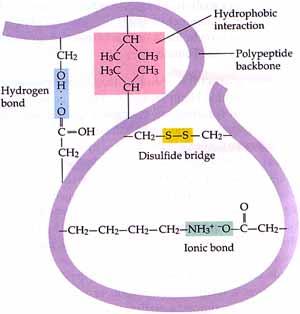
Enzyme function depends on its three-dimensional structure, which is stabilized by various interactions.
Primary Structure: Sequence of amino acids.
Secondary Structure: Local folding (alpha helices, beta sheets).
Tertiary Structure: Overall three-dimensional shape.
Quaternary Structure: Association of multiple polypeptides.
Stabilizing Interactions: Hydrogen bonds, ionic bonds, disulfide bridges, hydrophobic interactions.
Summary Table: Factors Affecting Enzyme Activity
Factor | Effect on Reaction Rate | Notes |
|---|---|---|
Substrate Concentration | Increases rate until saturation | Plateaus at high concentration |
Enzyme Concentration | Increases rate | Limited by substrate availability |
Cofactor/Coenzyme | Required for activity | Absence reduces rate |
Competitive Inhibitor | Decreases rate | Binds active site |
Noncompetitive Inhibitor | Decreases rate | Binds allosteric site |
Temperature | Increases rate to optimum, then decreases | High temp causes denaturation |
pH | Optimal range increases rate | Extreme pH causes denaturation |
Key Equations
Activation Energy and Free Energy
Enzymes lower the activation energy (EA) required for a reaction, but do not change the overall free energy change (ΔG).
Activation Energy:
Free Energy Change:
Enzyme Kinetics (Michaelis-Menten Equation)
The rate of enzyme-catalyzed reactions can be described by the Michaelis-Menten equation:
Where v is reaction rate, Vmax is maximum rate, [S] is substrate concentration, and Km is the Michaelis constant.
Summary
Enzymes are crucial for life, enabling metabolic reactions to occur rapidly and efficiently. Their activity is regulated by various factors, and understanding these principles is fundamental to biology.
