Back
Energy, Metabolism, and Enzyme Function in Cells
Study Guide - Smart Notes
 Tailored notes based on your materials, expanded with key definitions, examples, and context.
Metabolism and Metabolic Pathways
Overview of Metabolism
Metabolism encompasses all chemical reactions that occur within an organism, allowing it to maintain life, grow, and reproduce. These reactions are organized into metabolic pathways, which are sequences of enzymatically catalyzed steps that either build up or break down molecules.
Substrate: The initial molecule acted upon by an enzyme.
Product: The final molecule produced by the pathway.
Intermediates: Molecules formed between the substrate and the final product.
Types of Metabolic Pathways
There are two main types of metabolic pathways: anabolic and catabolic pathways.
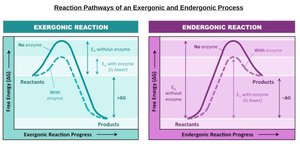
Anabolic Pathways: Build complex molecules from simpler ones, requiring energy input (endergonic).
Catabolic Pathways: Break down complex molecules into simpler ones, releasing energy (exergonic).
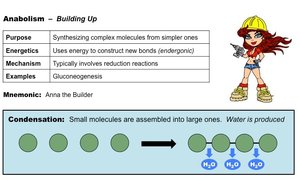
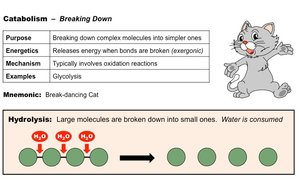
Example: Glycogen synthesis is anabolic; glycolysis is catabolic.
Energy in Biological Systems
Forms of Energy
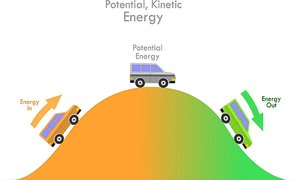
Energy is the capacity to do work. Organisms require energy to survive, grow, and reproduce. Energy exists in several forms:
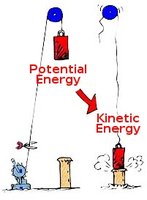
Kinetic Energy: Energy of motion.
Thermal Energy: Energy associated with the random movement of atoms or molecules.
Potential Energy: Stored energy due to position or structure.
Chemical Energy: Potential energy stored in chemical bonds, available for release in a chemical reaction.
Laws of Thermodynamics
Thermodynamics is the study of energy transformations. Two fundamental laws apply to all energy exchanges:
First Law: Energy cannot be created or destroyed, only transformed or transferred.
Second Law: Every energy transfer increases the entropy (disorder) of the universe; some energy is always lost as heat.
Example: When a squirrel eats a nut, the chemical energy is transformed into kinetic energy for movement, with some energy lost as heat.
Free Energy and Spontaneous Reactions
Gibbs Free Energy
To predict whether a reaction will occur spontaneously, biologists use the concept of free energy ():
: Change in free energy
: Change in total energy (enthalpy)
: Change in entropy
: Absolute temperature in Kelvin
Reactions with are spontaneous (exergonic), while those with are non-spontaneous (endergonic).
Exergonic vs. Endergonic Reactions
Exergonic: Release energy, spontaneous (e.g., cellular respiration).
Endergonic: Absorb energy, non-spontaneous (e.g., photosynthesis).
ATP: The Energy Currency of the Cell
Structure and Function of ATP
Adenosine triphosphate (ATP) is the primary energy carrier in cells. It powers cellular work by coupling exergonic and endergonic reactions.
Energy is released when the bond between the second and third phosphate groups is broken (hydrolysis).
The released phosphate can phosphorylate other molecules, transferring energy.
ATP is regenerated from ADP and inorganic phosphate () in a cyclic process.
Enzymes and the Rate of Metabolic Reactions
Role of Enzymes
Enzymes are biological catalysts, usually proteins, that speed up chemical reactions by lowering the activation energy required. They are not consumed in the reaction and are highly specific for their substrates.
Enzyme names typically end in -ase.
The active site is the region where the substrate binds.




Induced Fit Model
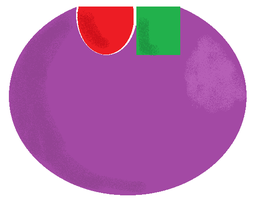
Enzymes undergo a slight change in shape to fit the substrate more snugly, a process known as induced fit. This enhances the enzyme's ability to catalyze the reaction.
Enzyme Function: Catabolism and Anabolism
Catabolic enzymes: Break down complex molecules.
Anabolic enzymes: Build complex molecules from simpler ones.
Factors Affecting Enzyme Activity
Environmental Effects
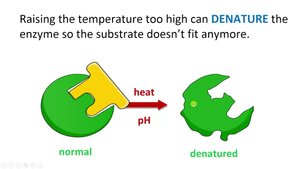
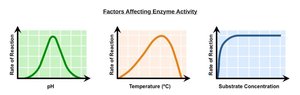
Enzyme activity is influenced by temperature, pH, and the presence of chemicals. Each enzyme has optimal conditions under which it functions best.
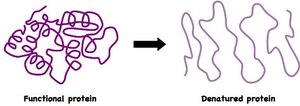
High temperatures or extreme pH can cause denaturation, altering the enzyme's shape and function.
Cofactors and Coenzymes
Some enzymes require non-protein helpers called cofactors (inorganic, e.g., metal ions) or coenzymes (organic, e.g., vitamins) to function properly.
Enzyme Inhibition and Regulation
Types of Enzyme Inhibitors
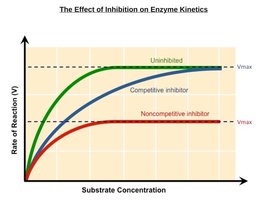
Competitive inhibitors: Bind to the active site, blocking substrate binding. Can be overcome by increasing substrate concentration.
Noncompetitive inhibitors: Bind to a site other than the active site (allosteric site), changing the enzyme's shape and reducing activity.




Allosteric Regulation
Allosteric enzymes have multiple binding sites. Binding of regulatory molecules at allosteric sites can either inhibit or activate enzyme activity. Cooperativity is a form of allosteric regulation where substrate binding to one active site increases activity at other sites.


Feedback Inhibition
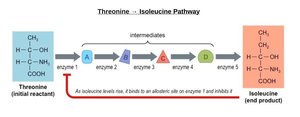
In feedback inhibition, the end product of a metabolic pathway inhibits an enzyme involved early in the pathway, preventing overproduction of the product.


Practice Questions and Applications
Fever and Enzyme Activity
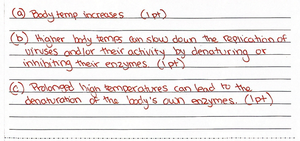
(a) Body temperature increases.
(b) Higher body temperature can slow down the replication of viruses and/or their activity by denaturing or inhibiting their enzymes.
(c) Prolonged high temperatures can lead to the denaturation of the body's own enzymes.
Vitamins as Coenzymes
Vitamins function as coenzymes by binding to enzymes and assisting in catalyzing reactions.
Without cofactors, enzymes may not function properly, leading to impaired enzyme activity and metabolic disruptions in the body.